
ATLANTA — The law was supposed to be a fortress. Instead, it has become a battlefield.
Georgia’s Republican-controlled legislature created so-called leadership committees in 2021 to give incumbent officeholders a structural advantage over challengers: the ability to raise unlimited campaign funds, and to raise them during the legislative session when ordinary candidates are legally barred from soliciting contributions. The architects of that law almost certainly imagined it would operate quietly, delivering financial comfort to the party’s preferred candidates without attracting much scrutiny. Three years later, it has produced a constitutional crisis that is consuming the most expensive governor’s race in state history — and neither a billionaire challenger spending $93 million of his own money nor a string of federal lawsuits has yet resolved the central question of whether the mechanism is legal at all.
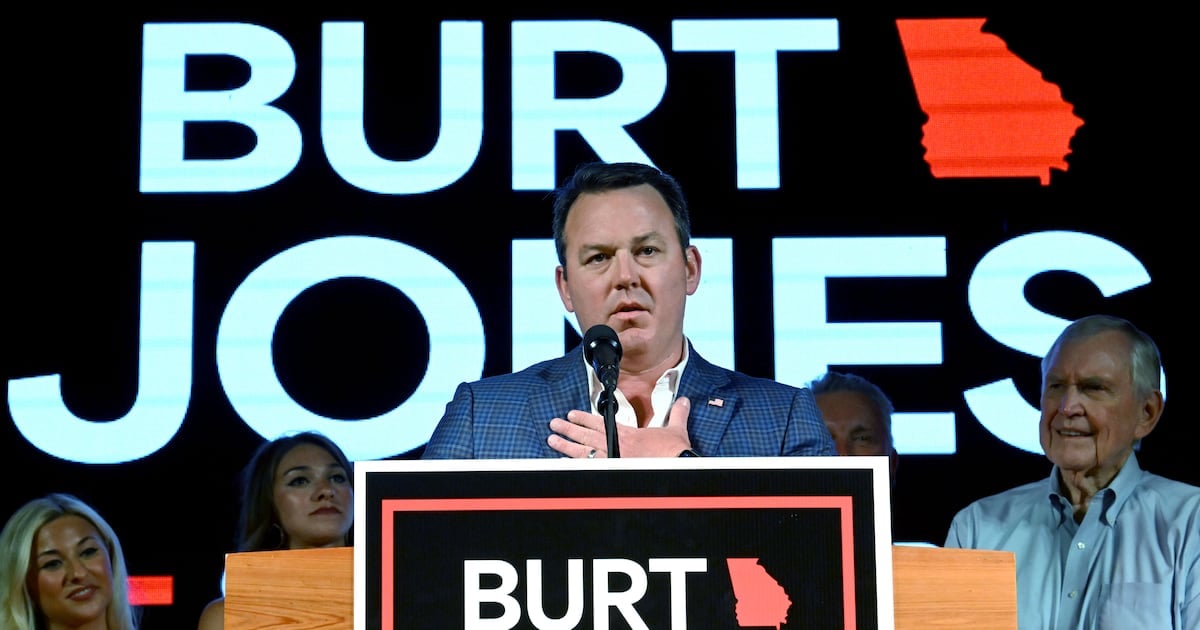
Lt. Gov. Burt Jones, the Trump-endorsed candidate who advanced to a Republican runoff after finishing first in the May 19 primary, has raised $2.1 million through his WBJ Leadership Committee alone this year — more than any of the state’s 10 such committees, according to an analysis by The Atlanta Journal-Constitution. That total arrives on top of $4.7 million raised through his traditional campaign account, which is subject to the same $8,400-per-donor limit that applies to everyone else running for statewide office. His largest single contributor through the leadership vehicle: an antitax group called Fighting for Georgia, which delivered $526,742.
The figure that matters most, though, is not this year’s $2.1 million. It is the $4 million the leadership committee has accumulated since Jones announced his gubernatorial candidacy in July 2025 — bringing the committee’s cumulative total to roughly $15.9 million since its creation. Georgia is already fighting over the boundaries of political money at the federal level, and the leadership committee fight has added a second front that the state’s courts cannot seem to close.
Three federal lawsuits challenging the mechanism — one filed by Jackson, one by Secretary of State Brad Raffensperger, and a third by the Libertarian and Green parties — remain unresolved in the 11th Circuit Court of Appeals. Federal judges have twice signaled that the committees appear to confer an unconstitutional advantage. A temporary restraining order briefly froze Jones’ fundraising pipeline in February before courts allowed it to resume. And yet the money keeps flowing, because no final ruling has ever come.
Jackson’s campaign has been direct about what it believes the evidence shows. In February, when the lawsuit was filed, his legal team described the WBJ Leadership Committee as a “de facto second, super-duper campaign committee” that operates entirely outside the law’s constraints. The argument mirrors what Stacey Abrams and David Perdue successfully argued in 2022, when a federal judge found similar committees likely unconstitutional and issued injunctions to that effect — only for the plaintiffs to eventually drop their cases before a final ruling could be handed down, leaving the question open. That opening is the reason Georgia is having this fight again now.
Jones’ spokesperson Kayla Lott, asked about the committee’s role, kept her answer focused on Jackson’s personal wealth. “Rick Jackson can spend over $100 million attacking Trump-endorsed Lt. Governor Burt Jones, but no amount of money can hide Rick’s record or buy the trust of the people of this state,” she said. The campaign has not addressed the committee’s constitutional status directly.
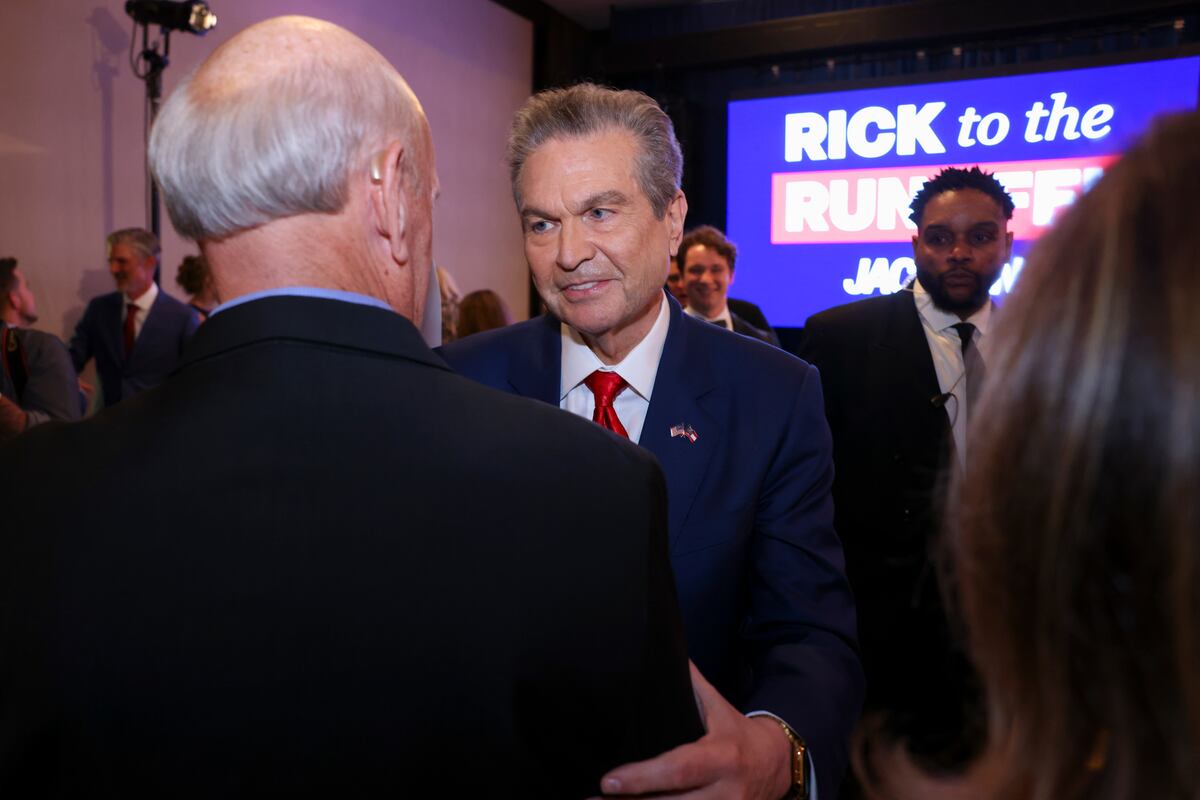
The irony of Jackson’s position is not lost on observers of Georgia politics. He entered the race in February as a political outsider, spending freely to challenge an incumbent backed by a sitting president. He then became the most aggressive legal challenger to the same law that, should he win the runoff, he could use himself. National anti-corruption groups have been watching Georgia closely as a test case for whether states can sustain rules that create tiered fundraising rights based on which office a candidate currently holds.
The law permits only a narrow class of officials to form leadership committees: the governor, the lieutenant governor, the Democratic and Republican nominees for those offices, and legislative leaders of both parties. That exclusivity is precisely what courts have found troubling. Under the structure, a sitting lieutenant governor running for governor can raise an unlimited check from a single donor on the same day a challenger is prohibited from taking more than $8,400 from that same donor. The gap is not abstract. This year, Georgia’s leadership committees accepted 132 contributions larger than the legal maximum for statewide candidates, including 15 of $100,000 or more, according to the AJC analysis.
Gov. Brian Kemp, who is term-limited and not on the ballot, has used his own leadership committee as something closer to a political machine — backing and opposing legislative candidates, financing his push to limit civil lawsuits, and at one point threatening primary challenges against Republican legislators who refused to support that tort-reform effort. The committees raised $3.1 million during this year’s legislative session, when ordinary lawmakers were barred from raising money. That represented an increase of more than a third from the $2.3 million raised during last year’s session.
The structure’s resilience in court has surprised some campaign finance lawyers. Four separate legal challenges have now been filed since 2021; all have either failed or remain unresolved. The 11th Circuit has not yet issued a definitive ruling on whether the tiered structure survives First Amendment and equal protection analysis. Until it does, the committees operate in a state of prolonged legal ambiguity that benefits whoever holds office and harms whoever is trying to take it.
What makes the 2026 race distinctive is not the lawsuit — those have been filed before — but the speed with which the Democratic side moved to claim the same tool once its usefulness became clear. Keisha Lance Bottoms, who won the Democratic nomination for governor in the May 19 primary, created her own leadership committee last week, according to state records. She is now a nominee and therefore eligible under the same 2021 law her party has spent the better part of two years attacking in federal court. The moment underscores what the committee structure has become: not a partisan tool but a structural advantage that any rational political actor would seize, regardless of position on its legality.
The Republican primary runoff is scheduled for June 16. Whoever wins that contest will face Bottoms in November — and if the 11th Circuit has still not ruled, they will enter the general election under the same unresolved constitutional cloud that has shadowed this race since it began. Democrats have already framed campaign finance as a central midterm argument, and Georgia’s leadership committee fight hands them a state-level case study with a dollar figure attached: $6.7 million raised this year alone through a mechanism that multiple federal judges have said probably should not exist.
Whether the courts will finally resolve it before November is the question Georgia’s political class is not sure how to answer.