
VIENNA — Rafael Grossi was unambiguous on Monday about where the International Atomic Energy Agency stands on the most combustible security question in Europe right now. It stands outside the room.
The IAEA director general told reporters that his organisation is not involved in discussions about whether the United States should deploy nuclear weapons in Poland and several Baltic states, and drew a pointed distinction between the agency’s civilian mandate and the alliance politics driving those talks. “We are not involved, we are not a nuclear weapon organisation,” Grossi said. “These matters are in the realm of the defence policies of these countries.”
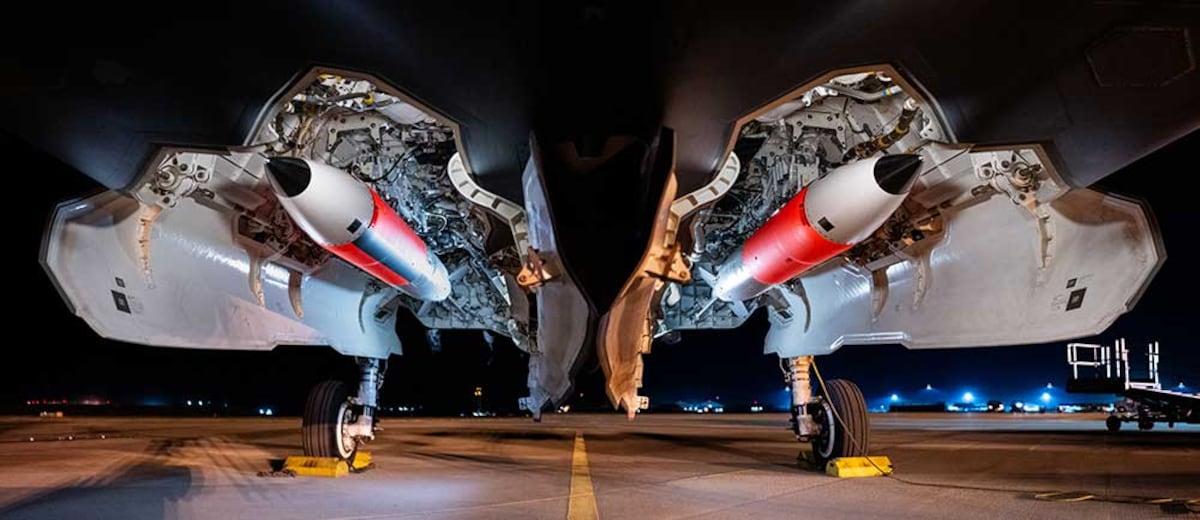
The remarks amounted to something more than a bureaucratic clarification. They arrived less than a week after the Financial Times, citing three people briefed on the discussions, reported that Washington has signalled openness to expanding its nuclear-sharing arrangements beyond the six European countries where US dual-capable aircraft are already stationed. Poland and the Baltic states had expressed the strongest interest, the FT said. The report set off an immediate chain of diplomatic commentary: Russia warned that any NATO nuclear moves closer to its borders would not go unanswered; European capitals weighed in on what expanded hosting would mean for continental deterrence; and analysts debated whether the talks represented a genuine shift or an exercise in strategic reassurance during a period of US troop reductions in Europe.
Into that charged atmosphere, Grossi’s Monday statement served as a kind of institutional demarcation. The IAEA inspects and safeguards civilian nuclear programmes under the Non-Proliferation Treaty. Nuclear-sharing arrangements, in which non-nuclear NATO members host US weapons and train to deliver them, operate entirely outside that framework. The weapons remain under US control. No NPT obligation is triggered. The IAEA has no inspection right, no consultative role, and no seat at the table where these decisions are made. That gap between the international safeguards regime and the nuclear-sharing world has long existed; Grossi simply named it plainly.
The political context for the FT report is rooted in a specific anxiety inside NATO’s eastern flank. The Trump administration has been drawing down conventional forces in Europe and redirecting military resources toward Asia, leaving allies who spent decades calibrating their defence postures around American troop presence scrambling for alternative assurances. Poland has been one of the most vocal capitals. Former president Andrzej Duda explicitly invited US nuclear deployments to Polish soil; the current government has walked that back somewhat, but Warsaw’s appetite for deeper American security commitments has not diminished.
France has moved into some of that space, offering what President Macron has described as a forward deterrence scheme that would include information exchanges, joint exercises, and the possible temporary deployment of French nuclear-capable aircraft to Poland. Paris has been explicit that any decision on use would rest solely with the French president. The Kremlin has condemned both the American and French trajectories as destabilising nuclearisation of the continent’s eastern edge.
Grossi has consistently warned about what he calls “friendly proliferation” the emerging logic in which states outside the existing nuclear club seek protection under someone else’s warhead rather than developing their own. In an April interview with The Telegraph, he named Poland, South Korea, and Japan as countries where the conversation about nuclear alignment had become particularly acute, and described the trend as deeply corrosive to the NPT’s foundations. More than two dozen states could, in the near future, either begin work on independent arsenals or acquire foreign weapons through alliance structures, he said at the time.
Monday’s clarification did not revisit that warning. It addressed a narrower question: whether the watchdog has any oversight role in the specific NATO-internal talks being reported. The answer, Grossi said, is no. The alliance conducts nuclear-sharing consultations through its own internal channels, not through the IAEA. The Financial Times noted that no agreement was imminent, and that at least one source described the discussions as largely aimed at political reassurance rather than near-term operational change.
What remains unresolved is whether that reassurance function will hold. The existing six nuclear-sharing hosts, Belgium, Germany, Italy, the Netherlands, Turkey, and Greece, which maintains a reserve arrangement, embedded their participation over decades of Cold War infrastructure. Bringing new states into that architecture would require building dual-capable aircraft bases, integrating new pilot certification programmes, and aligning host-nation agreements with US nuclear doctrine. Defence News reported last week that those conversations are live but that no timeline has been set.
Earlier reporting on the FT disclosure noted that Poland and the Baltic states had been among the most vocally interested in hosting dual-capable aircraft, driven in part by the uncertainty created by Washington’s broader European repositioning. Poland’s simultaneous outreach, formally requesting a permanent US military base last week, illustrates how Warsaw is pursuing multiple assurance tracks at once. Whether nuclear hosting becomes a formal part of that architecture, or remains at the level of political signalling, is a question the IAEA has neither the mandate nor the standing to answer.
The agency’s remit begins where state nuclear programmes intersect with the NPT’s safeguards obligations. Alliance deterrence planning, as Grossi noted, belongs to another room entirely.