
WASHINGTON — When a federal judge in Oregon eventually decides whether climate attribution science is admissible in Multnomah County’s $51.5 billion lawsuit against oil and coal companies, she will do so without a tool that has guided federal courts for more than three decades. The Federal Judicial Center, the research agency for the federal judiciary chaired by Chief Justice John Roberts, published an updated Reference Manual on Scientific Evidence in December 2025 — its first revision in fifteen years. By February 6, 2026, the climate science chapter was gone.
The removal was not an editorial accident. It followed a coordinated political campaign: on January 29, a coalition of 27 Republican state attorneys general, led by West Virginia’s John McCuskey and Nebraska’s Mike Hilgers, sent a letter demanding the chapter’s immediate withdrawal. Twenty-two of those attorneys general separately wrote to the House and Senate Judiciary Committees urging them to investigate the Federal Judicial Center and consider defunding it. Eight days later, the center’s director, Judge Robin Rosenberg, sent McCuskey a single sentence: the climate science chapter had been omitted. No explanation was given. No public process preceded the decision. The approximately 1,682-page manual quietly shrank by 90 pages.
That chapter’s disappearance would be remarkable on its own. Read alongside what this publication reported Thursday — that industry-allied operatives are simultaneously running a records-request campaign against the scientists producing the National Academies attribution report, which is expected to reach courts as soon as this month — the pattern suggests something more deliberate than coincidence. The same ecosystem of Republican attorneys general, fossil-fuel-aligned think tanks, and opposition research firms has spent 2026 working both ends of the courtroom at once: attacking the science before it is published, and stripping judges of the vocabulary to evaluate it when it arrives.
The manual has been cited by the United States Supreme Court and thousands of federal and state judges over its thirty years in circulation. Its purpose is straightforward: when a judge who is not a scientist must weigh competing expert testimony on a technical subject, the manual provides the intellectual baseline. The fourth edition’s climate chapter — written by Jessica Wentz of Columbia Law School’s Sabin Center for Climate Change Law and Radley Horton of Columbia University’s Climate School — had undergone months of peer review by scientists and judges before publication. It covered attribution science, ocean warming, sea-level rise, and the documented relationship between fossil fuel emissions and extreme weather events. These are precisely the categories of evidence at issue in the dozens of climate liability cases now working through state and federal courts.
The American Geophysical Union warned after the removal that court decisions made without access to climate science “will be worse for us all.” David Faigman, Erwin Chemerinsky, Benjamin Santer, and Lynn Nadel — scientists, legal scholars, and constitutional law authorities — wrote in the Bulletin of the Atomic Scientists that the deletion deprives judges of a resource they need to do their jobs, and that removing scientific consensus from legal reference materials because it is politically contested is a category error with no precedent in the manual’s history. A coalition of 23 Democratic attorneys general, joined by the cities of New York and Chicago and Harris County, Texas, wrote to the center calling the removal a surrender to partisan pressure that sends a chilling message about the judiciary’s susceptibility to political coercion.
California Attorney General Rob Bonta, who led the Democratic coalition, was blunt: removing the chapter does not change the scientific reality of climate change. It only changes what judges are officially permitted to know about it.
The chapter remains, in an act of institutional defiance, on the National Academies of Sciences website. But a subset of the same attorneys general who pressured the Federal Judicial Center have now written to the National Academies demanding its removal there as well. The Academies have not yet complied. Whether that holds is one of the open questions surrounding a body already under pressure over the attribution report.
The Daubert standard, which governs what scientific evidence American judges allow near a jury, requires that the methodology enjoy broad acceptance in the relevant scientific community. A National Academies imprimatur is the most powerful acceptance signal in American science. The logic of the current campaign is therefore legible from its tactics: if the attribution report can be discredited before publication through FOIA pressure and personnel departures, and if the judges who might admit it as evidence have been deprived of the scientific baseline to evaluate it, the report’s legal utility narrows considerably even if it publishes intact.
Alice Hill, a former federal prosecutor and California judge who later directed climate policy in the Obama White House, told E&E News that the goal of the broader campaign is to keep attribution science out of court and shield fossil fuel companies from liability. That goal has a dollar figure attached to it: one 2022 analysis put the fossil fuel industry’s exposure at more than $100 billion in the most severe litigation scenario, and more than a dozen new climate liability cases have been filed since. Multnomah County alone is seeking $51.5 billion from oil and coal companies over the 2021 Pacific Northwest heat dome, which killed 69 people and which attribution science found would have been virtually impossible without decades of fossil fuel emissions.
The Federal Judicial Center was established by Congress in 1967. It is not a political body; its director is appointed by a committee of federal judges, and its mandate is to provide nonpartisan education and research for the courts. The decision to pull the chapter in response to a political letter — with no explanation, no public deliberation, no rebuttal of the chapter’s substance — alarmed legal scholars across the ideological spectrum. Critics from the right called the original chapter advocacy dressed as science; critics from the left called its removal censorship dressed as neutrality. What neither side disputes is that the manual now has a 90-page gap where climate science used to be, and that the gap was created by political pressure at a moment when climate science is scheduled to arrive in court.
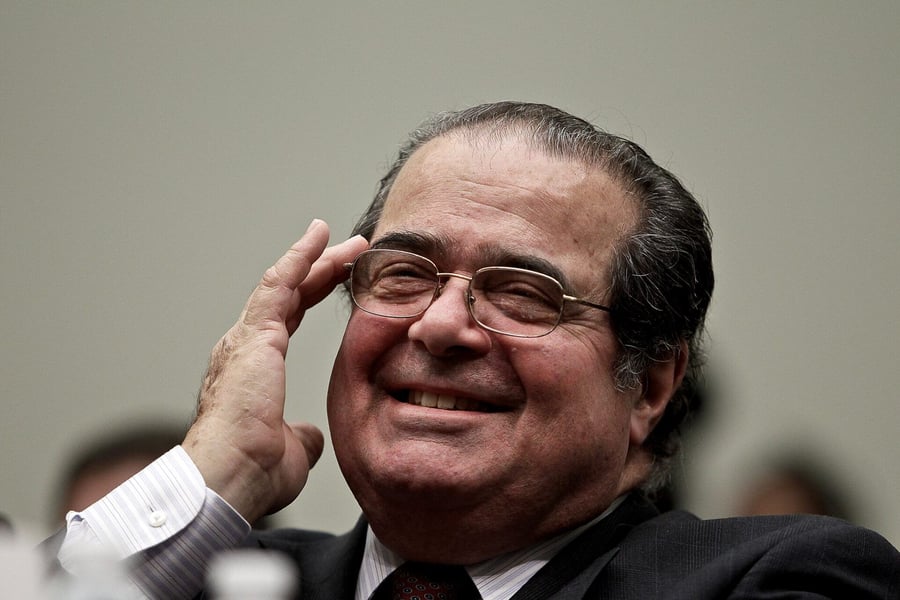
Justice Antonin Scalia, in a 2007 greenhouse gas case, told colleagues he did not want to deal with global warming because he was not a scientist. That remark has become the ironic epigraph for the current crisis: the reference manual existed precisely to help judges who are not scientists navigate cases where climate evidence is determinative. The manual’s editors took the Scalia problem seriously. The political campaign that removed the chapter has now made it worse.
The National Academies attribution report has been peer-reviewed, and its release is expected within weeks. The ocean data its researchers relied on is already being pulled from the Pacific and Atlantic. The scientists who produced it have had their university emails harvested by an opposition research firm. Two members of the fifteen-person panel have already departed. The courtrooms where it might be submitted now lack the official scientific context that would help judges evaluate it.
What the campaign has not managed to do is answer any of the science. The chapter that was removed made no claims that are disputed in peer-reviewed literature. The attribution research it described has been validated repeatedly. The National Academies’ earlier report in September 2025 — on human-caused warming that has now reached 1.37 degrees Celsius — found the evidence of harm to public health beyond scientific dispute. None of those findings have been credibly challenged. The campaign being waged against them is procedural, institutional, and financial. It works by controlling what courts are allowed to hear, not by contesting what scientists have found.
Whether the next judge to hear a climate case opens the reference manual and finds the gap is a small but precise measure of how far the campaign has traveled.