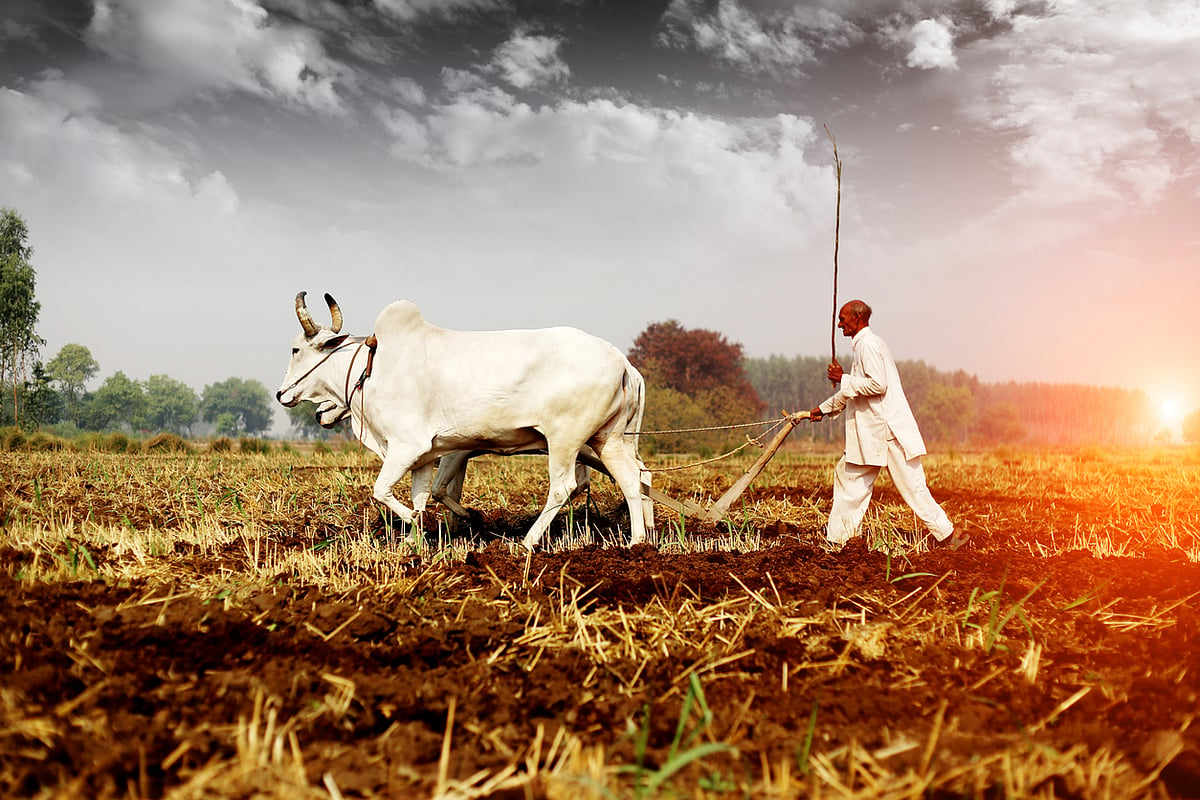

NEW DELHI — In the rain-dependent districts of Marathwada, where the soil grows the pulses India cannot afford to import, farmers are preparing for a kharif season that the government has already flagged as perilous. The agriculture ministry has placed 197 districts across the country on its most-vulnerable watchlist, ordered contingency plans revised by June 20, and begun stockpiling drought-resistant seeds in regions stretching from Rajasthan to Jharkhand. It is the clearest admission yet that the monsoon arriving under El Niño conditions may not deliver what the harvest requires.
The urgency follows a week in which the meteorological picture hardened. NOAA declared El Niño conditions in the tropical Pacific on June 11, giving 63 percent odds that sea-surface temperatures exceed two degrees above normal by the northern-hemisphere winter. A day later, the India Meteorological Department confirmed the onset and held its seasonal rainfall forecast at 90 percent of the long-period average of 868.6 millimetres, a level that formally classifies the outlook as below-normal. IMD assigns a 92 percent probability that El Niño persists through the monsoon months, and its models project the real shortfall in the second half of the season, August and September, precisely when the kharif crop transitions from vegetative growth to grain filling.
The 197 districts span the geography most exposed to rainfall deficits. The Marathwada-north Karnataka belt, where water tables have not recovered from the last major El Niño cycle, tops the list. Rajasthan, Gujarat, Madhya Pradesh, Chhattisgarh, eastern Uttar Pradesh, Bihar, and Jharkhand follow. Agriculture Minister Shivraj Singh Chouhan has said the threat occupies his ministry constantly. The government has formed a multi-ministry taskforce of 14 to 15 officials drawn from agriculture, the Indian Council of Agricultural Research, socio-economic planning, and commerce to coordinate the response, a composition that signals concern not only about crops but about import bills and consumer prices.
The specific vulnerability is structural. Roughly 90 percent of India’s pulses and oilseeds acreage is rainfed, meaning these crops have no irrigation buffer when the monsoon falters. The two commodities sit at the heart of the government’s self-sufficiency missions, programmes designed to reduce India’s dependence on imports of protein and cooking oil. A poor monsoon does not just shrink the harvest. It resets the import calculus and, in election-sensitive commodities like dal and edible oil, pushes retail inflation higher at a speed the Reserve Bank cannot easily offset. An analysis by the credit rating agency ICRA estimates that the El Niño could add 0.4 percentage points to CPI food inflation if the deficit materialises as forecast.
The historical record supplies the context the forecast cannot. The 2002 El Niño, a moderate event, produced a 21 percent national rainfall deficit. The 2015 event, classified as strong, delivered a 13 percent deficit and shrank rice production by roughly 3.4 million tonnes below trend. India’s total foodgrain output fell by seven percent that year, and pulses prices climbed sharply enough to become a political issue. The current event is forming on baseline ocean temperatures warmer than any previous El Niño in the instrumental record, a fact that climate scientists say makes the forecasting models less certain about intensity, not more.

What the agriculture ministry has done in response carries its own signal about the severity of the threat. ICAR and state agricultural universities have been told to revise district-level contingency plans, many of which are at least a decade old, specifically for El Niño conditions before the June 20 deadline. Precautionary reserves of drought-resistant seed varieties, essential fertilizers, and critical agricultural inputs have been pre-positioned across the flagged districts to enable quick re-sowing if August dry spells fracture the initial planting cycle. The language in government briefings has shifted from standard monsoon preparedness to explicit drought contingency, a distinction that matters because it triggers a different set of protocols and a different level of funding.
The monsoon itself is sending mixed signals. The Bay of Bengal branch has raced ahead, entering South Bengal at its earliest date in five years and covering half of Bihar within 24 hours. But the Arabian Sea arm, which delivers rain to Maharashtra, Gujarat, and the northwest, has stalled over the central sea for nearly two weeks, leaving Mumbai waiting past its normal June 11 onset date with its reservoirs at 12 percent of capacity. The two branches are writing different chapters of the same season, and the agricultural districts flagged on the ministry’s watchlist sit predominantly in the path of the weaker arm.
Reservoir levels add a layer of pressure that the rainfall numbers alone do not capture. National reservoir storage dropped eight billion cubic metres in two weeks between late April and mid-May, a faster drawdown than normal, and the monsoon’s late arrival in the western states is extending the gap between when irrigation storage was expected to begin refilling and when it actually will. For districts in Maharashtra and Rajasthan that depend on canal irrigation, late or reduced reservoir inflows compress the sowing window for rice, soybean, and groundnut, leaving farmers less room to plant and less time for the crop to mature before the rains taper off.
Two things remain uncertain enough to shape the outcome in either direction. The first is whether El Niño actually reaches the super-event threshold that forecasters have flagged with near-two-thirds probability. A moderate El Niño and a super event produce meaningfully different monsoon deficits, and the difference for India’s harvest is not academic. The second is whether a positive Indian Ocean Dipole emerges later in the season. In 2023, the last El Niño monsoon, a late-forming positive IOD rescued the second half of the rains and brought the final tally to 94 percent of average. IMD currently forecasts a neutral IOD, which means no such rescue is in the pipeline, but the dipole has surprised forecasters before.
The government’s contingency planning is the right response to a credible threat, but contingency plans protect farmers’ options, not their yields. If August brings the dry spells the models suggest, the drought-resistant seeds will germinate and the re-sowing protocols will activate. What they cannot replace is the 10 percent of rainfall the forecast says the season is likely to miss, and for the 197 districts watching the sky over rainfed fields, that gap is the one that determines whether the harvest feeds the country or forces it to the import market.
Related Posts