
SEOGWIPO, Jeju Island, South Korea — In the summer of 2024, soft corals along approximately eighty kilometres of the southern coast of South Korea’s largest island stopped doing what corals are supposed to do. They drooped. According to a Mongabay report this week by Elizabeth Claire Alberts, a research team led by Anna Jöst Kim and Taihun Kim at the Korea Institute of Ocean Science and Technology has catalogued the event into five identifiable stages — inflation, drooping, dangle, deflation and disintegration — and named the phenomenon “slumping.” The first stage is what it sounds like; the last stage is gone. The 2024 die-off was widespread enough that the team is now monitoring the same coast for a repeat in 2026 with the unease that climate-projection language usually packages as “elevated risk.”
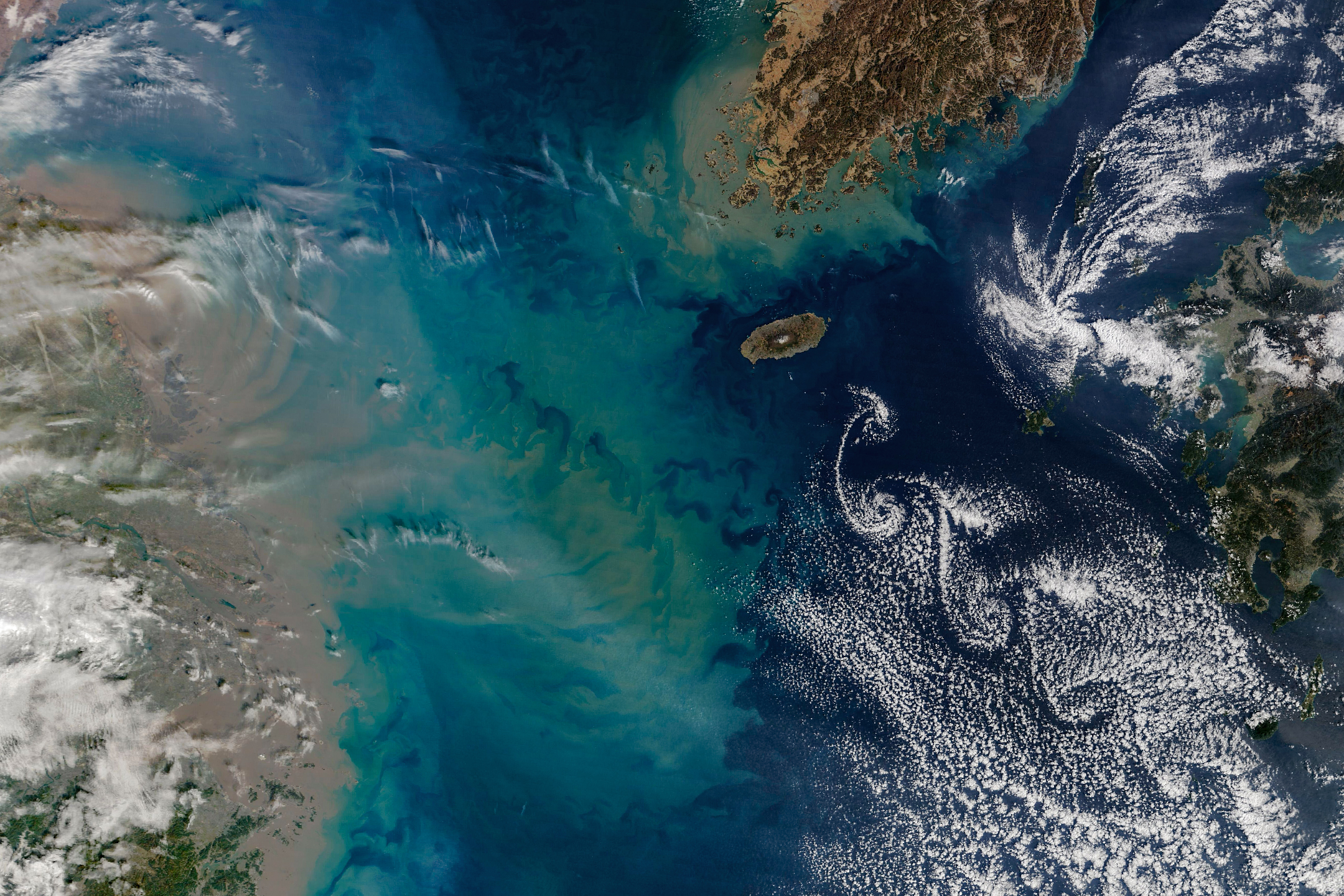
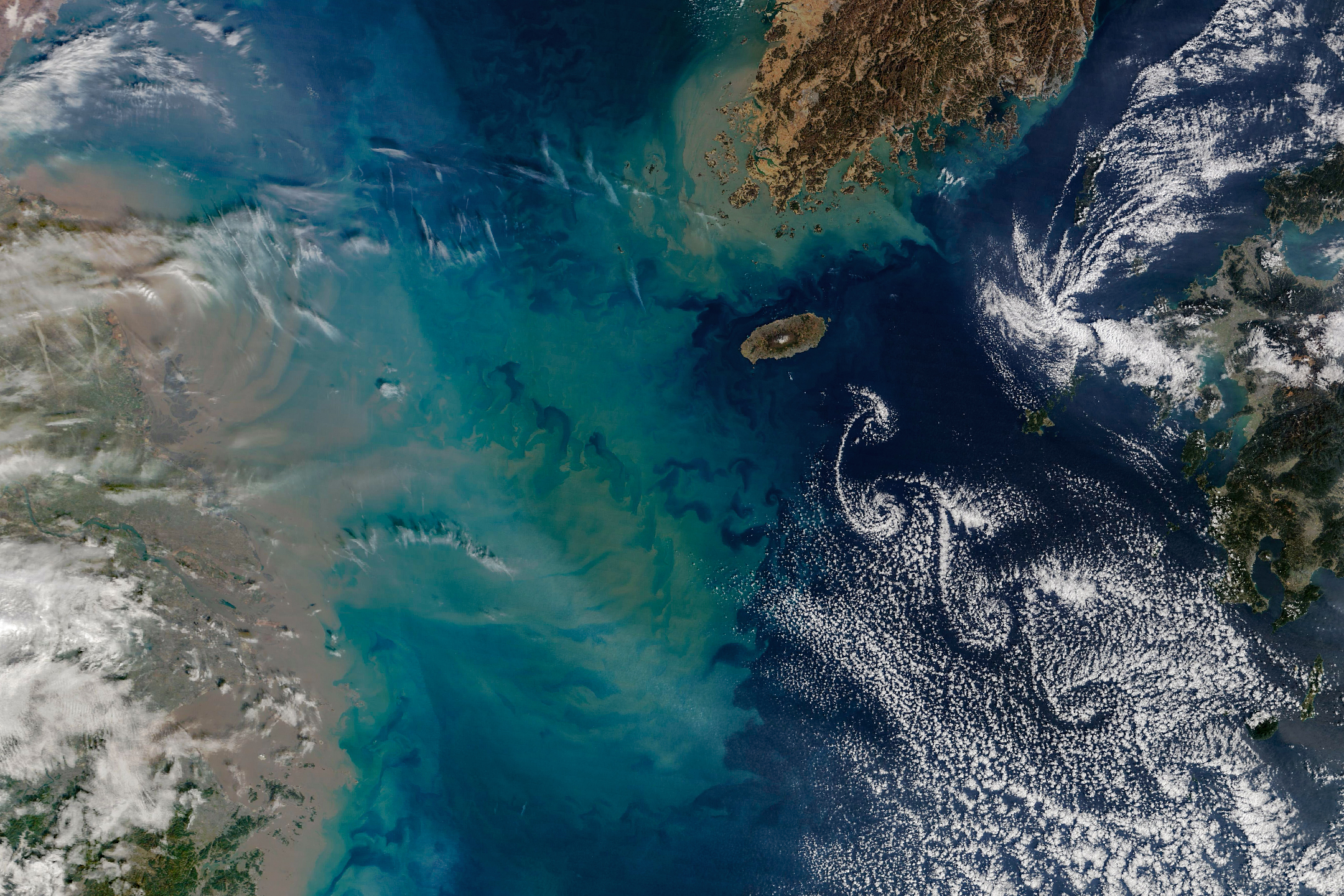
The mechanics behind the 2024 slumping, as the Korean team describes them, were two simultaneous shocks. The first was temperature. Sea-surface temperatures around Jeju that summer climbed above thirty degrees Celsius, against a typical seasonal average closer to twenty-four. The second was salinity. Record summer rainfall in mainland China pushed the Yangtze River into peak flood. The freshwater plume the Yangtze pours into the East China Sea, normally a feature most visible in winter, spread south and east in volumes that the satellite record had not previously recorded, reducing the salt content of the seawater around Jeju at the same time the heat was at its peak. Soft corals tolerate one or the other. They tolerate neither together.
The five-stage taxonomy the Korean team published distinguishes their findings from the better-known coral-bleaching pathway. Bleaching, the loss of the symbiotic algae that colour and feed reef-building hard corals, is a chemical-symbiosis failure. Slumping, in soft corals, is a structural one. The polyp loses its hydrostatic pressure, the colony deflates, the integument sags off the substrate, and within days the tissue disintegrates. Photographs in the team’s field notebooks, reproduced in the Mongabay piece, show coral that, days apart, look like the same organism photographed in different geological eras.
The 2025 summer was milder. Only scattered individual slumping cases were observed along the same coast. By early 2026, none of the eighty kilometres of southern shoreline had repeated 2024’s pattern. The reprieve is what the team is now afraid will end. On Wednesday, the U.S. National Oceanic and Atmospheric Administration officially declared a strengthening El Niño with a 63 percent probability of becoming a very strong event by November — the kind of event that has historically pushed sea-surface temperatures across the Western Pacific to record annual peaks. The Korean team’s statistical model has built a probability surface across the Jeju southern shore for a repeat of the conditions that drove the 2024 slumping. For mid-2026, given the El Niño signal, the probability is, in their language, “elevated.”

Jeju’s coastal-management framework is the other half of the story. The southern coast where the slumping occurred is partially inside the Munseom Island marine protected area and overlaps with three habitat-protection designations under South Korean and UNESCO marine-conservation frameworks. Sanghoon Yoon, who runs the Paran Ocean Citizen Science Center, told the Mongabay reporter that the designations were, in practice, little more than letterhead. “The law is there,” he said, “but there’s no management.” The criticism is not unique to Jeju. The phrase he used, “paper parks,” has been the international term-of-art in marine conservation for a decade.
The Korea Institute of Ocean Science and Technology, which is funded through South Korea’s Ministry of Oceans and Fisheries, has asked the ministry to invest in a year-round real-time monitoring network across Jeju’s southern coast. The system would couple in-water temperature and salinity sensors with satellite-derived sea-surface temperature and chlorophyll observations. The proposal sits on the desk of a ministry that, in 2025, absorbed a roughly five percent funding reduction as part of South Korea’s response to a national budget tightening. The European OceanSITES network and the Japanese SOLAS-Asia programme have offered partnership; the proposal does not yet have an executable timetable.
The contrast with the United States is sharp. As Eastern Herald reported earlier this week, the U.S. National Science Foundation is dismantling the Ocean Observatories Initiative, a $386 million in-water sensor network of the kind the Korean team is now asking its own ministry to fund. The science the OOI was designed to perform — deep-current, dissolved-oxygen and seasonal subsurface temperature monitoring — is the same science the Jeju soft-coral problem requires. The signal slumping events depend on is the one the United States is about to stop measuring.
The wider Northeast Asian ocean context is also moving. The Yangtze flood that pushed the freshwater plume to Jeju in 2024 was part of the same Asian-monsoon pattern that the World Meteorological Organization has linked to warming sea-surface temperatures across the South China Sea. The Chinese coal-fired industrial pulse that CREA’s report this week documented as the largest annual commissioning in a decade sits on the same airshed; the embodied steel emissions the Leiden and Beijing Normal studies traced through the Belt and Road Initiative route through Hebei mills whose heat plume warms the same coastal current that runs past Jeju. The polypeptide-level question — will the colony hold its shape this summer — is downstream of the policy-level one.
What the Korean team is asking for, beyond the funding, is short notice. “In general,” the meteorologist Shel Winkley told Mongabay in a separate piece this month, “climate change is making events like this more intense at their peak intensity.” Soft-coral slumping is, at this stage, a new word in the field’s vocabulary. The 2024 stage-by-stage taxonomy is the first attempt to give it the structural reading that bleaching has had for thirty years. The 2026 summer, with the El Niño tail still developing, is the season the field will find out whether “slumping” stays a single-year anomaly or becomes a recurring phase of Western Pacific reef ecology.
The Jeju southern shore is, at this point in mid-June, still standing. The soft corals are inflated. Sea-surface temperatures are, the Korean team’s bulletin says, tracking slightly above the long-term seasonal average. The Yangtze is, this year, on schedule. None of that means much past August. “The ocean is already telling us something important,” the marine biogeochemist Helen Findlay wrote in a Mongabay commentary earlier this month about the broader Atlantic-current uncertainty. “The question is whether we are prepared to listen, and act, while there is still time.” The Korean team is listening. The instrumentation it still does not have is the harder problem.