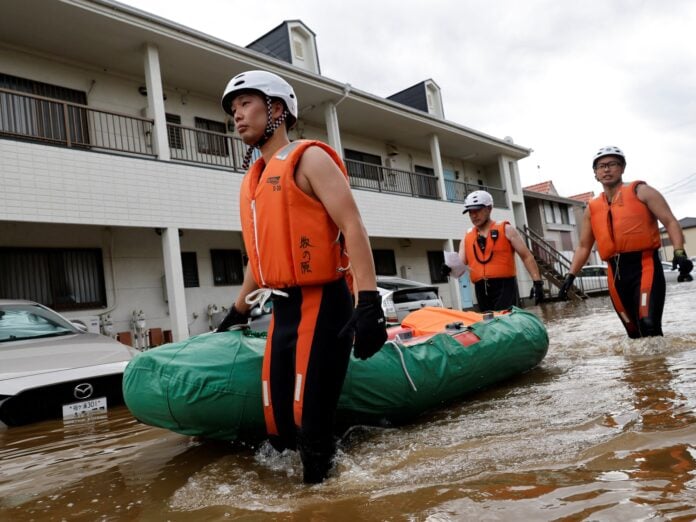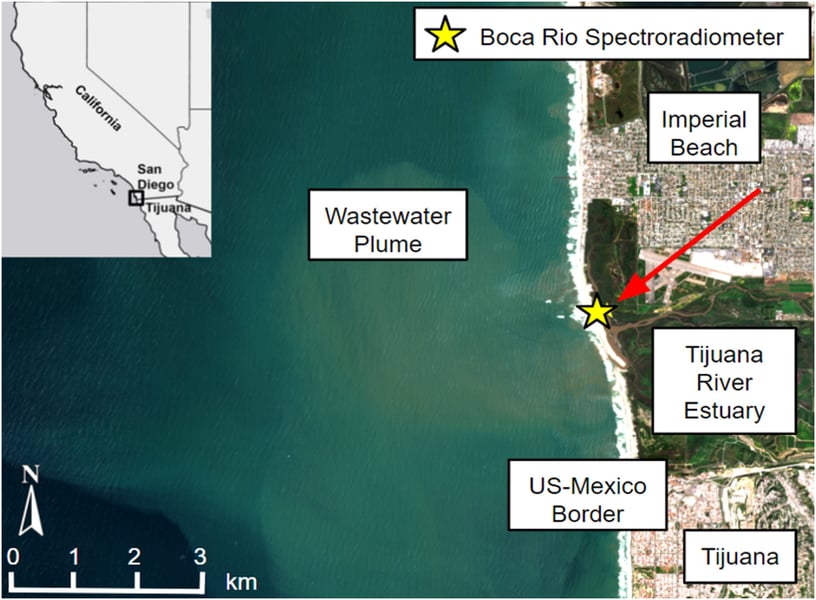

SACRAMENTO — Governor Gavin Newsom on Thursday released the first $46 million of California’s Proposition 4 climate-bond funding to address the Tijuana River sewage crisis, the cross-border environmental disaster that has poured more than 100 billion gallons of raw sewage from Mexican wastewater plants onto United States beaches since 2018. The state’s press release framed the move directly. While Trump drags his feet, the governor’s office said, California is delivering the money the federal government has not.
The funding draws on Proposition 4, the $10 billion climate-resilience bond California voters approved in November 2024 to pay for water, wildfire and natural-resource projects across the state. At least 40 percent of the bond is statutorily directed to the communities most exposed to climate change and environmental pollution. The Tijuana River corridor, where the coastal communities of Imperial Beach and the south end of Coronado have been closed to swimming for more than 1,000 consecutive days, qualifies under that test by every reasonable measure.
The grant structure announced Thursday will route up to 750,000 dollars per planning project and up to 10 million per implementation project, with implementation grants increasing to a maximum of 20 million per project on approval from the State Water Resources Control Board’s deputy director. The State Water Board will administer the program and the first applications close in September. The intended recipients include the City of Imperial Beach, the County of San Diego, and the Tijuana River National Estuarine Research Reserve, along with several nonprofit conservation organizations that have run cleanup operations during the years the federal pipeline went without funding.
The substance of the crisis is the failure of the South Bay International Wastewater Treatment Plant. The plant, built in 1997 under a US-Mexico treaty arrangement and operated by the International Boundary and Water Commission, was designed to handle 25 million gallons of sewage per day from Tijuana’s urban catchment. Tijuana’s population has roughly doubled since the plant opened. The city now generates close to 50 million gallons a day of sewage, much of it carrying industrial waste from US-owned factories operating in the maquiladora corridor, and the overflow flows north across the border through the Tijuana River channel to the Pacific Ocean.
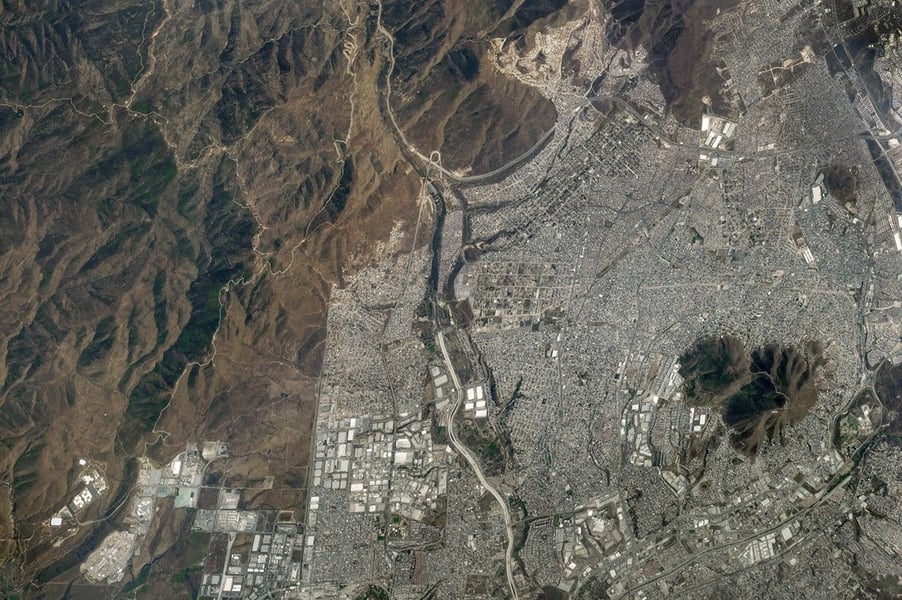
The federal half of the response is the part Newsom’s release was pointed at. The bilateral agreement that the Biden administration signed with Mexico in 2024 committed about 600 million dollars to upgrade the South Bay plant and add capacity on the Mexican side; the Trump administration has slowed the disbursement of the US share through the International Boundary and Water Commission’s appropriations cycle, citing border-security priorities that the Tijuana River infrastructure does not directly serve. The slowdown was described in budget documents this spring as a re-prioritisation; the practical effect is that the federal money has stopped showing up.
California’s intervention is the same model the state has been operating under for two decades on issues where the federal posture is hostile or absent. The 46-million-dollar tranche is the down payment, with a further commitment that the Newsom administration expects to bring to the State Water Board for approval in subsequent fiscal years. The Associated Press reported that the governor’s office tied the move explicitly to a federal water crisis the state should not have to fund alone. The framing matches Newsom’s broader posture this year of demonstrating state-level climate-policy delivery against the backdrop of federal rollback.
The public-health stakes are documented. The Centers for Disease Control reported in 2024 that ER visits for gastrointestinal illness in San Diego County’s South Bay region tracked closely with overflow events at the Tijuana River. US Navy SEAL training operations at Naval Amphibious Base Coronado have been adjusted around the plume; the Marine Corps suspended ocean-training activities at the Silver Strand in 2023 and has not fully restored them. The contamination is not abstract environmental damage. It has medically measurable effects on US military readiness and on the communities downstream of the plume.
The political economy of Proposition 4 is the part that gives the announcement its Sacramento read. The bond was sold to voters in 2024 as climate-resilience infrastructure with environmental-justice safeguards, and the first tranche of money is now flowing to a project that has both features in maximum form. Newsom is using the bond to demonstrate that state climate finance can be deployed quickly when the federal government cannot or will not act, the political proposition he has been building toward through the spring.
The same week, the Trump administration’s EPA sent California’s vehicle-emissions waivers to Congress for repeal under the Congressional Review Act, the third major federal move against the state’s climate authority this term. The juxtaposition is the point Newsom’s office was making. California is funding the cleanup of a federally caused water crisis at the border at the same time that Washington is using the legislative shortcut around the courts to dismantle the state’s clean-air rules. The political grammar of both events is the same: the federal government is removing climate policy, the state is adding climate-policy money. Which side carries the longer-term consequence for California’s air, water and public health is the question both maneuvers are testing in different directions.
The international piece is the part that gets less attention. Mexico’s federal Conagua water agency has its own funding commitment under the 2024 bilateral, and the Sheinbaum administration is on schedule with the Mexican side of the plant expansion, the IBWC’s quarterly report this spring confirmed. The constraint on completion is the US-side disbursement, not the Mexican one. California’s 46 million dollars cannot substitute for the federal share; it can keep the planning and reserve-protection work moving while the federal appropriation is renegotiated. NOAA’s El Nino Advisory this week adds a separate timing question: the El Nino winter brings heavier-than-usual rainfall to the southern California coast, which increases the volume of the Tijuana River and the velocity of the overflow into US waters at exactly the moment the bilateral upgrade is most behind.
The applications for the first round of Proposition 4 Tijuana funding close in September, and the State Water Board is expected to issue the first awards before the end of the calendar year. Imperial Beach Mayor Paloma Aguirre called the announcement a long-overdue recognition that the state has to step in where the federal government has not; the City Council unanimously endorsed the bond’s allocation last month. The crisis is now into its eighth year of beach closures, its third year of measurable public-health effects, and its first year of state climate-bond funding. The Trump administration has not commented.