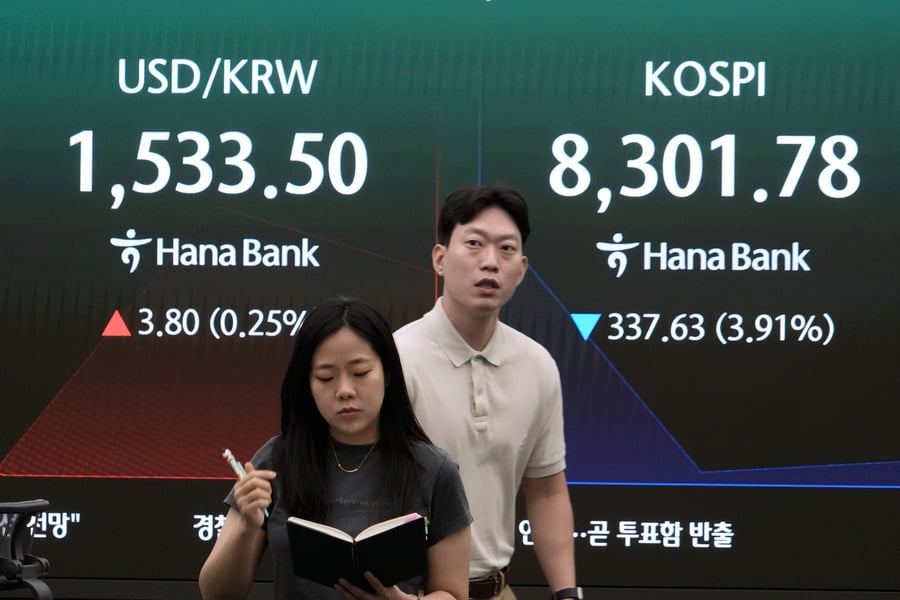

HONG KONG, June 14, 2026 (The Eastern Herald) — The Asian artificial-intelligence-trade unwind that began with the early-June Kospi correction has now extended into a third consecutive weekly decline, with the cumulative regional-equity-market drawdown reflecting both the structural cumulative-valuation stretch that the AI-trade rally produced and the cyclical Federal Reserve-policy expectation shift that the cumulative US economic-data releases have driven. The South Korea Kospi index has fallen 8.3 percent in the cumulative trailing-week trading sessions despite the cumulative year-to-date gain of more than 100 percent, the China Star Market 50 has fallen 4.3 percent on the cumulative AI-component unwind, the CSI 300 Index has lost 2.1 percent in the cumulative two-week trading-session window, and the Hang Seng Index has closed at 24,657 with a 1.2 percent decline that the cumulative Hang Seng Tech component-index 2.7 percent decline reflects.
The structural valuation backdrop for the Asian AI-trade unwind is distinctive. The cumulative Hang Seng Tech Index forward-twelve-month price-to-earnings multiple peaked at 31.4 times at the late-May trading session, the cumulative Kospi-tech-component forward-twelve-month price-to-earnings multiple peaked at 27.6 times, and the cumulative China Star Market 50 forward-twelve-month price-to-earnings multiple peaked at 38.2 times, with all three valuation prints sitting at cumulative ten-year extreme high readings. The cumulative valuation-extreme position is the structural variable that has produced the cumulative unwind-vulnerability profile, and the cumulative position-trimming activity reflects the cumulative-overvaluation-recognition that institutional-investor portfolio-management discipline has now been applying.
The Federal Reserve September-meeting expectation is the cyclical-policy variable that has been the cumulative-AI-trade-unwind catalyst. The May U.S. non-farm-payrolls print of 172,000 new positions, the May U.S. unemployment-rate stability at 4.3 percent, the cumulative-trailing-three-month average hourly-earnings-growth rate at 3.8 percent annualised, and the cumulative-trailing-three-month inflation-print stability above the Federal Reserve 2 percent target have collectively produced the cumulative-rate-cycle expectation shift that the cumulative-fed-funds-futures-market is now pricing. The implied probability of a Federal Reserve September-meeting rate-increase has risen from 18 percent at the start of June to 47 percent in the trailing-week pricing, and the implied probability of a rate-cut-cycle resumption has compressed correspondingly.
The cumulative U.S. Treasury yield-curve repricing has been the consequence of the cumulative-rate-cycle expectation shift. The cumulative 10-year U.S. Treasury yield has risen 35 basis points from the late-May trading-session low to 4.62 percent at the Friday close, the cumulative 2-year U.S. Treasury yield has risen 28 basis points to 4.18 percent, and the cumulative 30-year U.S. Treasury yield has risen 41 basis points to 4.89 percent. The cumulative-yield-rise reflects the cumulative cost-of-capital re-rating that the cumulative-rate-cycle expectation shift has produced, and the cumulative-cost-of-capital re-rating is the variable that has been driving the cumulative AI-equity-valuation compression.
The Hang Seng Tech Index composition has been the variable that has produced the cumulative-Hong-Kong-market-underperformance against the broader cumulative-Hong-Kong-equity-market position. The cumulative Hang Seng Tech Index eligibility-rules have so far barred the inclusion of the most-recent Chinese frontier-AI listings including MiniMax Group and Knowledge Atlas, also known as Zhipu AI, both of which have delivered cumulative-listing-day-and-trailing-week share-price gains in the 80-to-150 percent range from the IPO-pricing levels. The cumulative-Index-eligibility-rules-induced underperformance has been a substantial component of the cumulative Hang Seng Tech-relative-underperformance, with the broader-market Hang Seng Composite Index having outperformed the cumulative Hang Seng Tech component by approximately 4 percentage points over the trailing-three-month window.

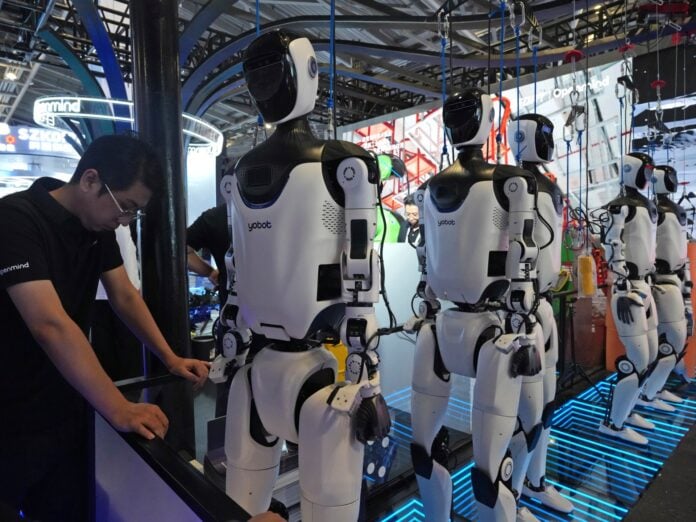
The cumulative Chinese frontier-AI-listing pipeline is the second structural variable. MiniMax Group, the Shanghai-based frontier-AI-model-developer that has been the closest Chinese-developer competitor to OpenAI and Anthropic, completed its Hong Kong listing in mid-May 2026 with a $5.2 billion initial-public-offering valuation and a cumulative listing-day-trading premium of 82 percent. Knowledge Atlas, also known as Zhipu AI, the second-largest Chinese frontier-AI-model-developer with the GLM 5 model series, completed its Hong Kong listing in early June 2026 with a $4.1 billion initial-public-offering valuation and a cumulative listing-day premium of 134 percent. The cumulative-frontier-AI-listing pipeline is the dominant variable that the cumulative Hong Kong listing-market activity is now reflecting.
The cumulative-AI-trade unwind impact on the broader Chinese-listed-AI ecosystem has been substantial. Alibaba, the cumulative-largest Chinese AI-capable cloud-and-e-commerce platform, has fallen 12 percent from the late-May high. Tencent, the cumulative-largest Chinese-AI-research-and-consumer-AI-platform, has fallen 9 percent. SMIC, the cumulative-largest Chinese semiconductor foundry and the primary domestic-AI-chip-production-platform, has fallen 18 percent. Kuaishou, the cumulative-largest Chinese short-video-and-AI-application-platform, has fallen 14 percent. The cumulative-position-trimming across the broader Chinese AI-ecosystem has been the dominant single feature of the cumulative trading-week price-action.
The cumulative U.S. AI-trade position has been the parallel cumulative-position-trimming variable. The Nasdaq Composite Index has fallen 4.1 percent from the late-May high, the S&P 500 Index has fallen 2.6 percent, and the Magnificent Seven mega-cap-AI complex has fallen 5.8 percent. The cumulative-U.S.-AI-trade unwind is more measured than the cumulative-Asian-AI-trade unwind, reflecting the cumulative-broader U.S.-equity-market-composition diversification, but the cumulative U.S.-Treasury-yield-rise-driven valuation pressure has been the same. The cumulative US export-control restrictions on Anthropic Fable 5 and Mythos 5 have added the cumulative-regulatory-overhang variable to the broader U.S.-AI-trade environment.
The cross-asset rotation underneath the cumulative AI-trade unwind has been the broader market backdrop. The cumulative gold-market rotation that has produced State Street’s $4,750-to-$5,500 end-2026 base case has been the cumulative-defensive-asset-rotation that the cumulative-AI-trade unwind has been driving, the cumulative SpaceX September Nasdaq listing has been absorbing the cumulative U.S.-equity-market-listing demand, and the cumulative Hong Kong cross-border regulatory tightening has been compressing the cumulative-cross-border-investor-flow channels into the cumulative-Hong-Kong-market.
The cumulative risk environment for the rest of June and the cumulative-July-to-September window is heavily weighted toward the cumulative-Federal-Reserve-policy variable. The Federal Open Market Committee June 17-18 meeting will produce the cumulative-policy-statement and Summary of Economic Projections that will set the cumulative-rate-cycle expectation for the rest of 2026, the cumulative-July-and-August non-farm-payrolls-and-inflation-print releases will refine the cumulative-September-meeting expectation, and the cumulative-September-meeting decision will be the cumulative-rate-cycle catalyst. The cumulative-trailing-six-week interest-rate path is the dominant single variable for the cumulative-AI-trade trajectory, and the cumulative-AI-trade trajectory is the dominant single variable for the cumulative-Asian-equity-market-performance through the second half of 2026.
The cleanest read of the cumulative-Asian-AI-trade unwind is that it is a healthy cyclical valuation reset rather than a structural-bubble-burst reset. The cumulative-Chinese-frontier-AI-listing pipeline continues to produce the kind of listing-and-listing-day-trading-premium activity that the MiniMax and Zhipu IPOs delivered, the cumulative Chinese-AI-research output continues to deliver the kind of frontier-model-development that the cumulative-AI-trade has been pricing, and the cumulative-Asian-equity-market underlying cumulative-economic-growth supports the cumulative-AI-trade thesis. The cyclical-correction is substantial, the structural-thesis is durable, and the cumulative-Federal-Reserve-policy-path will determine the cumulative-second-half-trajectory. South China Morning Post’s reporting sets out the trailing-week cumulative-trading-session price-action. SCMP’s related coverage of the Hang Seng Tech Index eligibility rules details the index-composition variable.
The cleanest read of the rest of the second-quarter and the cumulative-third-quarter is that the cumulative-Federal-Reserve-policy-path will determine the cumulative-AI-trade trajectory, the cumulative-Chinese-frontier-AI-listing pipeline will continue to absorb the cumulative-investor-flow that the cumulative-AI-trade has been generating, and the cumulative-Hong-Kong-listing-market activity will continue to support the cumulative-Asian-equity-market-position. The cumulative-Federal-Reserve September-meeting decision is the cumulative-trajectory-defining variable. The cumulative-Chinese-AI-research-output continues to support the cumulative-Asian-AI-trade structural thesis. The next concrete data prints to watch are the Federal Open Market Committee June 17-18 statement, the July non-farm-payrolls-and-inflation prints, the August non-farm-payrolls-and-inflation prints, the Federal Open Market Committee September 16-17 decision, and the cumulative-Chinese-frontier-AI-listing pipeline through the third-quarter window.