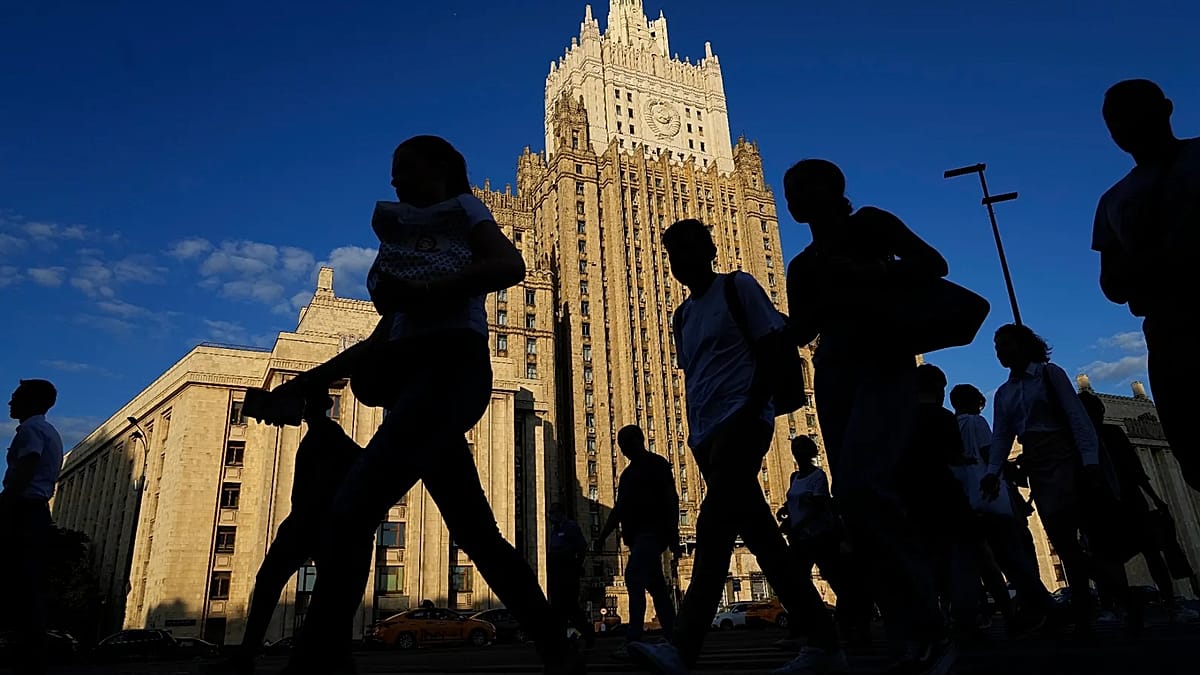

BRUSSELS – They went to Smolenskaya Square with a message. They left with a lecture.
The ambassadors of France, Britain, and Germany – Nicolas de Rivière, Nigel Casey, and Alexander Graf Lambsdorff – filed into Russia’s Foreign Ministry on June 11, four days after their leaders had gathered in London with Volodymyr Zelensky to demand that Moscow come to the table. Deputy Foreign Minister Mikhail Galuzin met them. What followed, by any diplomatic measure, was not a negotiation. It was a scolding.
The Russian Foreign Ministry said its side had delivered, in its own words, an “objective assessment of the destructive policies” pursued by the three European governments – a phrase that, in Moscow’s diplomatic vocabulary, is less a critique than a predetermined verdict. Russia also restated its demand that any settlement must address the “root causes of the conflict,” language the Kremlin has used consistently to justify refusing a ceasefire and pressing claims over Ukrainian territory. The ministry’s spokeswoman Maria Zakharova was direct: Europe, she said, pretends to seek peace while imposing unacceptable conditions.
De Rivière emerged briefly to tell reporters the three envoys had held a “good discussion” with Galuzin. A joint statement issued afterward said the ambassadors had outlined the E3 leaders’ June 7 declaration, including support for Zelensky’s call for direct Russian-Ukrainian negotiations with active U.S. and European participation. They had also condemned what they described as Russia’s “recent escalation and intensified disinformation campaigns.” What the statement did not contain was any sign that Moscow had moved, or intended to.
The gap between what the three ambassadors said on their way out and what Russia said about the same meeting is the clearest possible picture of where European diplomacy stands. It is a picture worth looking at carefully.
The London summit that preceded the Moscow visit had its own ambiguities. Prime Minister Keir Starmer, President Emmanuel Macron, and Chancellor Friedrich Merz stood with Zelensky and endorsed the current front lines as a starting point for any ceasefire, called for security guarantees for Kyiv, and insisted that European voices must have a place at the negotiating table. Russian President Vladimir Putin, who had already rejected Zelensky’s offer for a direct meeting, dismissed the joint statement as a demand for Russia’s “capitulation.” Foreign Minister Sergey Lavrov had framed the Moscow ambassadorial request with open skepticism, telling journalists in Kazan that he agreed to the meeting largely out of curiosity – doubting, he said, that the envoys would say anything beyond what their leaders had already put in writing.
He was right. They didn’t.

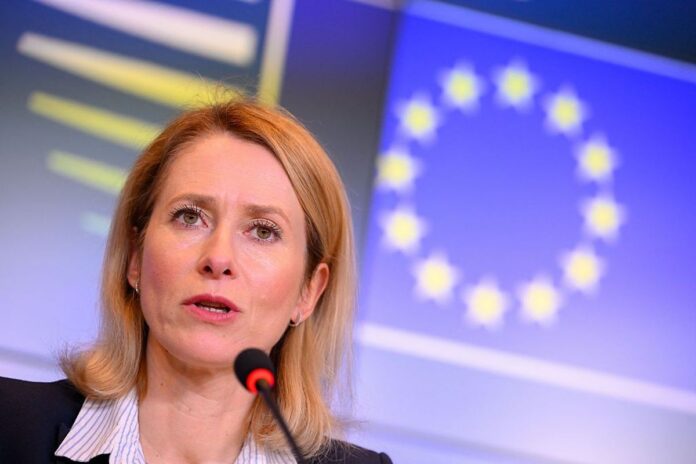
What makes the encounter more than a diplomatic formality is the argument happening around it, not inside the ministry. In Brussels, senior officials are uncertain about what the E3 format actually represents. “They don’t speak for the 27, that’s clear,” one senior European official said. The European Commission’s foreign affairs spokesperson Anitta Hipper was diplomatically careful when asked about the meeting, saying only that negotiations take place in various formats and that the EU currently sees no signs of Russia being open to a lasting peace. Some member states are sharper. Lithuanian Foreign Minister Kestutis Budrys said Europe was already doing Moscow a favor simply by debating who among its leaders Russia would find acceptable as an interlocutor. “I am afraid that we are pleasing the Russians already with discussions about who can negotiate,” he told the Kyiv Independent.
That skepticism points to something the meeting itself could not resolve. Europe has long operated on the assumption that demonstrating seriousness – turning up, making a statement, coordinating positions – is a form of leverage. It is not obvious that Moscow shares that assumption. Russia’s calculus on the battlefield has not measurably shifted. Its diplomatic language has not softened. The “root causes” formulation that emerged again on June 11 is the same formulation Moscow has been reaching for since 2022. Sending three ambassadors to hear it in person changes nothing about the underlying architecture.
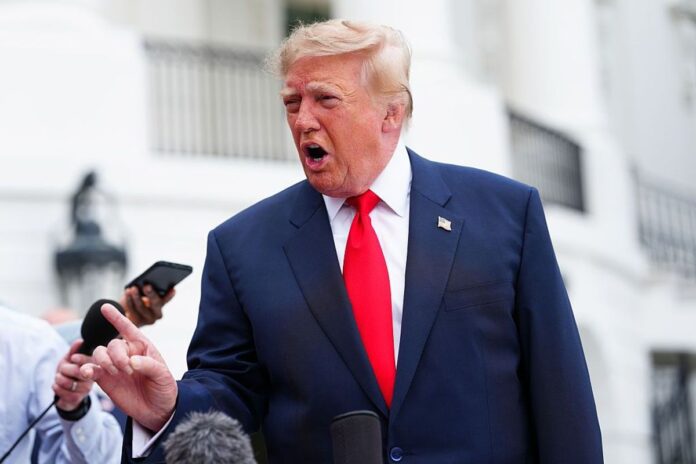
The E3 exercise also has an audience that is not in Moscow at all. European officials briefed on the visit said, according to ANSA, that the three governments are partly trying to demonstrate to U.S. President Donald Trump that Europe is prepared to carry diplomatic weight – a signal that Washington can step back from the Witkoff-Kushner track without abandoning the broader effort to end the war. The argument, as one Brussels official put it: “Trump has said this is a European war. We are showing him we are doing our part.” Whether that argument reaches Trump in any form that changes his posture on Ukraine is an open question – and no one in Brussels will say with confidence that it does.
The Kremlin has said explicitly that it does not consider Europe a neutral mediator while European governments continue supplying Kyiv with weapons and financial support. The E3 London framework was built by governments that are among Ukraine’s principal backers. Moscow’s argument is not new: the same parties cannot simultaneously arm one side and claim to arbitrate between the two. The ambassadorial visit changed neither of those conditions. Galuzin heard the message out and sent the envoys home with Russia’s answer intact.
Swedish Prime Minister Ulf Kristersson had recently argued that any European diplomatic architecture should be anchored in the E3. Finnish President Alexander Stubb, once a candidate for a potential European negotiator role, has since publicly declined the idea. The question of whether a single European figure could represent the continent in any meaningful talks with the Kremlin – a format that was called the E5 when it included Poland and Italy alongside the original three – remains theoretical. Putin has given no indication he is prepared for that conversation.
Zelensky is expected at the G7 summit in Italy, where a lengthy session with Trump is reportedly being arranged. If there is a moment when the diplomatic channel between Europe and Washington clarifies, it may come there – not on Smolenskaya Square, where the Russian deputy foreign minister delivered his verdict and the European ambassadors filed politely back out into the June afternoon, their joint statement already drafted, their capitals already uncertain what comes next.