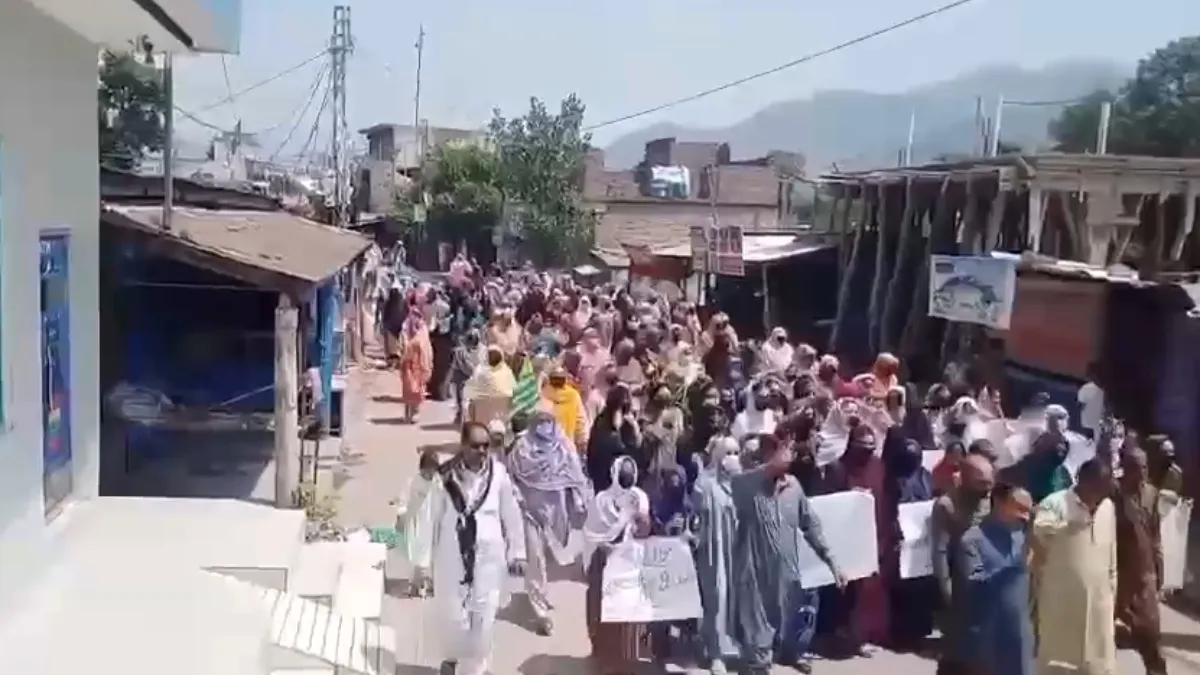

NEW DELHI – Eleven people are dead in Pakistan-occupied Kashmir after security forces fired on protesters in Rawalakot on June 8, and India’s Ministry of External Affairs has responded by calling on the international community to hold Islamabad accountable for what it described as a desperate attempt to cover up governance failures. The killings capped a week in which Pakistan banned the movement organizing the protests under anti-terrorism legislation, shut down internet access across the region, and deployed federal paramilitary forces to prevent further demonstrations.
The protests were organized by the Joint Awami Action Committee, a grassroots coalition of traders and civil society groups that formed in 2023 to demand basic governance reforms in Pakistan-administered Kashmir. The JAAC’s thirty-eight-point charter covers electricity subsidies, corruption investigations, infrastructure development, and social welfare provisions. The immediate trigger for the June demonstrations was the allocation of twelve reserved legislative seats in the territory’s assembly for refugees from Indian-administered Kashmir who live elsewhere in Pakistan. The JAAC wants all forty-five assembly seats reserved for current residents.
The Indian government framed the killings as evidence of Pakistan’s structural inability to govern territory it has occupied since 1947. “Pakistan must be held accountable for its horrific human rights violations,” the MEA said in response, accusing Islamabad of suppressing dissent through force rather than addressing grievances. External Affairs Minister S. Jaishankar has previously stated that PoK is part of India, a position New Delhi has maintained consistently since partition and reiterated with increasing frequency under the current government.
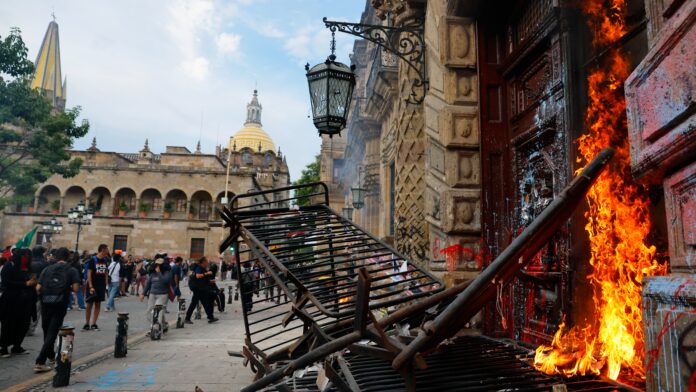
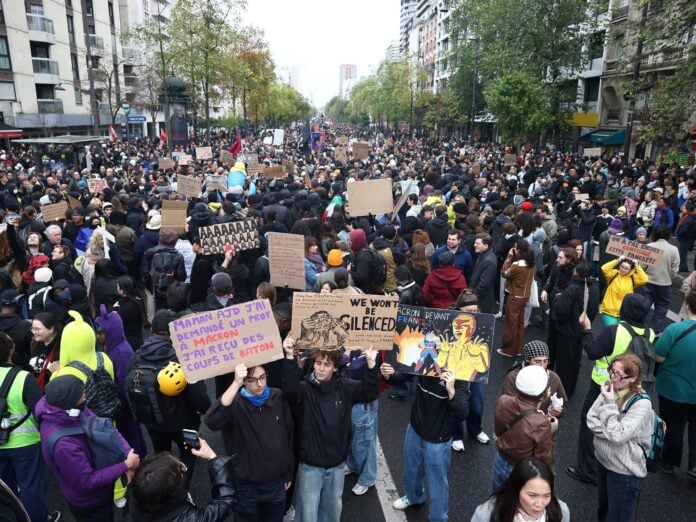
Six of the eleven dead were protesters, four were police officers, and one was a bystander caught in the crossfire. More than seventy additional people were injured in clashes across Rawalakot, the main city in Poonch district. Pakistani authorities had banned the JAAC on June 7 under the Anti-Terrorism Act of 2014, a classification that criminalizes membership in the organization and allows security forces to detain its leaders without charge. The ban came one day before the deadliest single episode of violence in the territory since the 2024 march on Muzaffarabad.
Internet access in Pakistan-occupied Kashmir remained severely restricted for a third consecutive day after the killings. The blackout followed a pattern established during earlier rounds of unrest. In September and October 2025, Pakistan imposed a communications shutdown across the territory when the JAAC released its full charter of demands. In May 2024, five people were killed during a JAAC-organized long march to Muzaffarabad, the territory’s administrative capital. The first wave of protests in 2023 began over electricity bills and food shortages, grievances that three years and multiple rounds of negotiations have failed to resolve.
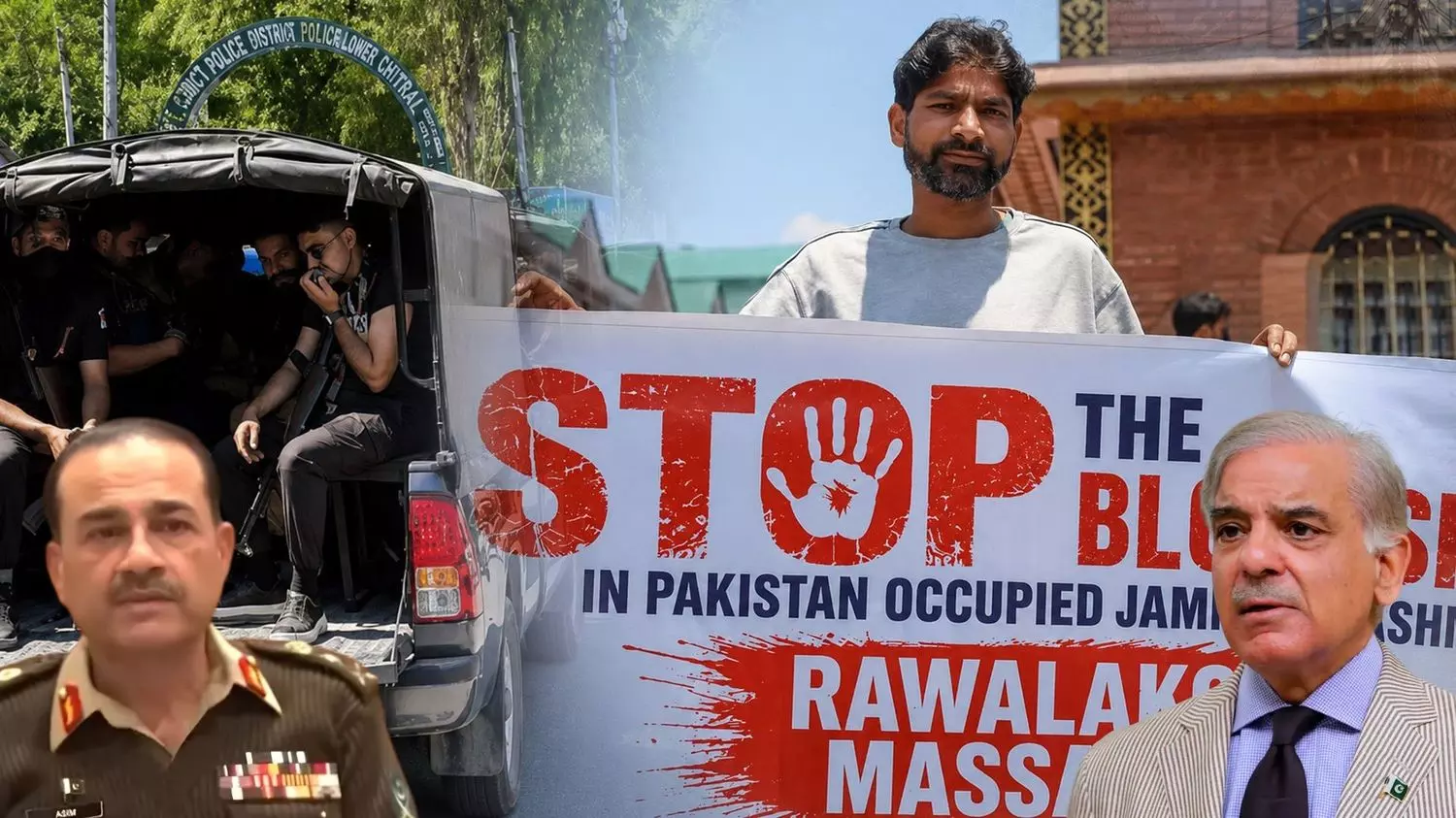
The fear animating the current unrest extends beyond the reserved seats. Indian intelligence assessments and media reports cite Article 56 of the Azad Jammu and Kashmir Interim Constitution Act of 1974, which empowers the federal government in Islamabad to dismiss the territory’s elected government and dissolve its legislative assembly. If invoked, the provision would eliminate what remains of the territory’s administrative autonomy and place all decision-making under direct federal control. Indian analysts characterize Islamabad’s dialogue offers to the JAAC as a procedural screen for Article 56 implementation.
Pakistan-occupied Kashmir is technically a self-governing autonomous territory under the 1974 interim constitution. Pakistan controls foreign affairs, defence, security, currency, and foreign trade. The local government handles day-to-day administration. In practice, Islamabad has repeatedly overridden this arrangement through communications blackouts, security force deployments, and legislative mechanisms like the reserved seats that give non-residents a voice in the territory’s assembly while restricting the franchise of its own population.
The JAAC’s leader, Shaukat Nawaz Mir, has rejected Islamabad’s offers of dialogue as a futile exercise, pointing to years of unfulfilled commitments. Government officials claim thirty-five of the JAAC’s thirty-eight demands have been implemented. The committee disputes the figure. The regional supreme court has ruled that the twelve reserved seats are constitutionally protected and would require a constitutional amendment to abolish, a step Pakistan’s federal government has shown no interest in pursuing.
Pakistan-occupied Kashmir holds legislative elections on July 27, and the reserved seats controversy will define the campaign. The Pakistan Peoples Party currently controls the assembly through a slim majority. The JAAC’s ban under anti-terrorism laws effectively removes organized civil society opposition from the electoral process, a move that India and human rights organizations have characterized as a democratic regression in a territory Pakistan claims to govern with local consent.
India has consistently demanded that Pakistan vacate the territory it occupies in Kashmir. The abrogation of Article 370 in August 2019, which ended special autonomy provisions for Indian-administered Jammu and Kashmir, sharpened New Delhi’s rhetorical claims on PoK. Indian maps now formally show the territory as part of India. The MEA’s response to the June killings fits a broader pattern in which India uses PoK unrest to argue that Pakistan’s occupation is illegitimate, positioning each round of protests as further evidence that Islamabad cannot govern the territory without coercion.
Three years of escalating protests have produced a cycle that neither Islamabad nor the protesters can break. Pakistan responds to each round of demonstrations with force, bans, and internet shutdowns. The demonstrations return, larger and with a longer list of grievances, because the underlying conditions remain unchanged. Electricity is expensive. Infrastructure is poor. Corruption is unaddressed. The twelve reserved seats remain in place. The eleven deaths in Rawalakot are the latest cost of a governance failure that Pakistan cannot fix without ceding the control it refuses to surrender.