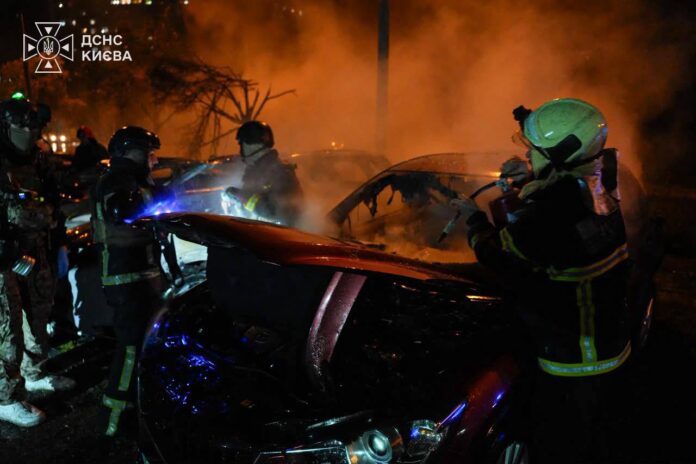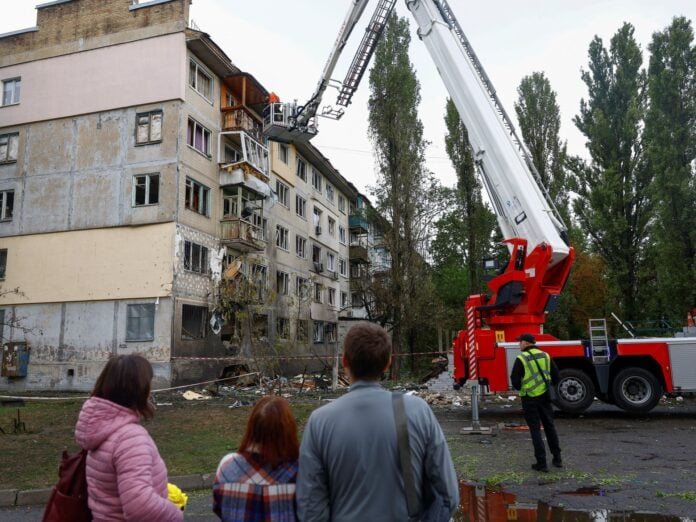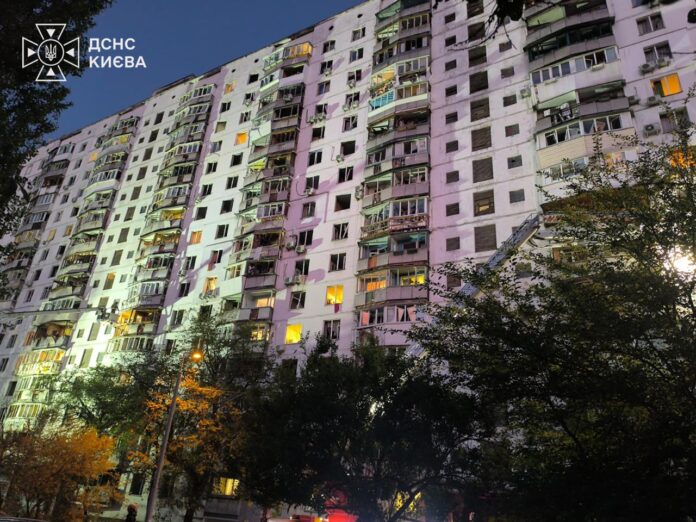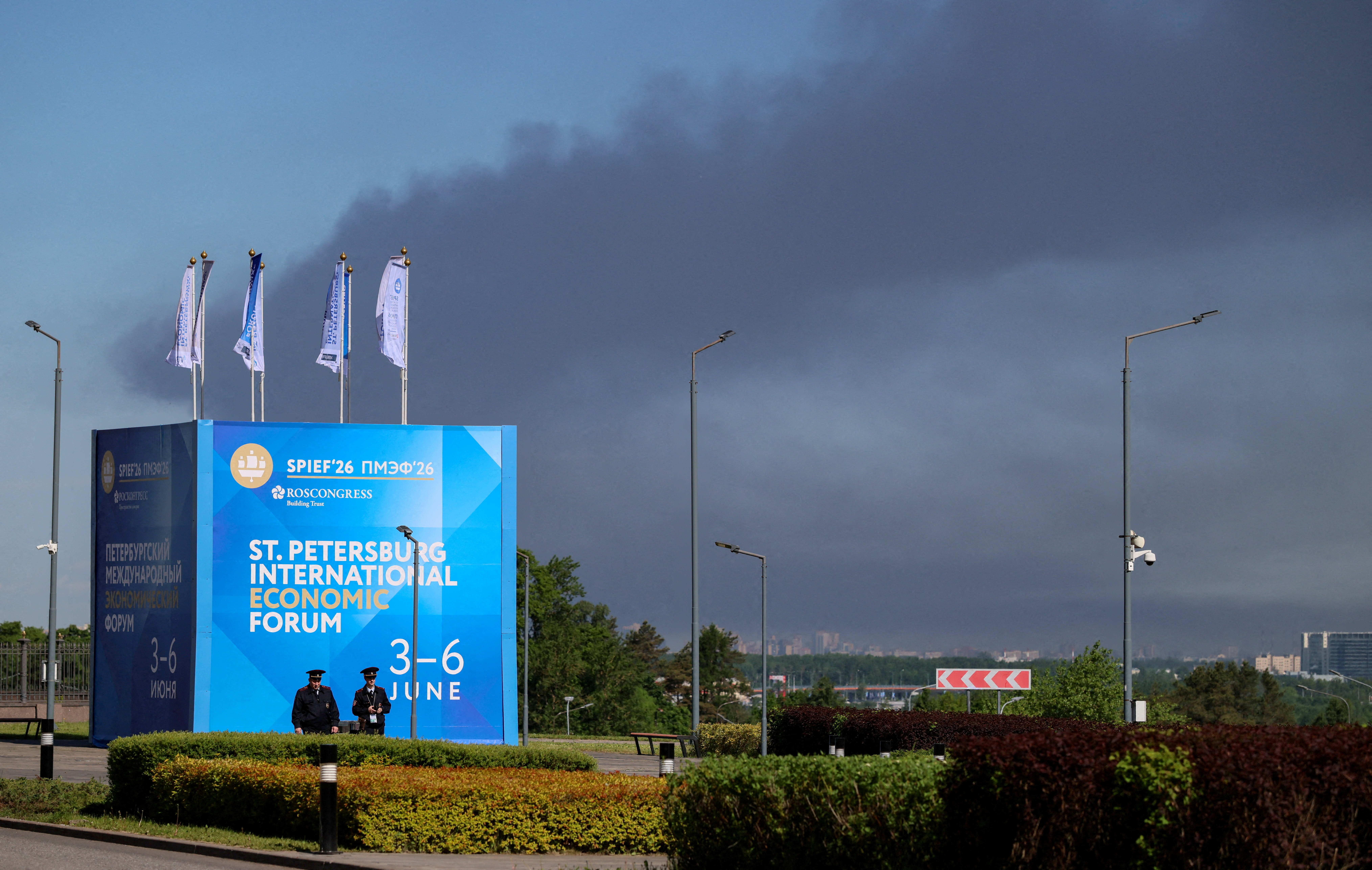

MOSCOW – The radar screens lit up across 16 Russian regions Saturday night and into Sunday morning, and by the time the Defense Ministry tallied the count at 7 a.m. Moscow time, the number was 249. That figure – the total Ukrainian fixed-wing drones Russia claims to have intercepted between 8 p.m. on June 13 and dawn on June 14 – is more than a battlefield statistic. It is a map of how far Ukraine’s overnight campaign has traveled from the border skirmishes that defined its early aerial strategy.
The Russian Defense Ministry announced the intercepts in its morning Telegram statement, saying alert air defense systems “intercepted and destroyed” the unmanned aerial vehicles across an arc of territory that stretched from Belgorod and Bryansk in the west – both within artillery range of Ukraine – to Vladimir, Yaroslavl, Kostroma, and Tver in the Russian interior, and south to the Sea of Azov and Crimea. The full list of regions named in the statement: Belgorod, Bryansk, Kursk, Voronezh, Oryol, Tula, Kaluga, Rostov, Ryazan, Vladimir, Astrakhan, Tver, Yaroslavl, Kostroma, Crimea, and the Sea of Azov.
Russia did not say whether any of the drones evaded interception or struck their targets. It rarely does. Russian officials routinely attribute any ground-level damage or fires to debris from downed drones rather than direct impacts, a framing that makes the intercept numbers impossible to independently verify. What the Kremlin’s figures do confirm, by their own accounting, is the sheer geographic breadth of the overnight operation – a detail that carries its own strategic weight.
The 249-drone overnight figure arrives against a backdrop of escalating aerial exchange. Just over a week ago, Moscow claimed to have downed 500 Ukrainian drones in a single day, a number that prompted analysts to describe the conflict as having entered an industrial phase of drone warfare. The pattern since then has not slowed. Whether measured at 95 in a single night or nearly 250, the tempo of Ukraine’s fixed-wing campaign has compelled Russia to keep its air defense networks active across regions that once sat far beyond the operational logic of the war.
Ukraine has not formally commented on the overnight operation. Kyiv does not routinely confirm individual drone raids on Russian territory, though it acknowledges the broader campaign and has increasingly described deep strikes on Russian energy and military infrastructure as a deliberate strategy to compress Moscow’s war-making capacity. The Atlantic Council noted in April that Ukraine’s mid-range strike campaign is designed to hit targets between 20 and 300 kilometers behind Russian lines, aiming to disrupt the supply chains that feed front-line units and gradually degrade the air defense systems meant to stop it.
Forcing those air defense systems to activate nightly across 16 regions is itself a form of attrition – one that depletes interceptor missiles, strains radar crews, and compels Russia to maintain expensive alert postures across a territory it cannot fully cover simultaneously. That cost does not appear in the intercept count.

Saturday night’s operation targeted regions that span more than 2,000 kilometers from Ukraine’s eastern border to Russia’s Volga heartland. Kostroma and Yaroslavl, both on the upper Volga northeast of Moscow, are roughly 1,100 kilometers from Ukraine’s front-line positions in Donetsk. Their inclusion in the overnight intercept list marks a departure from even the recent escalation pattern. Earlier this month, the June 7 overnight count of 95 drones covered 13 regions, concentrated in Russia’s south and west. Saturday’s raid added Kostroma and Yaroslavl to the map.
The Crimean peninsula and the Sea of Azov remain fixtures of nearly every overnight raid. Crimea, where Russia maintains its Black Sea Fleet and several military installations, has been a priority target since the beginning of the full-scale conflict. Earlier this month, the Kremlin publicly acknowledged a fuel crisis on the peninsula after sustained Ukrainian drone operations disrupted supply routes – an admission that the aerial campaign is generating consequences Moscow can no longer attribute entirely to debris.
The Kremlin’s acknowledgment of the Crimea fuel shortage, delivered by spokesman Dmitry Peskov, was notable precisely because Moscow had spent months insisting that intercepted drones caused no meaningful damage. That position has become harder to sustain as the frequency and reach of overnight raids increase. What Russia’s air defenses destroyed in 11 hours on Saturday night – and what, if anything, made it through – is a question the Defense Ministry did not answer.
The 16-region intercept count will pass from the headlines by Monday. Another night’s raid will replace it. That, more than the number itself, is what the overnight tally actually measures.