
WASHINGTON – For a few hours on Monday, the thread connecting a stripped royal in Windsor, a Senate candidate in Austin, and the White House Situation Room became impossible to ignore. The Epstein files did not deliver a single detonation on June 15. They delivered something more unsettling: a pattern, visible on both sides of the Atlantic simultaneously, of political actors who have mastered the performance of outrage while carefully protecting the people who made Jeffrey Epstein’s world possible.
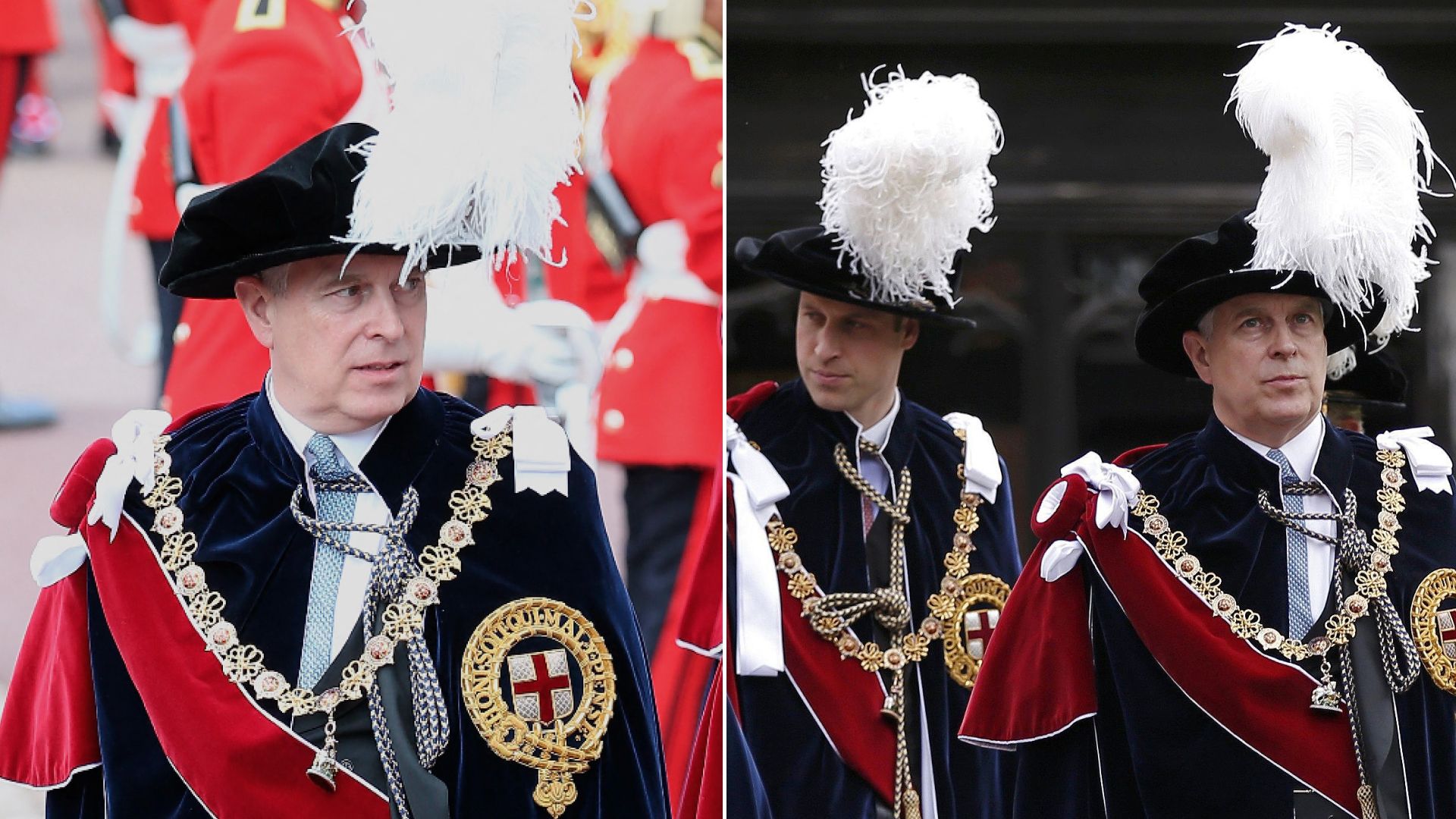
At Windsor Castle, King Charles III processed with Princess Kate and Prince William through the annual Order of the Garter ceremony, the oldest chivalric order in England. Andrew Mountbatten-Windsor, who once wore its ceremonial robes and processed in its procession, was not there. He was not invited. He was not granted even the private lunch access that had been quietly extended to him in 2025 as a compromise. According to a royal source cited by Marie Claire, the former Duke of York spent the day in a form of imposed isolation, cut off from a ritual that had once been among the most visible expressions of his royal standing. “It’s one of those days that reminds him of all that he’s lost,” the source told the Daily Express.
What he lost, and why, is not mysterious. Andrew Mountbatten-Windsor was stripped of his royal titles in October 2025 amid intensifying scrutiny of his documented ties to Epstein, and arrested in February 2026 on suspicion of misconduct in public office – accused of sharing confidential government information with the convicted sex offender. Thames Valley Police later expanded their investigation to include sexual misconduct claims. King Charles’ public statement at the time of the arrest was terse: “The law must take its course.” The Garter ban represents the institutional codification of what that statement implied. There is no further compromise coming.
That the Order of the Garter held its ceremony on the same day protesters marched outside Buckingham Palace carrying photographs of Andrew alongside Epstein – placards reading “Down With the Crown” raised two days earlier during Trooping the Colour on June 13 – was not accidental timing so much as the natural rhythm of a scandal that has refused to go away. The institution has moved to sever the connection formally. The public has moved to demand an explanation for why it took so long.
The British chapter of this reckoning has a certain tragic clarity to it. The American chapter, unfolding simultaneously, does not.
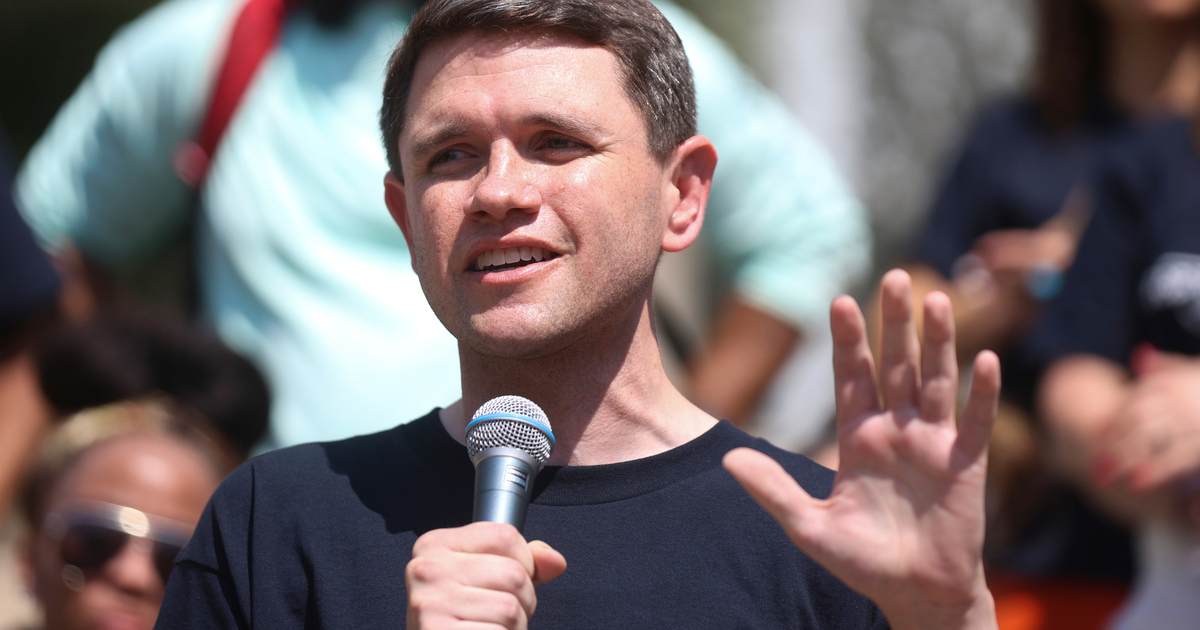
In Texas, state Representative James Talarico – the Democratic candidate challenging Republican Ken Paxton for a U.S. Senate seat – has spent months making Epstein a centerpiece of his campaign. He demanded the full release of the files. He attacked Paxton by drawing explicit comparisons to Epstein’s network. He vowed to pursue every powerful person who had enabled the convicted offender. “The American people deserve to know the full truth about Jeffrey Epstein and every powerful person who enabled him,” Talarico posted on X in November 2025. “Every name. Every flight log. Every cover up. All of it.”
What Talarico did not address was the source of much of the money that paid for the ads making that case. The Lone Star Rising PAC, which spent heavily on Talarico’s behalf during the primary, received $1.5 million from LinkedIn co-founder Reid Hoffman, the Texas Tribune reported in May. Hoffman, whose broader Democratic donor network has made him one of the most consequential financiers in American progressive politics, acknowledged visiting Epstein’s private island in 2014 and continued communicating with the offender after his 2008 conviction on prostitution charges involving a minor. Hoffman expressed regret and attributed the visit to an MIT fundraising event, framing his association with Epstein as a mistake born of insufficient research. What he has not offered – and what Talarico has not demanded – is any accounting of how deeply that relationship ran.
Talarico, who has also campaigned against the influence of billionaires in politics and pledged to push for banning super PACs, has not publicly returned the Hoffman-linked money, condemned the donor, or acknowledged the tension. His campaign has not said whether it was aware of the connection before accepting the funds. That silence is its own kind of statement.
The third leg of Monday’s convergence came from Washington itself. Raw Story reported that the vice president’s office, led by JD Vance, was among the senior administration figures involved in internal White House discussions about the Epstein files – meetings that the New York Times Magazine earlier reported had taken place in the Situation Room. The framing from administration critics has been consistent: the space most associated with genuine national security deliberations was used, at least in part, to strategize around how to manage disclosure of material that implicates people close to the president. What specific decisions were made in those meetings, and by whom, remains unknown. The White House has not confirmed the accounts.
Taken individually, each of these three developments has its own momentum and its own political constituency. Taken together on a single day, they describe something more durable: a structural resistance to accountability that transcends any one party or any one country. The British monarchy stripped Andrew of his titles only after years of pressure, two Virginia Giuffre settlements, and a criminal arrest. The Texas Democratic primary elevated a candidate running explicitly against Epstein’s world while that candidate’s super PAC was being funded by someone who had visited Epstein’s island. The American administration that promised transparency on the files is accused of using the government’s most sensitive meeting room to contain them.
EH has previously reported on the expanding Thames Valley Police investigation into Andrew Mountbatten-Windsor, which now encompasses sexual misconduct claims in addition to the original public office misconduct allegations, and on the broader institutional crisis the Epstein files have triggered across British institutions. What neither of those investigations has yet produced is a clear accounting of who made the decisions that kept Andrew in royal standing for as long as he was – and what those decision-makers knew.
That uncertainty is the thread connecting Windsor to Austin to Washington. The machinery of protection – the quiet compromises, the private lunches, the bundled donations, the classified briefing rooms – operated largely out of public view for years. What the Epstein files have done, document by document, is drag the machinery into the light. Whether any of that exposure translates into legal consequence, electoral consequence, or institutional reform remains, on June 15, 2026, an open question. What is no longer open is whether the pattern exists.
It does. And it runs through some of the most carefully maintained reputations in the English-speaking world.