
LA GUAIRA, Venezuela — When a group of women in Playa Grande saw a police inspector rummaging through the wreckage of their collapsed apartment complex with a bag filling up with $100 bills, they did not call for help. They grabbed the money and tore it apart with their hands.
The video spread across Venezuelan social media within hours. By Tuesday, four officers from the country’s Scientific, Penal, and Criminal Investigations Corps — known as the CICPC — had been expelled from the force and detained for stealing cash from the rubble of Vallarta residences in La Guaira state, the coastal region that absorbed the worst of the twin earthquakes that struck June 24, the Guardian reported. Six more CICPC officers were detained in Miranda state for looting materials from earthquake-damaged homes. The agency identified the four officers by name and promised to present them before the courts.
The arrests arrived as the official death toll from the 7.5-magnitude earthquake — the strongest to hit Venezuela since 1900 — reached 1,719, with more than 43,000 people still unaccounted for and search teams warning that the window for finding survivors was narrowing by the hour. What the looting cases illustrated, in a way no casualty figure could, was the depth of the institutional crisis unfolding inside the disaster zone.
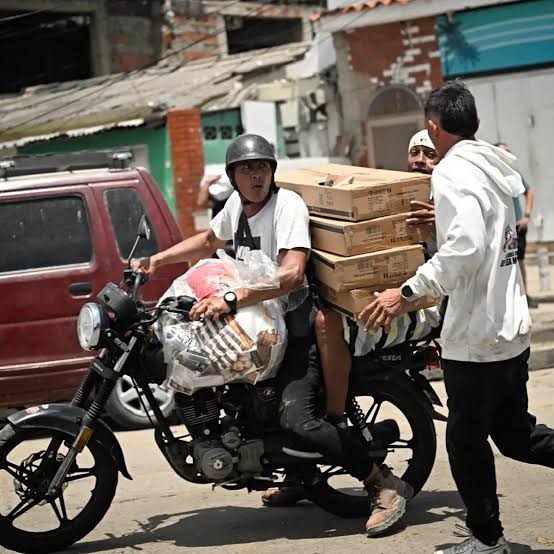
Since the earthquakes struck, police and army units have set up roadblocks at approaches to damaged neighborhoods, demanding government permits from doctors, rescue workers, and construction crews before allowing passage. One business owner trying to bring a jackhammer to help break up debris and reach survivors spent two days waiting for police to verify both his permit and the original sales receipt for the equipment, CNN reported. The machinery sat idle. Whether anyone trapped beneath the concrete the jackhammer was meant to crack survived those two days is not known.
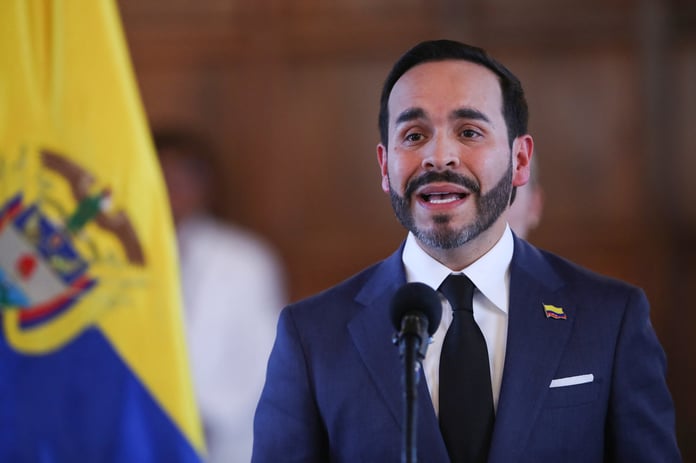
Acting President Delcy Rodríguez, who assumed executive authority after Venezuela’s political transition, has faced mounting criticism for the government’s response. A former head of Venezuela’s civil defense agency told reporters publicly that the armed forces appeared “prepared for riots but not natural disasters.” Rodríguez’s approval numbers were already declining before June 24; the earthquake has accelerated that trajectory in ways that are visible on the streets of La Guaira and Caracas alike.
Into this has walked the United States military. More than 900 American personnel are now operating inside Venezuela, with another roughly 800 staged in Puerto Rico and Curaçao as logistics hubs. The Trump administration has committed $150 million in earthquake relief, channeled through faith-based organizations including Samaritan’s Purse and Catholic Relief Services, as well as the World Food Programme and the United Nations Office for the Coordination of Humanitarian Affairs. US forces helped restart operations at Simón Bolívar International Airport and have mobilized naval and air assets to move supplies into the country.
The American presence carries political freight that is impossible to separate from the humanitarian one. The Trump administration played a role in the political transition that removed Nicolás Maduro from power, and the US military’s arrival in Venezuela — welcomed by some, viewed with suspicion by others — is a visible reminder of that. The Wall Street Journal reported that US quake relief efforts are colliding directly with public anger at Venezuela’s transitional government, creating a dynamic in which American soldiers are distributing aid in a country where the US helped engineer a change in leadership months earlier.
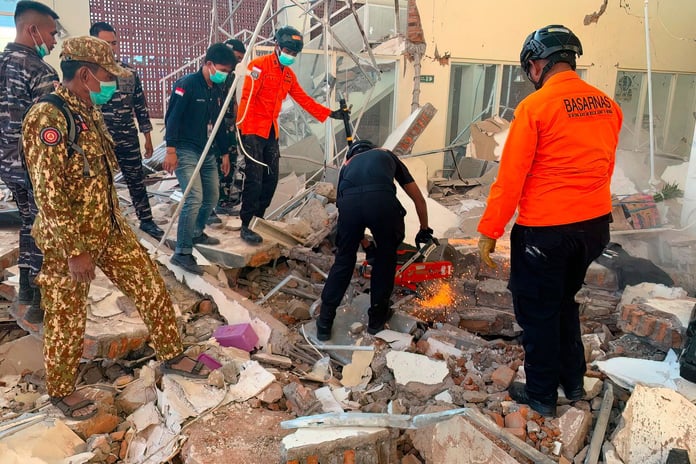
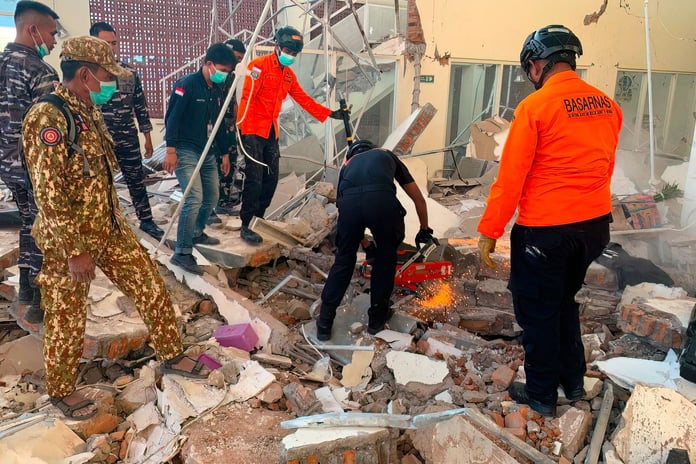
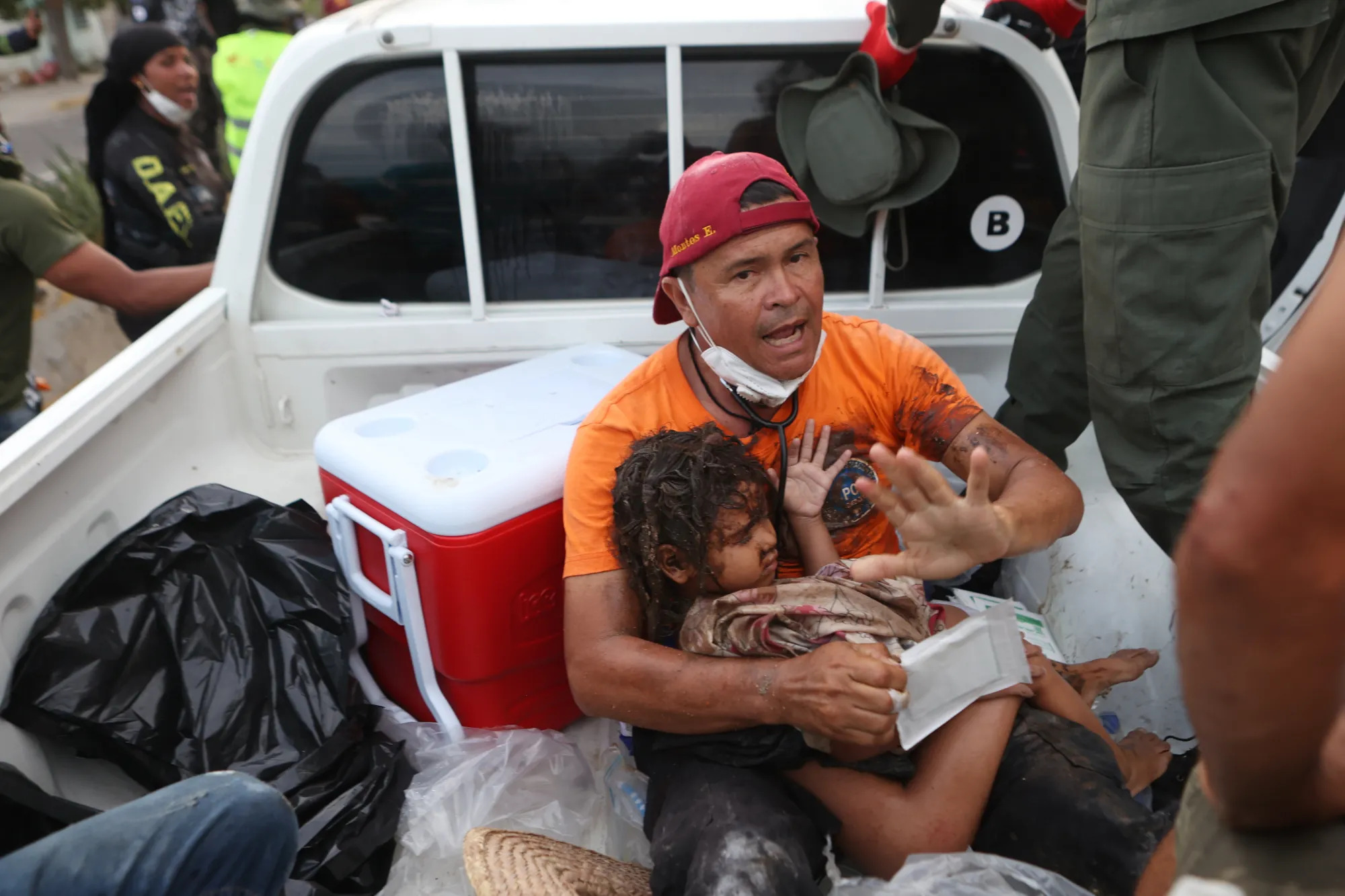
More than 2,000 rescue workers from 27 countries, accompanied by more than 160 search dogs across 40 teams, have been deployed across the affected areas. An infant and a woman trapped for more than three days were pulled out alive last week; a father and son were recovered from the La Guaira rubble four days after the quake, the kind of story that keeps crews digging in neighborhoods where the structural collapse has been near-total. The human toll has extended beyond statistics — Argentine footballer Lucas Trejo lost his wife and two young children when their La Guaira apartment building collapsed. Whether rescue momentum can be sustained through the second week, as heat and the deteriorating condition of buried structures reduce the odds of survival, remains the open question driving every operational decision.
The twin shocks — a 7.2 foreshock followed 39 seconds later by the 7.5 mainshock — struck at 6:04 p.m. local time on June 24, with the epicenter in Veroes, in Yaracuy state. The damage extended from the coast through Caracas, with at least 855 buildings damaged and 189 collapsed entirely. The USGS, assessing the scale of structural destruction, has warned that confirmed fatality figures may substantially undercount the final toll.
The CICPC’s decision to publicly name the detained officers and expel them immediately — rather than quietly reassign them — suggests the new government is aware that the looting cases have become a political liability. Whether the officers face meaningful prosecution, and whether the institutional conditions that produced the looting are addressed, is a different question. The US lifted Venezuela sanctions for earthquake relief last week, a four-month waiver that acknowledged the practical reality of the disaster while highlighting what those sanctions had cost the country’s emergency infrastructure over the years.
For the residents of Playa Grande, the question of prosecution belongs to a government they are not yet sure they trust. What they knew, in the moment a police inspector arrived at the ruins of their building with an empty bag, was that tearing up the money was the only tool immediately available. It worked, in the way that small acts of defiance work: it stopped this particular theft, on this particular afternoon. It did not change what the bag represented about the institutions standing between them and recovery.
Related Posts