
WASHINGTON — The United States Justice Department sued California on Wednesday to halt a newly enacted law banning retail sales of Glock and Glock-style handguns, the most popular pistols sold in the state, and simultaneously challenged a decades-old list that severely restricts which handguns may be legally purchased there.
The 17-page complaint, filed in federal district court in Los Angeles, argues that both restrictions violate the Second Amendment. The lawsuit escalates a months-long standoff between the Trump administration and California’s Democratic leadership over some of the nation’s most ambitious gun control measures.
“The Second Amendment is a sacred right belonging to all Americans, even those in California,” Acting Attorney General Todd Blanche said in a statement. “California cannot ban the most popular type of handgun in America. We will work to stop this blatant trampling of our rights by the California government to protect the rights of lawful gun owners.”
The lawsuit targets Assembly Bill 1127, signed into law by Gov. Gavin Newsom last fall and in effect since Tuesday. The measure prohibits licensed firearms dealers from selling any “semiautomatic machinegun-convertible pistol” — a category defined to cover virtually every Glock-style gun built around a cruciform trigger bar design. California officials have argued the classification is warranted because the design can be quickly modified with small, illegal aftermarket devices, widely known as “Glock switches,” that allow the pistol to fire continuously like a machine gun.
Those conversion devices are already prohibited under federal and state law. Critics of the bill, including the National Rifle Association and the Firearms Policy Coalition, which filed their own suit last fall in Jaymes v. Bonta, contend the state is effectively punishing law-abiding gun owners for the potential misconduct of criminals.
The federal complaint also takes aim at California’s existing Handgun Roster, a registry of specific pistols and revolvers approved for retail sale in the state. A federal court previously found the roster unconstitutional, though a Ninth Circuit stay has kept it in place for three years while an appeal has worked through the courts. The Justice Department now argues that allowing both the roster and the new Glock ban to stand simultaneously makes the constitutional problem acute.
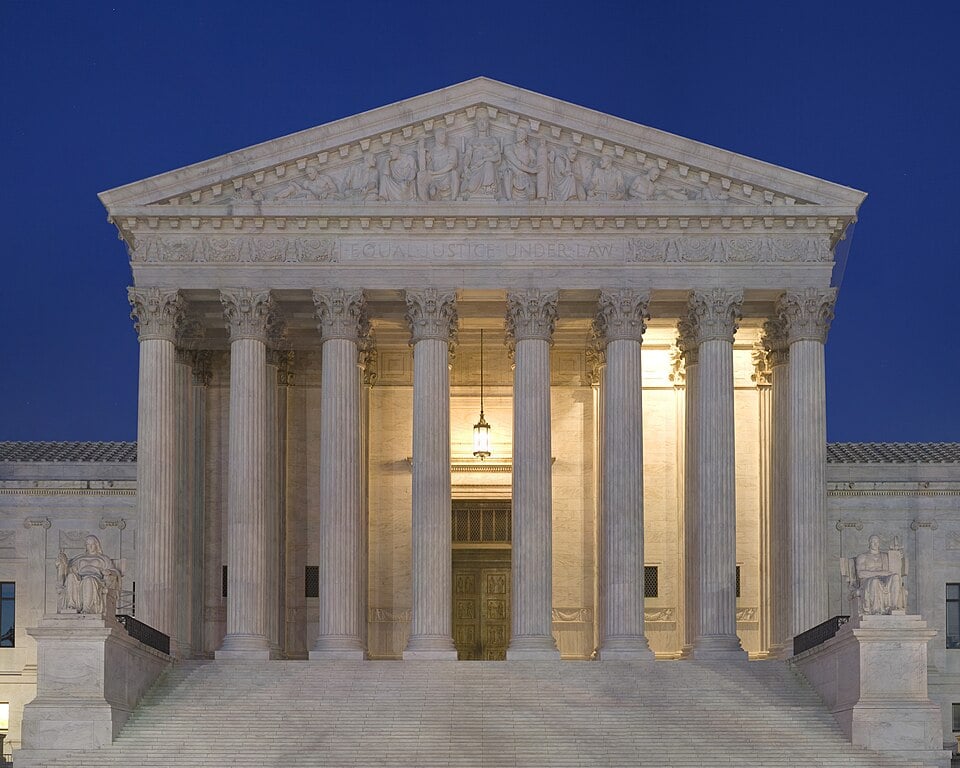
In making its constitutional case, the DOJ pointed to a recent Supreme Court decision, Wolford v. Lopez, in which the court reaffirmed that the Second and Fourteenth Amendments protect the right to carry handguns outside the home for self-defense, and reiterated that states may not prevent citizens from using commonly used firearms for that purpose. The complaint argues the Glock ban is “presumptively unconstitutional” because it removes from the market the country’s most widely sold handgun.
Assistant Attorney General Harmeet Dhillon, who leads the Justice Department’s Civil Rights Division, had put California on notice a week earlier, sending a formal letter to Newsom and state Attorney General Rob Bonta on June 24 demanding they agree to a voluntary resolution by 5 p.m. on June 30 or face a federal suit. She framed the state’s enforcement of the gun laws as a pattern or practice of law enforcement misconduct under 34 U.S.C. section 12601, the same statutory authority the federal government uses against rogue police departments.
Neither Newsom nor Bonta’s office signaled any willingness to back down before the deadline passed. “The Trump administration is once again trying to dismantle California’s commonsense gun safety laws,” Newsom spokeswoman Diana Crofts-Pelayo said in a statement Wednesday. “These laws save lives. California has proven that strong, evidence-based gun safety measures can reduce gun violence while respecting the rights of responsible gun owners. That’s why we have one of the lowest gun death rates in America and historically low crime rates across the board. We won’t be intimidated by another politically motivated lawsuit.”
A spokesman for Attorney General Bonta added that his office was “committed to defending California’s effective and constitutional gun safety laws.”
The suit is the latest in a series of Second Amendment actions the Justice Department has taken against Democratic-led states and jurisdictions. The department previously sued the Los Angeles County Sheriff’s Department over concealed carry permit delays, brought similar challenges against the US Virgin Islands and Washington, DC, and filed separate litigation targeting an AR-15 ban in Colorado. On the same day it filed the California complaint, the DOJ also sued Virginia and the Virginia State Police over that state’s ban on high-capacity semiautomatic rifles.
Dhillon acknowledged the stakes go beyond California. Her original warning letter to Newsom noted that other states had already begun to imitate the Glock ban model, and suggested that a court ruling blocking California’s version could determine whether such laws survive nationally.
The lawsuit does not affect gun owners who already possess Glock-style pistols, and the law itself does not outlaw existing ownership or private resales of the weapons. The immediate legal question is whether the ban on new retail sales can stand under the constitutional framework the Supreme Court has laid out in recent years.
The case lands before the federal courts at a moment when the Supreme Court has agreed to take up in its next term whether state or local governments can ban semiautomatic rifles, a decision that could define the outer limits of state gun regulation for a generation. California’s Glock ban may well be resolved, or complicated, well before that ruling arrives. The Supreme Court, already at the center of this administration’s most contested legal fights, will almost certainly have a voice in where these gun cases ultimately land.