
MOSCOW – The president of the International Committee of the Red Cross expressed hope on Wednesday for sustained cooperation with Russia as she met with Foreign Minister Sergey Lavrov in Moscow, pledging that the organization would continue working to ease the humanitarian toll of the war in Ukraine on families on both sides of the conflict.
“I look forward to this discussion and our continued dialogue and cooperation to be able to continue to alleviate suffering as much as we can,” ICRC President Mirjana Spoljaric said at the opening of the meeting with Lavrov, according to a statement released by the organization. She added that the ICRC would do everything in its power to help families suffering from conflict in both Russia and Ukraine.
The encounter was part of a two-day high-level visit to Moscow that Spoljaric began on Tuesday, centered on what the ICRC described as critical humanitarian issues arising from the international armed conflict between the Russian Federation and Ukraine. The organization said the trip was also an opportunity to discuss humanitarian concerns from other armed conflicts globally, including in the Middle East, the Horn of Africa, and Central Asia.
The visit comes at a moment of acute pressure on the ICRC’s access to prisoners of war held by Russia. As of April 2026, the organization said it had visited more than 8,900 prisoners of war on both sides of the conflict, though the large majority of those visits had taken place in Ukraine. In separate remarks at the same meeting, Lavrov called on the ICRC to strengthen its impartiality and accused Western governments of seeking to politicize the organization’s mandate in ways he said were detrimental to its credibility.
Spoljaric’s stated aim of keeping channels open with Moscow reflects the ICRC’s longstanding doctrine of confidential bilateral diplomacy. The organization has maintained that quiet engagement with parties to a conflict is generally more effective than public confrontation in securing humanitarian access. That approach has drawn sharp criticism from Ukrainian officials and civil society groups, who argue that the ICRC has not done enough to press Russia on its treatment of Ukrainian detainees.
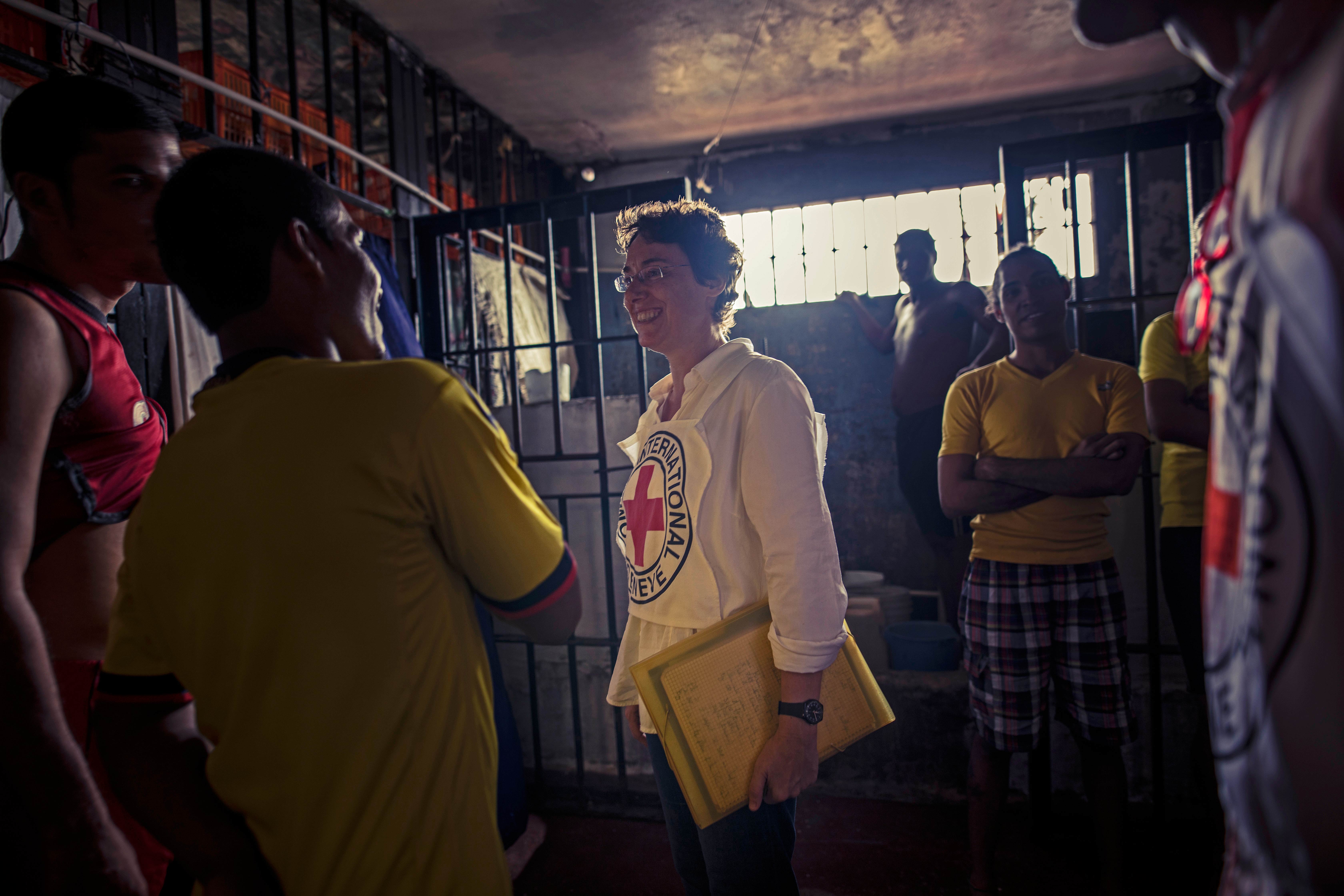
According to an OSCE expert mission report published last September, the ICRC does not have free and unimpeded access to places of detention of Ukrainian prisoners of war in Russia or in Russian-occupied territories. The mission found that visits that had occurred were few in number, did not cover all detention facilities, and were conducted without full access to all prisoners. Ukraine and a coalition of Western governments have accused Russia of systematically torturing and in some cases executing Ukrainian prisoners of war, charges Russia denies.
Russia, for its part, has said that Ukraine is failing to comply with international humanitarian law in its treatment of Russian prisoners, and has urged the ICRC to press Kyiv more forcefully on the issue. Lavrov’s ministry said after the meeting that he had drawn Spoljaric’s attention to what it described as “numerous facts of Ukraine’s violation of international humanitarian law, including in the context of the treatment of prisoners of war and civilians.” That characterization is disputed by Ukraine and has not been independently verified.
The ICRC has reiterated that it raises concerns about the conduct of all parties to the conflict through its confidential diplomatic channels, and that it expects compliance with the Third Geneva Convention from both Russia and Ukraine. Under that convention, parties to an international armed conflict are obligated to grant the ICRC immediate and repeated access to all prisoners of war wherever they are held.
Spoljaric’s Moscow schedule included separate meetings with Russian officials beyond Lavrov, part of what the ICRC described as its ongoing humanitarian dialogue with Russian authorities. Among the issues on the agenda were the protection of civilians and civilian infrastructure, the fate of missing persons, and access for ICRC delegates to all places of detention. Since the start of the full-scale war in February 2022, the ICRC has said that thousands of families on both sides of the conflict remain without any verified information about relatives who are unaccounted for or held captive.
The visit underscores the fraught diplomatic terrain the ICRC must navigate as it attempts to maintain its presence and access in a conflict where both sides have accused the organization of favoritism. Spoljaric has repeatedly emphasized that the ICRC’s neutrality is not passivity, and that the organization pursues its mandate through engagement rather than denunciation.