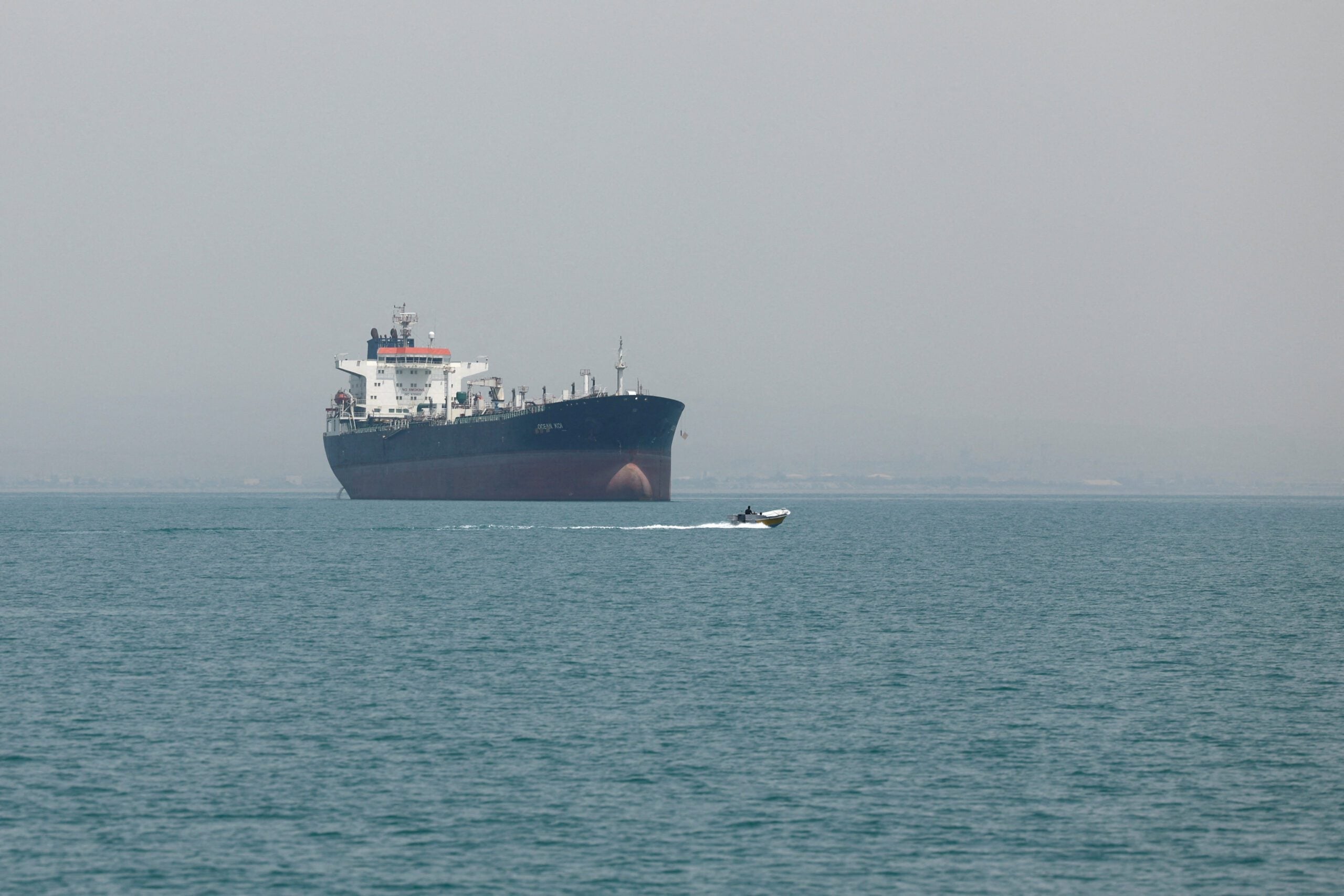

TEHRAN/DOHA – On July 2, while Iran’s deputy foreign minister was describing “positive progress” in indirect talks with American negotiators in Qatar, Iran’s joint military command issued a statement warning tankers transiting the Strait of Hormuz that any deviation from Tehran-approved routes would bring “an immediate and forceful response from the armed forces, endangering the security of the violating vessels.”
The two statements came from the same government. They were not contradictory in the way that would indicate factional conflict or institutional confusion. They were the same policy delivered in two registers: the diplomatic register, which described a new communications hotline and partial movement on $6 billion in frozen assets, and the military register, which described what happens to ships that test the route regime while the diplomatic process remains unresolved.
The route requirement has been operational since mid-March. Al Jazeera reported that when Oman and the International Maritime Organization announced a transit corridor in June that partially bypassed Iran’s direct control, the IRGC Sepah Navy immediately broadcast that transit was “only possible with Sepah Navy permission on designated route” and that vessels without authorization or with AIS transponders disabled would be “responsible for any consequences.” Within hours, a Singapore-flagged cargo vessel was struck by what US officials described as an Iranian projectile while using the Omani-approved route.
The pattern repeated on June 27. Iranian forces fired on commercial vessels in the strait; US forces struck Iranian coastal radar and military sites in response. The exchange produced a brief tactical ceasefire on June 28 – the US and Iran agreed to stop shooting at each other in the waterway while the Doha round proceeded. Kpler reported 34 verified vessel crossings on June 30, routing through the fragmented corridor across Iranian and Omani-adjacent lanes, before the July 2 talks concluded with the joint military command’s warning still in effect.
The Doha round addressed Hormuz directly. US negotiators argued that Iran would gain substantially more from a nuclear deal – full sanctions relief, oil revenue at market prices, access to frozen funds – than it could extract from transit tolls and route enforcement over 60 days. Iran’s technical team, led by Deputy Foreign Minister Kazem Gharibabadi, heard the argument. The July 2 military warning indicates the argument did not modify Iran’s operational posture in the strait. The route regime and the diplomatic process are running concurrently, and the military command does not wait for the diplomatic track to reach conclusions before enforcing the former.
What the July 2 warning does is remove the ambiguity that “positive progress” language might otherwise produce. A ship’s master deciding between Iran’s northern-shore corridor – passing through Qeshm and Larak, requiring passage permits and a transit fee assessed at $1.5 to $2 million per vessel – and the US-backed southern route through Omani territorial waters now has an explicit answer to the question of whether diplomatic momentum has softened enforcement. It has not. The military command’s statement is designed precisely to prevent that inference from forming.
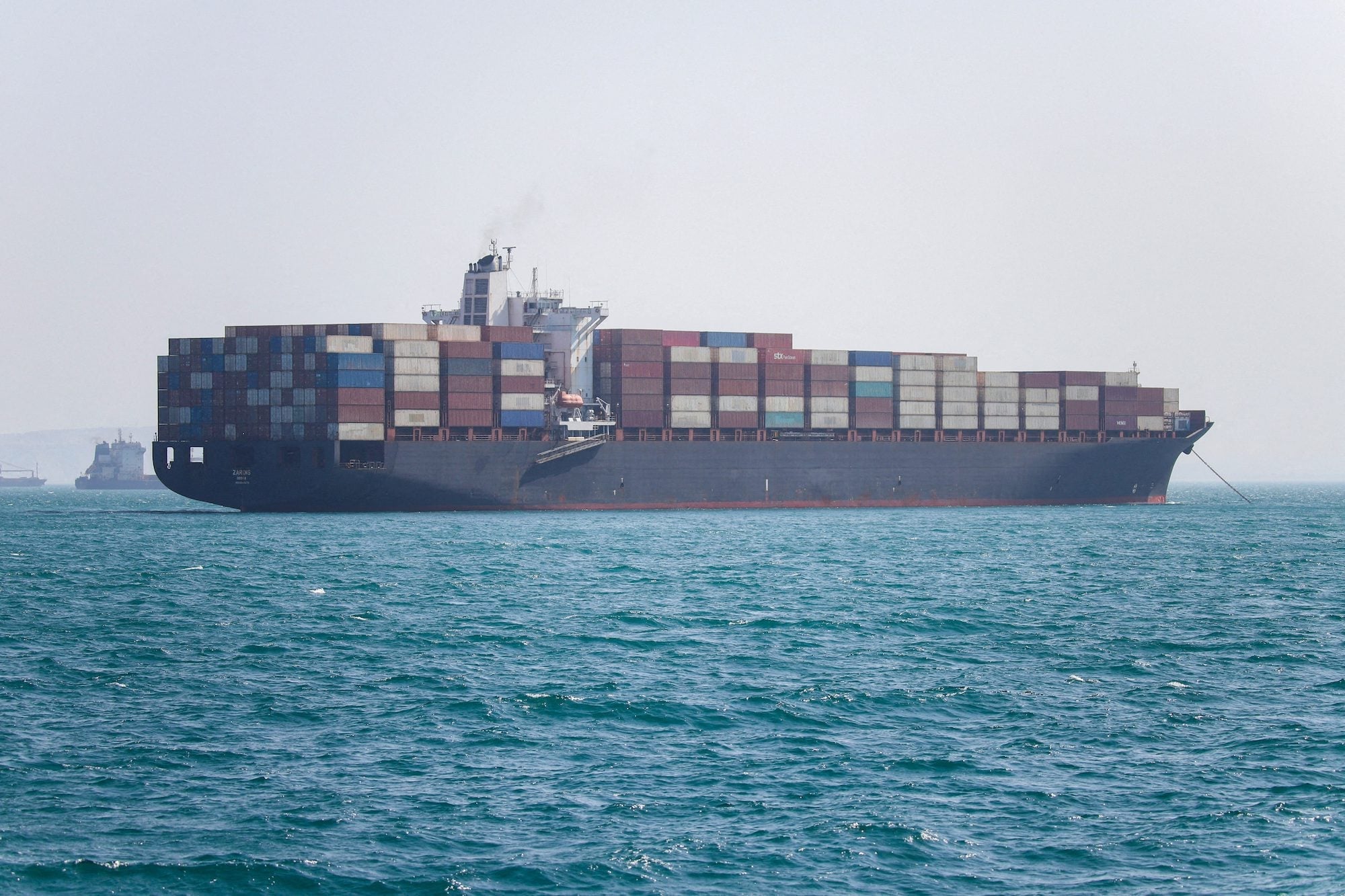
The insurance market processed both July 2 statements without ambiguity. International shipping unions and employers maintained the “warlike operations area” designation on the Strait through the week of the Doha talks – a designation that tracks demonstrated military threat, not diplomatic atmospherics. A “forceful response” warning from Iran’s joint military command issued on the same day its diplomats describe a communications hotline is not evidence that the military threat has diminished; it is evidence that the two tracks are being run in parallel and that the former remains operative until the latter resolves the underlying question.
The legislative track runs in the same direction. Iran’s parliament is advancing legislation that would formalize route enforcement as domestic statute – a fee schedule backed by law, a prohibition on vessels associated with sanctioning nations, a permanent sovereignty claim over the waterway. The military warning and the parliamentary bill are doing the same thing from different institutional angles: constructing facts around the strait that no subsequent negotiation outcome can simply erase by executive decision.
The diplomatic channel that might address all of this is currently frozen. The Doha round left the Hormuz file unresolved, and the next round cannot begin until after Ayatollah Khamenei’s burial in Mashhad on July 9. Iran’s joint military command does not observe that pause. The 34 vessels that crossed June 30 will be followed by others through the coming week, each operating under the July 2 warning, each choosing between a route that carries an Iranian transit fee and a route that carries an Iranian threat. The June 28 tactical ceasefire on active exchanges holds – for now. How long it holds after the 4th of July, with talks paused and the military posture unchanged, is a question the diplomatic track has no mechanism to answer until Mashhad.