
DUBAI — Three days was all it lasted. On Tuesday, the United Nations’ International Maritime Organization launched what it described as an orderly evacuation of roughly 600 ships and more than 11,000 sailors stranded in the Persian Gulf since war closed the Strait of Hormuz four months ago. By Thursday evening, it was over. Iran’s Islamic Revolutionary Guard Corps struck the Singapore-flagged cargo ship Ever Lovely with a drone as it attempted to leave the strait along the IMO-approved route, and the UN halted the convoy on the spot.
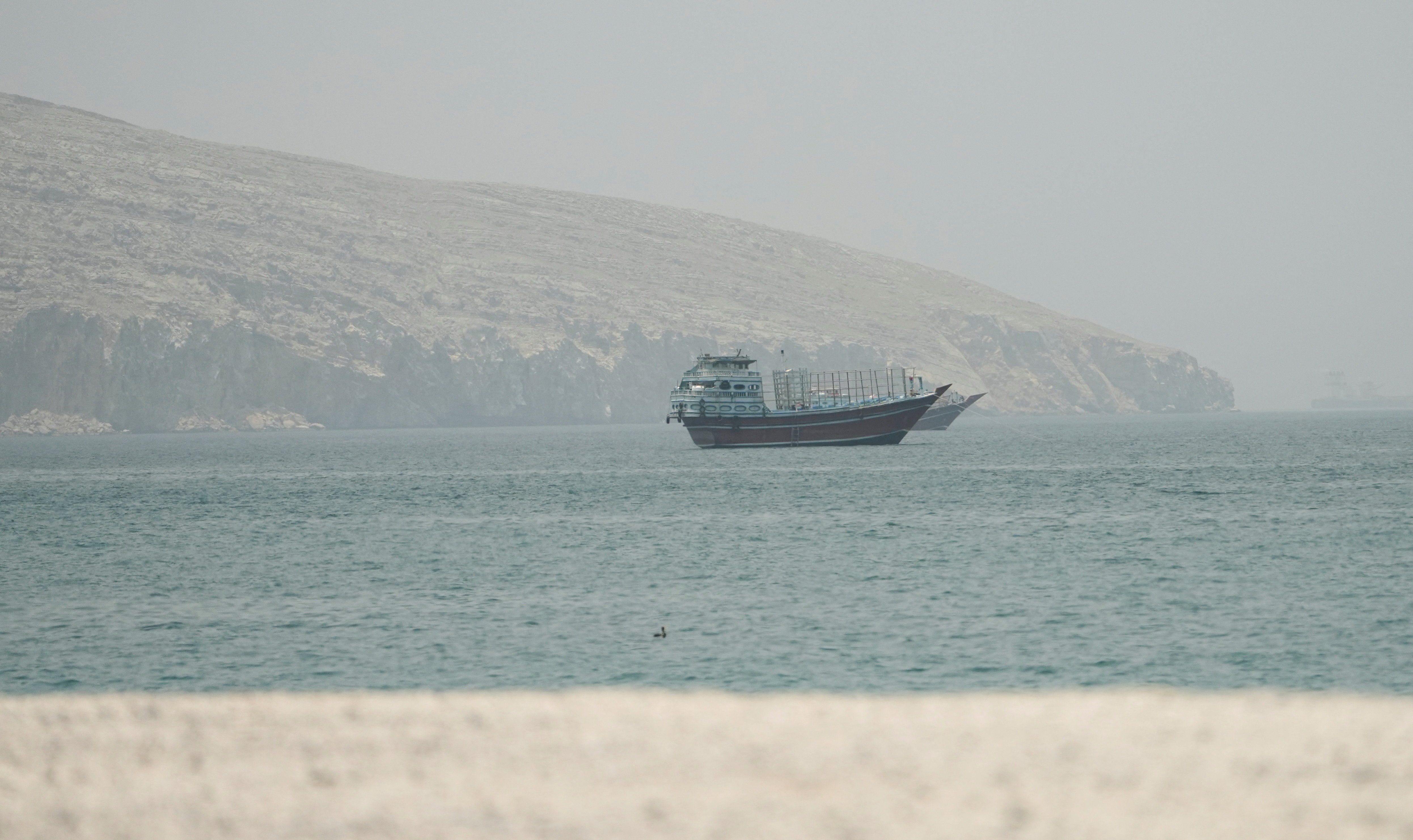
The Ever Lovely had been stuck in the gulf for more than 100 days. Loaded with cargo in Iraq, it had waited, along with hundreds of other vessels, for the corridor to clear. On Thursday morning, its captain made the attempt, following the Omani coastal route the IMO had designated with coordinates the IRGC had never agreed to use. The drone hit the ship’s starboard side about 14 kilometres southeast of Oman’s port of Dahit, damaging its bridge. No one was injured. The ship did not sink. But the evacuation stopped.
The strike had a specific logic. Iran’s Revolutionary Guard had warned the day before, as Eastern Herald reported, that no vessel should move through the channel without first calling the Guard’s navy for clearance. The Omani route, the Guard said, had been published without consulting the Islamic Republic, and ships that followed it would not be covered by Iranian safe-passage guarantees. Iran’s Persian Gulf Strait Authority reinforced that position on Thursday: “Any passage through routes outside the framework designated by PGSA will not be covered by safe passage guarantees and will not be entitled to insurance coverage or related liabilities.”
The Ever Lovely’s captain followed the route the IMO told him to follow. Iran had told him something different. The ship is owned by Taiwan-based Evergreen Marine, whose vessels have been caught in the Hormuz crisis multiple times since the war began. By Thursday afternoon, a U.S. official confirmed the strike to CBS News, though Iran did not issue a public claim of responsibility.
IMO Secretary-General Arsenio Dominguez announced the pause within hours. “To ensure a coordinated approach and navigational safety,” he said, the evacuation plan would be halted “until further clarity is obtained,” in order to reconfirm that the necessary safety guarantees remained in place, Al Jazeera reported. The 11,000 seafarers whose passage home had been scheduled in batches over the coming weeks remain at anchor in the Gulf.
The root of Thursday’s confrontation lies in a decision made without Iran at the table. When the US and Iran signed the memorandum of understanding at Bürgenstock last week, the document committed Tehran to using its “best efforts” to ensure toll-free passage for 60 days. It did not specify routes. Oman subsequently announced a new transit corridor, saying it had coordinated the line with the IMO. The IRGC’s position, stated Wednesday and backed by force on Thursday, was that the corridor’s publication was a unilateral act that Tehran was not consulted on, and that the only routes through the Strait of Hormuz are the ones Iran designates.
US Secretary of State Marco Rubio addressed the transit fee dispute on Thursday. “No country on Earth has a right to charge for the use of international waterways,” Rubio said, “and that will never be an acceptable condition of any deal.” The American position is that the memorandum of understanding requires Iran to maintain safe passage; Tehran’s reading is rather different. Iran has said it took on no new route-related obligations at Bürgenstock, that the question of who governs the strait was not resolved there, and that route authority belongs to it regardless of what Oman and the IMO publish on a navigation chart, CNBC reported.
Iranian Foreign Minister Abbas Araghchi moved to open a separate channel after the strike. He called Omani Foreign Minister Badr Albusaidi and the two agreed to hold talks on what Araghchi described as “the future administration” of the Strait of Hormuz, a phrase that positions Tehran as a co-author of any arrangement that emerges from the 60-day window. Iran’s negotiating posture since the shooting stopped has been consistent: the strait is Iranian water, governed on Iranian terms, and the question of transit fees and passage authority is Tehran’s to determine once the current pause expires.
The confrontation over the Ever Lovely is the first serious test of whether the Bürgenstock memorandum can hold. That paper committed both sides to a 60-day push toward a final agreement on the nuclear file, on sanctions, and on permanent Hormuz governance. What Thursday demonstrated is that the preliminary agreement papered over a disagreement that was never actually bridged: two incompatible readings of who has authority over passage through the strait, and what “toll-free” means when the waterway in question narrows to roughly two miles of navigable lane in each direction.
Whether the IMO convoy resumes, and under whose navigation framework, is the question the coming days will test. Iran and Oman have agreed to talk. Rubio has not moved. The Ever Lovely’s bridge has been repaired. The 11,000 sailors are still waiting.