
LOS ANGELES — Six of Hollywood’s most recognizable faces appeared this week in a video they never agreed to make.
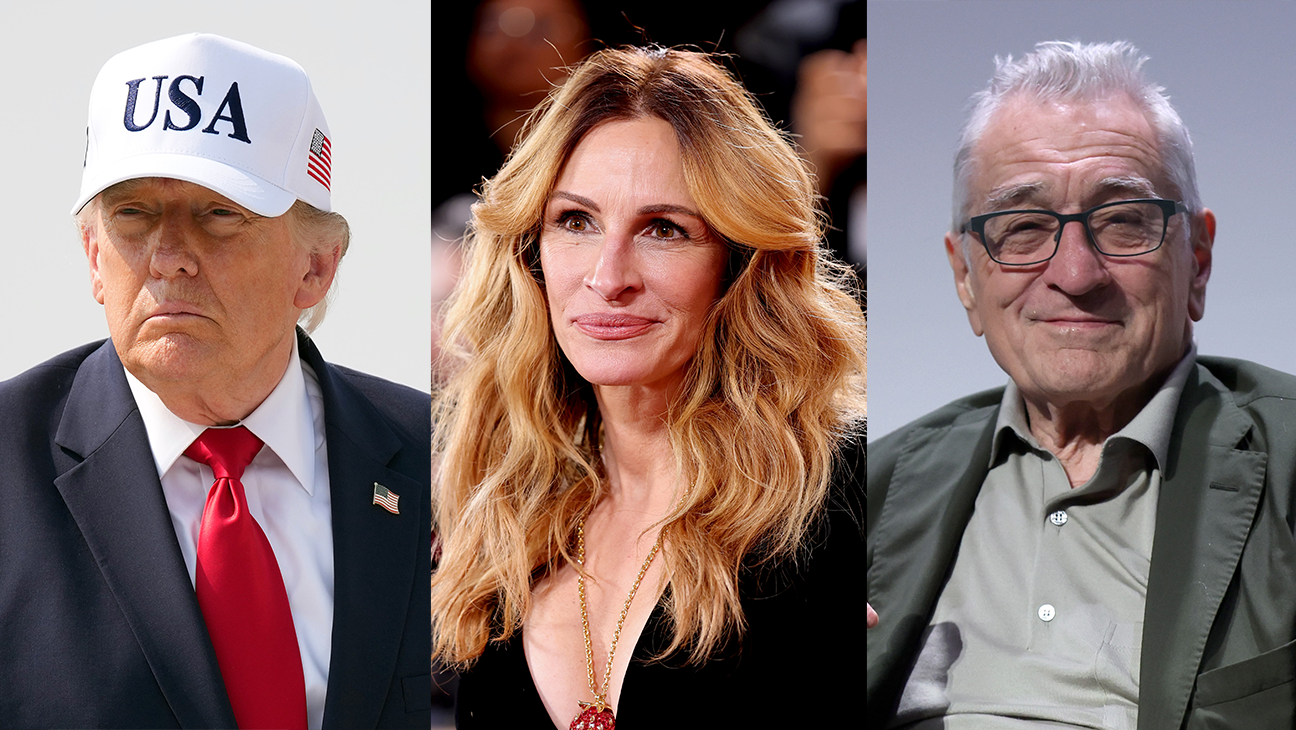
President Donald Trump posted an AI-generated video to his Truth Social platform Wednesday using the likenesses of Julia Roberts, Robert De Niro, Rosie O’Donnell, Whoopi Goldberg, John Leguizamo, and Edward Norton to mock what he labeled “Trump Derangement Syndrome.” None of the six authorized the use of their likeness. Styled to mimic a pharmaceutical advertisement, the clip cast Trump as “Dr. Trump,” presenting a cure for the fabricated condition: turning off the news, saying prayers, and drinking Diet Coke.
Representatives for the actors had not responded to requests for comment by the time The Hollywood Reporter published its account of the incident.
The video carries the technical signatures of AI synthesis: expressions calibrated past the natural range of human movement, audio-visual correspondence that holds but carries the compressed quality of generated media, lighting that sits slightly outside the logic of physical space. But the significance is not in the technical execution. It is in what the technology was used for: a sitting head of government deploying fabricated audiovisual content to publicly mock named private citizens who have criticized him, using their own faces to express views they do not hold.
The choice of targets is not arbitrary. Roberts, De Niro, O’Donnell, Goldberg, Leguizamo, and Norton have each been publicly critical of Trump at various points. De Niro testified before Congress about threats to democratic institutions. O’Donnell’s public disputes with Trump extend back decades, long before his presidency. Goldberg has addressed his conduct and record repeatedly on The View. Leguizamo has been among the most prominent Latino voices in Hollywood on the administration’s immigration policies. The deepfake does not respond to any of their arguments. It classifies their dissent as a treatable condition.
That framing has a precise history. Labeling political opposition as mental illness is the language governments have used to delegitimize critics without engaging them, deployed with particular force by authoritarian regimes against artists, journalists, and public intellectuals. Applied through AI-generated video against six named Americans who never consented to appear in the clip, it takes on an additional dimension: fabricated testimony from real people, expressing positions they publicly oppose.
Trump has deployed AI-generated imagery before, typically for campaign aesthetics and social media branding. The shift here is the targeting: named critics, individual likenesses, content designed not to promote a policy position but to humiliate. The video circulated through Trump’s social media networks before reaching mainstream entertainment press. Truth Social has not published specific policies governing AI-generated content with the precision that Meta and YouTube have applied to deepfake material, and no takedown had been announced as of publication.
The legal landscape governing content of this kind remains unsettled. Several states have enacted restrictions on AI-generated likenesses in political content, though applying those statutes against a sitting president involves thresholds courts have not confronted. California, where most of the targeted celebrities live and work, maintains strong right-of-publicity protections, but those statutes were built for a media environment that assumed human labor in content creation and did not anticipate the velocity at which AI-generated faces can be distributed.
Hollywood has been navigating AI consent frameworks since the issue became central to the most recent WGA and SAG-AFTRA contract cycles. The entertainment industry’s ongoing reckoning with how artificial intelligence is reshaping the craft of filmmaking has produced some contractual language around authorized use, but enforcement depends largely on the resources of the individuals whose likenesses are affected, and those frameworks assume commercial relationships with identifiable counterparties.
The Trump video sits outside those frameworks entirely. A recent case involving the AI reconstruction of a deceased actor’s voice for a Netflix production at least unfolded within a commercial relationship, with an estate capable of consenting or refusing. Here there is no contract, no consent, and no intermediary. There are only six living people whose faces appeared in content presenting them as adherents to a mockery of their own convictions, and their representatives had not responded by publication time.
Whether Roberts, De Niro, O’Donnell, Goldberg, Leguizamo, or Norton pursue legal remedies is unknown. What the video has already demonstrated is more basic and harder to correct. A deepfake travels. The understanding that it is fabricated travels more slowly, and in different channels, to different audiences. By the time most viewers learn the clip is AI-generated, the image of six public critics apparently endorsing a framework for their own humiliation will have circulated widely enough to be self-sustaining. That, as much as any political message, appears to be the design.