
WASHINGTON — The attorney general of New Mexico is accusing the U.S. Department of Justice of withholding unredacted records that his office needs to prosecute potential crimes at Jeffrey Epstein’s former desert compound, warning that every day of federal delay is allowing an active criminal case to deteriorate.
In a letter to Acting Attorney General Todd Blanche dated June 30 and made public on Thursday, Raúl Torrez wrote that his office has spent more than 130 days trying to obtain documents from federal prosecutors and has received nothing of substance. The letter marks the sharpest public rebuke yet from a state law enforcement official over the Justice Department’s handling of the Epstein files.
“Every day that the USDOJ withholds these records, the foundation upon which a New Mexico prosecution could be built erodes,” Torrez wrote. “Witnesses relocate and become unreachable. Memories, already strained by years of trauma, fade further. Physical and documentary evidence degrades, is lost, or is rendered more difficult to authenticate with the passage of time.”
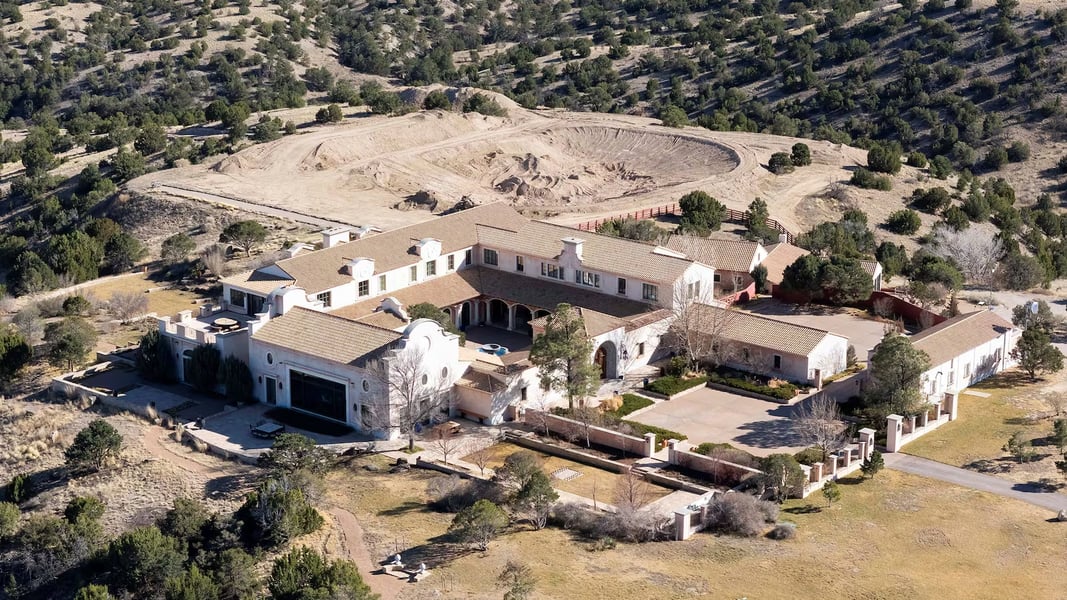
The letter details six separate attempts by the New Mexico Department of Justice to secure cooperation from its federal counterpart, beginning with a February 13 request for a specific unredacted document and all investigative materials related to Zorro Ranch, the roughly 8,000-acre property Epstein owned near Santa Fe from 1993 until his death in federal custody in 2019. An effort last month to arrange an in-person meeting during Torrez’s visit to Washington also produced no result, according to the letter.
“Despite verbal assurances of cooperation from the USDOJ, access to the requested records has not been granted, no substantive response has been provided,” Torrez wrote, calling the delay “unreasonable under any rule of reason.”
The Justice Department did not immediately respond to requests for comment. A department spokesperson has previously said the DOJ “has not refused to assist any jurisdiction” investigating potential criminal conduct related to Epstein.
Torrez reopened the criminal investigation in February after the Justice Department began releasing millions of files under the Epstein Files Transparency Act, which President Donald Trump signed into law in November. Among the newly public documents was a 2019 email received by a local radio host alleging that the remains of foreign girls were buried on the property on orders of Epstein and his convicted co-conspirator Ghislaine Maxwell. That allegation remains unverified, and it is unclear how thoroughly law enforcement examined it before this year’s renewed scrutiny.
Torrez’s letter noted that heavily redacted versions of the public files already establish that multiple survivors were brought to the ranch and subjected to sexual abuse and exploitation. The unredacted versions, he argued, contain names of survivors, witnesses, co-conspirators and other individuals whose identities are essential to the state’s ability to investigate and prosecute crimes within its borders.

At least 10 women and girls have said they were groomed or sexually assaulted at the ranch, according to court testimony, lawsuits and other records reviewed by NBC News. Prominent survivors including Chauntae Davies and the late Virginia Giuffre identified Zorro Ranch as one of the locations where Epstein abused them. New Mexico authorities searched the property in March, marking the first time any law enforcement agency had done so.
The state investigation runs alongside a parallel effort by the New Mexico Survivor’s Truth Commission, a bipartisan legislative panel created earlier this year with a $2 million budget drawn from settlements with Epstein’s banks. The four-member commission, led by state Representative Andrea Romero, has issued more than 20 subpoenas to federal agencies, banks including Deutsche Bank and JPMorgan Chase, Epstein’s estate and state offices. A survivor who testified before the commission in June described in graphic detail being abused at the ranch by both Epstein and Maxwell when she was 17.
The clash between Santa Fe and Washington reflects a deepening tension over the Justice Department’s broader handling of the Epstein files. The department released roughly 3 million pages of documents in December and January but withheld another 3 million, citing legal privileges and the need for redaction. Lawmakers on both sides of the aisle, survivors and advocacy groups have criticized the redactions as shielding powerful associates while failing to protect victims’ identities. The DOJ’s internal watchdog is now reviewing whether the department complied with the transparency act.
The standoff carries a sharp historical edge. In 2019, federal prosecutors from the Southern District of New York asked New Mexico’s then-attorney general, Hector Balderas, to halt the state’s investigation into Zorro Ranch, promising to share information that could support state charges. Balderas complied and turned over police reports, recorded interviews and other investigative materials, but has said he never received anything useful in return. He described the cooperation as “a one-way relationship” and has called the continued withholding of files from his successor “completely appalling.”
The FBI, according to emails released this year, never searched Zorro Ranch during its original investigation of Epstein, even as internal correspondence shows federal officials discussing the property in the days after his death in August 2019.
Former Attorney General Pam Bondi, who oversaw the initial rollout of files before Trump removed her from the post in April, testified before the House Oversight Committee on May 29 that she had delegated management of the file release to Blanche, who now serves as acting attorney general. The transcript of her closed-door interview, released in early June, shows Bondi invoking Blanche’s name more than 30 times. Democrats have since pushed for Blanche himself to appear before the committee.
Torrez closed his letter with a pointed reminder that his investigation is active, ongoing and directly impaired by federal inaction.
“The USDOJ’s continued withholding of unredacted records is causing real and escalating harm to the NMDOJ’s criminal investigation,” he wrote.