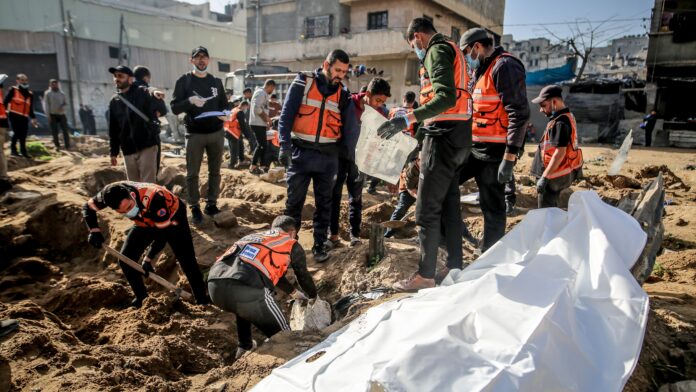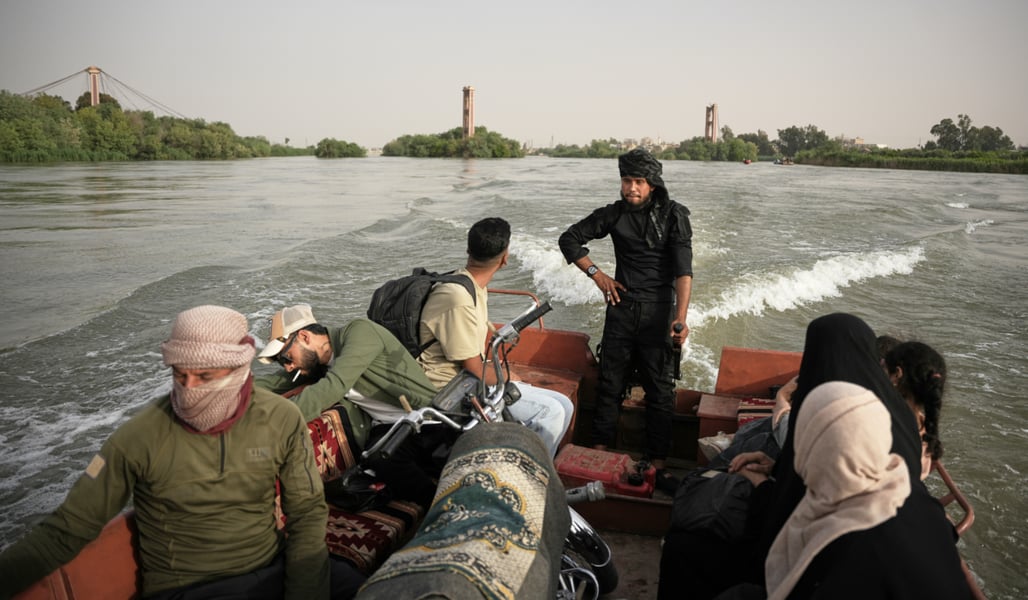

DEIR EZZOR – A ferry carrying more than 35 people struck a bridge on the Euphrates River in eastern Syria on Sunday, killing at least two children and throwing every passenger into the water. Syrian Civil Defense rescue teams pulled more than 15 survivors from the current as the search for those still missing continued into the afternoon.
The accident happened in Deir al-Zor, the main city in Deir Ezzor province, a region that spent three years under the control of the Islamic State before government and Kurdish forces recaptured it in 2017 and 2019 respectively. Much of the fixed infrastructure that once spanned the Euphrates was destroyed during the fighting and the years of displacement that followed, leaving river ferries as the primary way for many residents to cross between the city’s banks.
The Syrian Civil Defense said the vessel collided with the bridge while crossing the river, throwing all those on board into the water. By early afternoon, the rescue agency had retrieved more than 15 survivors, though it did not specify how many passengers remained unaccounted for. The two children confirmed dead were the first fatalities documented, but officials said the situation remained fluid and the toll could rise. Arab News, citing the Civil Defense, reported the casualty count from the scene.
No official explanation was given for what caused the ferry to strike the bridge. No statement came from Syrian transitional authorities in Damascus or Deir Ezzor’s local administration by Sunday afternoon. River currents in eastern Syria can run fast in summer months, and the Euphrates is wider and less predictable near Deir Ezzor than in areas further upstream.
The incident drew attention because of the number of children among those on board. The names and exact ages of the two victims were not released.
Deir Ezzor has seen a cluster of tragedies linked to infrastructure failure and displacement in recent years. The province’s road and bridge network sustained severe damage during the ISIS occupation and the subsequent military campaigns to dislodge the group. What remains has been supplemented by makeshift crossings and civilian ferries operating in conditions far below safe standards. There is no effective regulatory framework governing how many passengers a vessel may carry or what qualifications a ferry operator must hold.
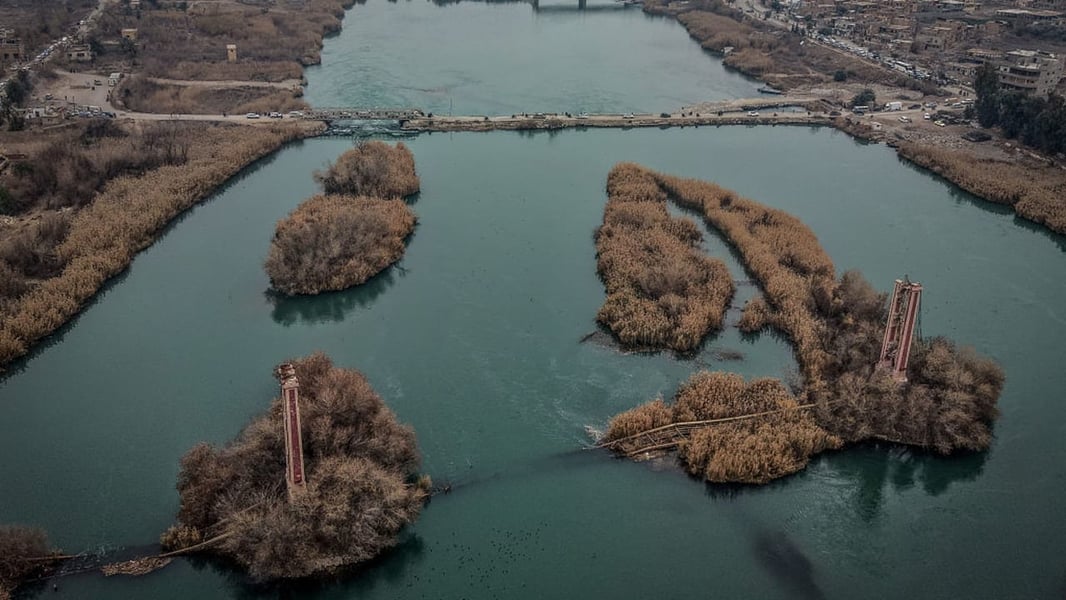
Eastern Syria’s transportation situation has not received the same reconstruction attention as areas closer to Damascus. The new Syrian government led by Ahmed al-Sharaa, which took power after Bashar al-Assad fled the country in December 2024, has focused its early administrative efforts on the capital and the western coastal regions where the country’s political institutions were concentrated under the previous government. Deir Ezzor, divided between areas under the Kurdish-led Syrian Democratic Forces and areas under central government authority, has been slower to integrate into national reconstruction plans.
International partners have moved cautiously in the east. Saudi Arabia is examining whether to reroute the India-Middle East-Europe Economic Corridor through Syria rather than Israel, a development that could eventually channel infrastructure investment toward the country, though no firm commitments have been made. Separately, the US energy firm ConocoPhillips is in discussions to develop gas fields in Syria’s east, but energy extraction projects do not translate directly into civilian bridge and road reconstruction.
Syria’s Civil Defense has been one of the few consistent emergency response institutions operating across the fractured governance landscape of the east. The agency was originally based in opposition-held areas in the north and west and has expanded its capacity since the political transition, though its resources in Deir Ezzor remain limited relative to the population it serves and the scale of accidents it is called to respond to.
Damascus has dealt with its own accumulation of shocks in recent weeks. A bomb killed nine people at a Damascus cafe on July 3, the third significant attack in the capital in six weeks, a reminder that Syria’s new authorities face simultaneous security, governance, and infrastructure deficits stretching from the capital to the Euphrates valley.
Whether Sunday’s accident prompts a review of ferry safety standards or a push to accelerate bridge reconstruction in Deir Ezzor remained to be seen. The Syrian Civil Defense confirmed that rescue operations were continuing as of the afternoon hours.