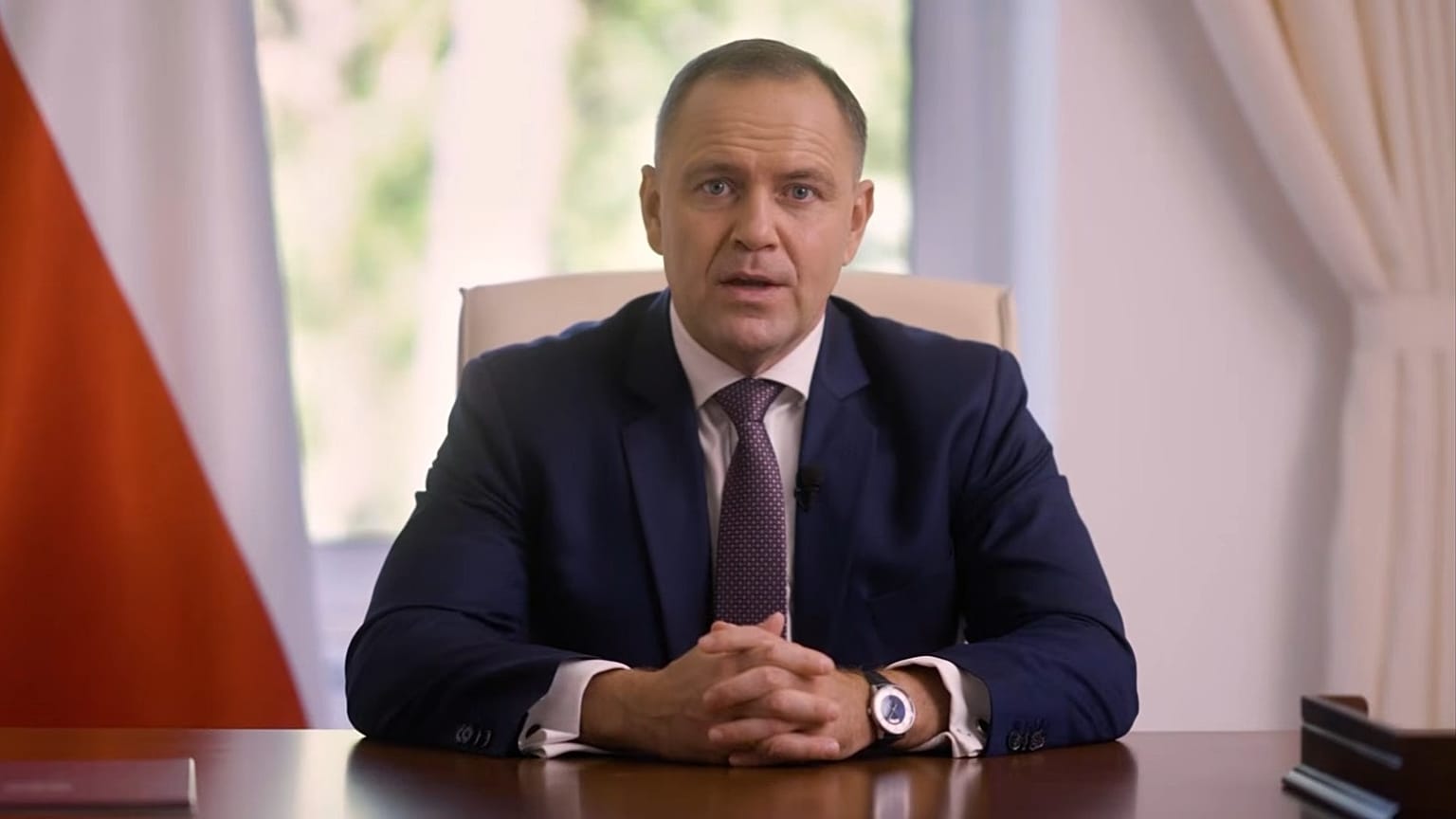

WARSAW – Polish President Karol Nawrocki vetoed legislation on Friday that would have created legal recognition for unmarried partners, including same-sex couples, rejecting a bill Prime Minister Donald Tusk’s government first submitted to parliament in December 2025 after years of pro-European promises on civil rights.
The bill, which established a “status of the closest person” for unmarried partners, would have granted couples the right to share property, access each other’s medical information, and make burial decisions. No spousal rights, no adoption recognition, and no reference to marriage were included in the legislation. Nawrocki’s veto blocked it regardless.
“I have always emphasised that nothing that is a quasi-marriage can count on my support,” Nawrocki said in announcing his decision, according to Euronews. His framing invoked the constitutional definition of marriage as a union between a man and a woman, arguing that any legal status for unmarried couples would create a parallel institution incompatible with that definition, regardless of its formal title.
Tusk responded with uncharacteristic directness. “Contempt toward people,” he said, describing the veto in two words. The formulation was intended less as political analysis than as a signal of how Tusk reads the politics of the moment: the president’s action as moral rather than procedural, a choice to deny recognition to a significant portion of the population that a majority of Poles now support.
A 2025 CBOS poll found that 62 percent of Poles supported legalizing same-sex partnerships, the highest recorded level of public support for such a measure. The gap between that support and the legislative reality now has a presidential veto attached to it rather than merely a stalemate. Overriding the veto would require a three-fifths majority in the lower house of parliament, a threshold Tusk’s coalition cannot reach given that more conservative coalition partners have expressed reservations about the bill’s scope.

The veto arrives at a dissonant moment in Polish legal history. In May 2026, Poland issued its first same-sex marriage certificate, a result of a court ruling rather than legislation. The judicial branch moved faster than the legislative branch in the same country, in the same year, moving in the opposite direction: courts extending rights that the executive and legislative majority cannot or will not formalize through statute.
Poland remains among the few European Union member states with no legal provision for same-sex relationships, alongside Bulgaria, Romania, and Slovakia. The European Court of Human Rights has repeatedly ruled that member states must provide some form of legal recognition for same-sex couples; Poland’s consistent non-compliance has generated a body of case law and enforcement proceedings that the country has not been able to fully resolve. Nawrocki’s veto extends that non-compliance rather than addressing it.
The trajectory of Tusk’s government on civil rights has been slower than its initial commitments suggested. The coalition pledged action within its first hundred days; the civil partnership bill arrived more than a year after that deadline. Governing with coalition partners whose socially conservative base was never enthusiastic about the measure required a more minimal bill than many advocates sought. The stripped-down version Nawrocki vetoed had already been substantially reduced from what advocacy groups originally requested.
For couples currently living together in Poland without legal recognition, the veto preserves a practical situation they have navigated for years. Unmarried partners, whether same-sex or opposite-sex, have no automatic right to hospital visitation, no legal standing in medical decisions about a partner’s care, and no inheritance protection without additional legal instruments. Notarized agreements and power-of-attorney documents have become the workaround framework, expensive to establish and limited in scope compared to statutory recognition.
As the incoming British prime minister apologised this month for his government’s own record on human rights and pledged stronger action, as Eastern Herald reported, the gap between European politicians’ stated values and actionable policy has widened in multiple countries simultaneously. In Poland’s case, the gap is measured not in rhetoric but in the concrete absence of a right to sit with a dying partner in a hospital room.
Nawrocki, who was elected in May 2025 with strong backing from the Law and Justice party, ran on an explicitly socially conservative platform that included opposition to same-sex civil recognition. His veto was widely anticipated. Tusk submitted the bill knowing a veto was likely, which raises questions about whether the exercise was genuinely legislative or primarily intended to position the governing coalition ahead of future electoral contests by establishing Nawrocki as the obstacle to reform.
What the veto cannot settle is the longer trajectory. Polish public support for same-sex partnerships has grown steadily for a decade, and the court-issued marriage certificate in May 2026 demonstrated that the legal architecture for recognition exists independently of what the president or parliament choose to do. The political institutions are running behind both public opinion and judicial practice. How long that gap persists, and whether the next presidential election in 2030 brings a different outcome, is the question Nawrocki’s veto has deferred but not resolved.
Related Posts