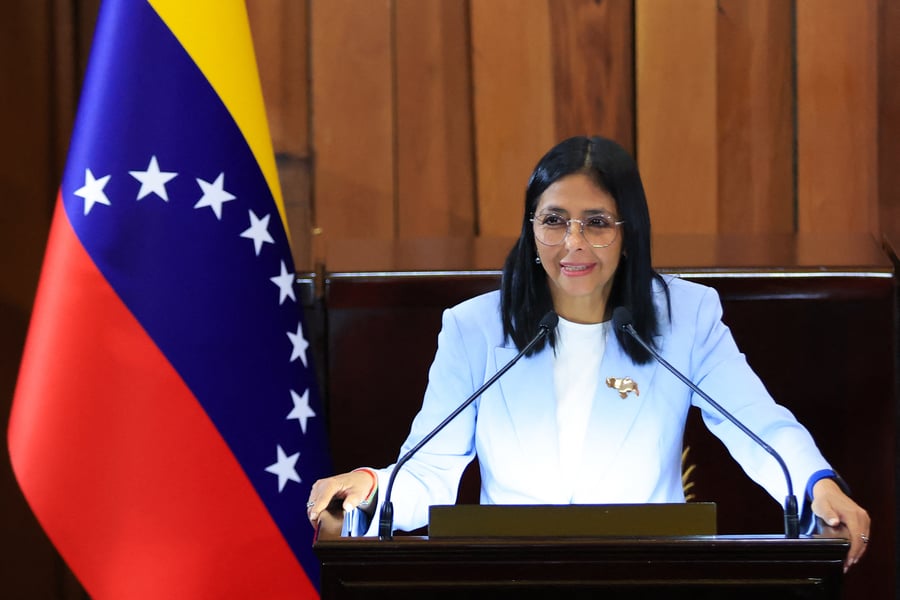
MADISON – The Democratic Party’s consolidation strategy for Wisconsin’s August 11 gubernatorial primary collapsed before it formally existed. Sara Rodriguez, the former lieutenant governor who had emerged as the establishment’s preferred candidate, withdrew after a campaign finance scandal involving her manager. David Crowley, Milwaukee County Executive, re-entered the contest July 18 carrying Governor Tony Evers’ endorsement. And Francesca Hong, a Madison state representative backed by the Democratic Socialists of America, watched the implosion from atop the only published poll of the race.
That Marquette Law School survey, conducted July 22, showed Hong at 26% in a four-way field that now includes Crowley, former Lieutenant Governor Mandela Barnes, and state senator Kelda Roys. The polling was conducted before Rodriguez’s departure and Crowley’s re-entry, making it a floor estimate at best: a snapshot of a race the party was still trying to consolidate when the surveying happened.
Hong, 35, has served in the Wisconsin State Assembly since 2020, representing Madison’s 76th district. A restaurant industry veteran of more than a decade before entering politics, she has built her campaign around what she calls “permanent affordability”: free child care, universal school breakfast and lunch, paid family leave, a 2% utility rate cap, and public banking. More than 25 local elected officials and community leaders from 13 Wisconsin counties endorsed her campaign this week. “Voters are telling us they want a new type of leadership,” Hong said, “prioritizing working-class concerns.”
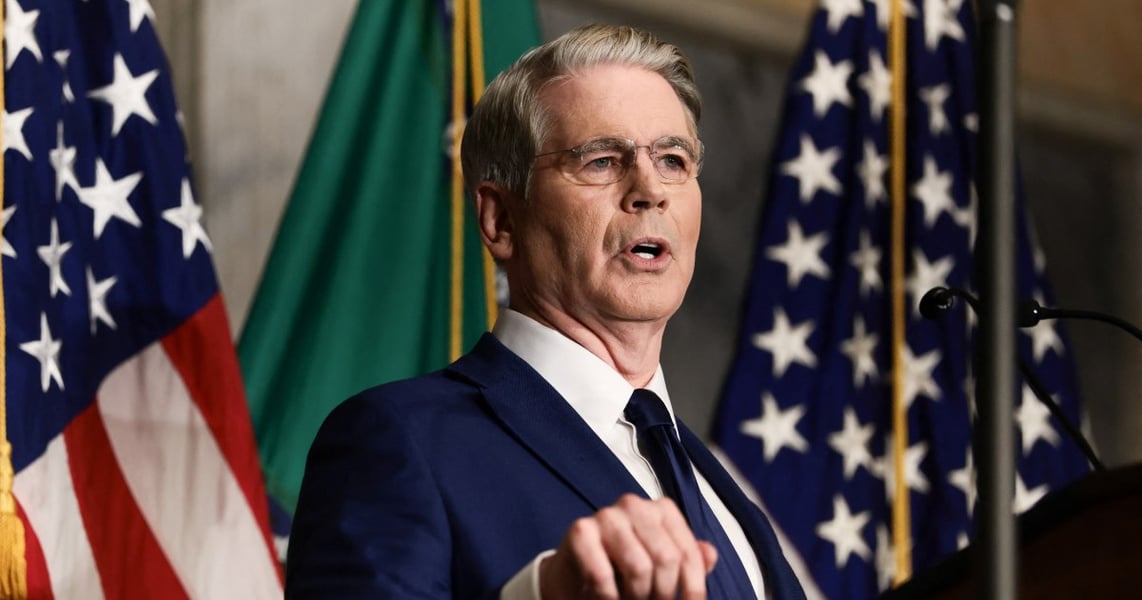
Barnes, who lost the 2022 U.S. Senate race to Ron Johnson by roughly 26,000 votes, carries the highest name recognition in the primary field. General-election polling against Republican congressman Tom Tiffany shows him ahead 47-42, while Hong runs tied with Tiffany at 44-44. The electability argument has become central to the establishment’s case for Crowley, though Crowley’s own internal polling, released last week, placed Hong ahead by 21 points with Crowley third, one point behind Barnes. What those internals mean to Crowley’s donors is a question the August 11 result will settle.
Roys, a state senator who finished third in the 2018 Democratic primary behind Evers, has sought to distinguish herself on healthcare. Where Hong, Crowley, and Barnes have backed Medicaid expansion, Roys has proposed “Keldacare,” a plan to extend the state employee insurance pool to all Wisconsin residents, citing federal Medicaid uncertainty under Trump. “Most of them are pretty darn new to politics,” Roys said of her opponents. Her tenure spans more than 30 years across both chambers.
Evers’ endorsement of Crowley, combined with the Wisconsin Laborers’ District Council backing the same week, represents the clearest signal from organized Democratic infrastructure. Crowley, 42, has served as Milwaukee County Executive since 2020 and is the only candidate running from an executive rather than a legislative seat. “We really haven’t been communicating what we’re fighting for,” he told reporters after re-entering the race, framing his candidacy as the message-discipline option in a field that includes two former lieutenant governors and a DSA legislator.

The Republican Governors Association has spent $2.2 million on attack ads this month framing Hong as too progressive to win statewide. Democrats have noted the spending with unease: the RGA typically directs money toward races it believes Republicans can win, not races it hopes to influence from the outside. Musk Wisconsin election bribery probe disrupted state political calculations earlier in 2026, raising questions about outside money and electoral integrity that primary polling cannot fully measure.
A Democratic gubernatorial win in November alone would not deliver a trifecta. Democrats would need to flip at least two state senate seats and five Assembly seats to control all three branches for the first time since 2010, a swing of more than 21,000 votes across maps drawn by Republicans. The SAVE Act’s voting restrictions and Trump’s mail-voting directive have complicated Democratic turnout planning, pushing organizers toward in-person registration efforts they had not fully anticipated.
Hong’s primary strength is the policy coalition, not the party machinery. “State Representative Francesca Hong leads with integrity,” said Ozaukee County Board Supervisor Melissa Custer, whose endorsement carried weight precisely because Ozaukee is a traditionally Republican-leaning county. Matthew Crowe, Mayor of Menomonie, was blunter: “I usually wouldn’t endorse a democratic socialist. However, Francesca doesn’t want to give free handouts. She wants to give all Wisconsinites a fair chance.”
The endorsement announcement, published through Urban Milwaukee, names officials from 13 counties across the state. Among Democratic primary voters, 54% view democratic socialism favorably, with just 10% unfavorable, according to the Marquette survey. That figure has become part of Hong’s counter-argument to the electability case: that a DSA-aligned candidate does not carry the liability in a Democratic primary that establishment strategists assume she does.
Trump’s mail ballot executive order, blocked as unconstitutional in June, remains in legal limbo. Trump’s rural support erosion in Wisconsin has shifted calculations about which Democrat runs strongest in November. Neither question resolves before August 11. What Wisconsin Democrats have heading into the primary is a four-way field: a former Senate nominee, a county executive with the governor’s backing, a 30-year legislative veteran, and a DSA state representative currently winning the only poll that exists.