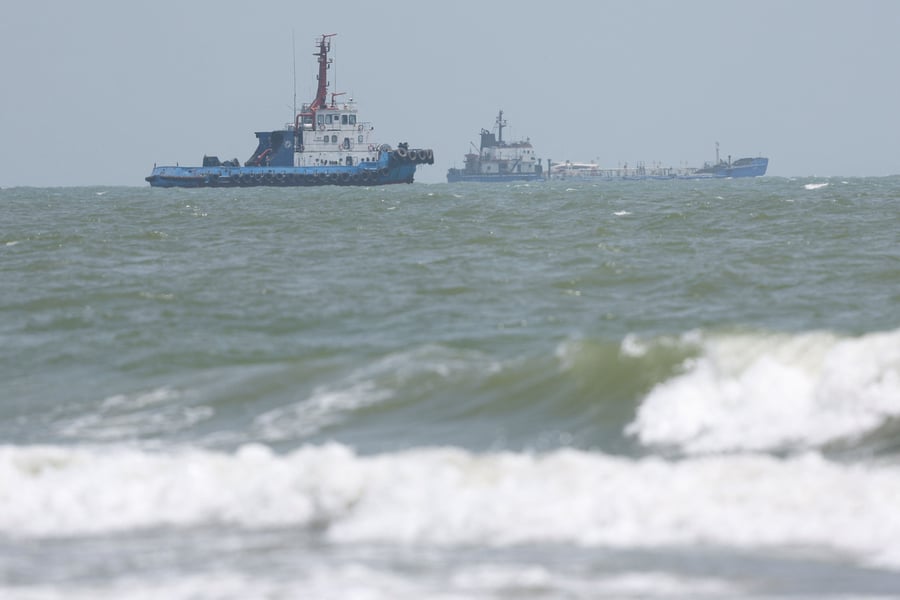

MUSCAT — An oil tanker nine nautical miles northeast of the Omani coastline had its engine room destroyed Tuesday by a projectile from an undisclosed source. At roughly the same hour, Donald Trump announced on Truth Social that every mine in the Strait of Hormuz’s international waters had been detonated or removed. The tanker’s crew survived. The vessel did not move.
Together, those two events compressed six months of conflict in the world’s most consequential shipping lane into a single morning. Since the United States and Israel launched strikes against Iran on February 28, the Strait has been a site of mining, vessel attacks, and diplomatic deadlock. Trump’s announcement did not change that condition. It described a different one.
The UK Maritime Trade Operations center reported that the tanker’s master radioed that the vessel had been “struck by an unknown projectile causing damage to the engine room and disabling the vessel.” No flag, no operator name, no nationality of crew were disclosed in the UKMTO advisory. No group claimed the attack. The projectile’s origin (drone, missile, or naval weapon) was not identified. What was confirmed: the crew were safe, the vessel was not, as Anadolu Agency reported.
Trump’s Truth Social post established what he called a “Zero Tolerance policy on mine placement,” warning that any vessel placing new mines “will be destroyed.” The statement cited the US Space Force as monitoring “every square inch” of the waterway and characterized the mine-clearing operation as complete. The tanker strike, occurring as the post was published, was not addressed.
A parallel diplomatic track was already underway. Iran’s Foreign Minister Abbas Araghchi and Oman’s Foreign Minister Badr al-Busaidi had begun discussions on a temporary navigational corridor through the Strait and a joint mine-clearing project. Unlike Trump’s announcement, the arrangement required Iranian participation. TRT World reported on the emerging proposal, which would allow limited commercial shipping to resume under conditions both parties had actually negotiated.
Behind that framework lay a more direct negotiation. Pakistani Army Chief General Asim Munir traveled to Tehran on Tuesday in what Iranian sources described as a mission to “create space for negotiations and convey Iran’s conditions” to Washington, not to deliver American warnings. Iran’s terms, relayed via Islamabad: US compliance with the mid-June memorandum that briefly halted hostilities, and implementation of Iran’s navigation rules for the Strait. The US position involves lifting the blockade and removing sanctions in exchange for Iran reopening the waterway on American terms, Sputnik reported.
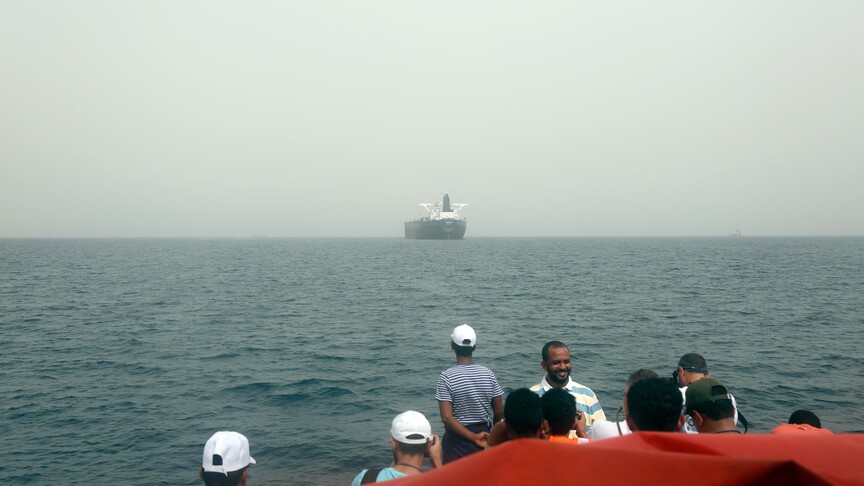
The stakes of that exchange are visible in the numbers. Before the US-Israel strikes began on February 28, the Strait of Hormuz carried more than 20 million barrels of oil daily, roughly one-fifth of global consumption. On Monday, that figure stood at five million barrels. The gap between those numbers has repriced energy inputs for manufacturers, airlines, and utilities across Asia, Europe, and the Americas for six months, and every week without resolution compounds it.
Washington’s pressure on Tehran since the pause in direct airstrikes has shifted to economic instruments. Operation Economic Outcast has targeted Iran’s trade networks across the UAE, China, Singapore, and Switzerland, using secondary Iran war sanctions as the primary lever. Vessel attacks in the Strait have continued as a third category of pressure: neither formally part of the ceasefire conversation nor acknowledged by either government as a precondition for talks.
Tuesday’s Hormuz incident did not occur in isolation. In adjacent waters, Houthi forces had already struck a Saudi-flagged tanker with a ballistic missile off Yanbu, extending maritime instability from the Red Sea into the Gulf of Oman. A pattern of parallel attacks, in both the Red Sea shipping attack corridor and the Strait itself, has persisted through every phase of the broader conflict, including periods when the US and Iran were nominally under a memorandum.
Whether the Iran-Oman framework for a temporary navigational corridor can advance faster than the ongoing tanker attacks is the question Tuesday left unanswered. Pakistan’s role as Iran’s interlocutor with Washington suggests Tehran has not abandoned diplomatic engagement. What it has not agreed to is Washington’s formulation of how that engagement concludes. Who fired the projectile that disabled a tanker nine nautical miles off the Omani coast on Tuesday was not disclosed. The answer, when it comes, will say something about what is actually happening in the Strait, as opposed to what has been announced about it.