
BOGOTA — Three weeks into the job, Colombia’s new president is announcing body counts on X, and the counts are not holding still.
Abelardo de la Espriella said on Thursday that Operation AMON had killed eight members of an armed group in the department of Guaviare. “As a result of the targeted airstrike and subsequent operation by our units, preliminary data indicates the elimination of eight terrorists, the seizure of 11 rifles and five machine guns, and a large amount of property,” he wrote. The strike hit camps in a rural area of El Retorno municipality in the early hours, and by the government’s account it began with a precision aerial bombardment and was followed in by commandos.
The target was the Jorge Suarez Briceno Bloc, part of the Estado Mayor de Bloques y Frentes commanded by Alexander Diaz Mendoza, who goes by Calarca. His units are among the FARC factions that refused the 2016 peace agreement and kept fighting, and Guaviare, deep in the Amazon basin and thinly governed, is where several of them have consolidated.
De la Espriella framed it as a declaration rather than an operation. “Colombia must know that we are going on the offensive,” he wrote. “The major leaders and their criminal organizations will have no refuge or safe haven anywhere in the national territory.”
That is a deliberate break, and it is the reason this strike matters more than its size. His predecessor Gustavo Petro spent four years on a policy called total peace, which meant negotiating simultaneously with most of the country’s armed groups and limiting offensive operations against those at the table. De la Espriella took office on August 7. By August 11 he had bombed the National Liberation Army in Catatumbo. Seventeen days later he bombed Calarca’s people in Guaviare. Two strikes in three weeks is not a change of emphasis. It is a different policy.
The complication arrived after the announcement. Colombian outlets including Infobae and Cambio put the toll at eleven rather than eight, and reported that one of the dead was a man known as Urias Perdomo, who had been designated a peace facilitator by the Petro government and was close to Calarca. Eastern Herald has not been able to confirm that independently, and the government has not addressed it.
If it holds, it is the most consequential detail of the operation. Peace facilitators under the previous policy were people the state itself had named to carry messages between the government and armed groups, and that designation carried a form of protection. Killing one in an airstrike does not merely end a negotiation. It tells every other intermediary in the country what a government designation is now worth, and those intermediaries are the only reason talks with these groups have ever gone anywhere.
There is also the ordinary problem with strike arithmetic. The president published a figure within hours, in a jungle municipality, based on what he described as preliminary data. Reporters using local and military sources arrived at a higher one. Neither number has been verified by anyone outside the chain that produced it, and in Colombia the gap between an announced count and an established one has a long and contested history. The seizure figures, eleven rifles and five machine guns, are more checkable than the human ones and suggest a camp of some size rather than a small unit.
What is not in dispute is that the aircraft flew and the camp was hit. The dissident structures have expanded steadily since 2016, financed by cocaine and by illegal gold, and they have been fighting each other as well as the state. Calarca’s faction is among the larger of them.
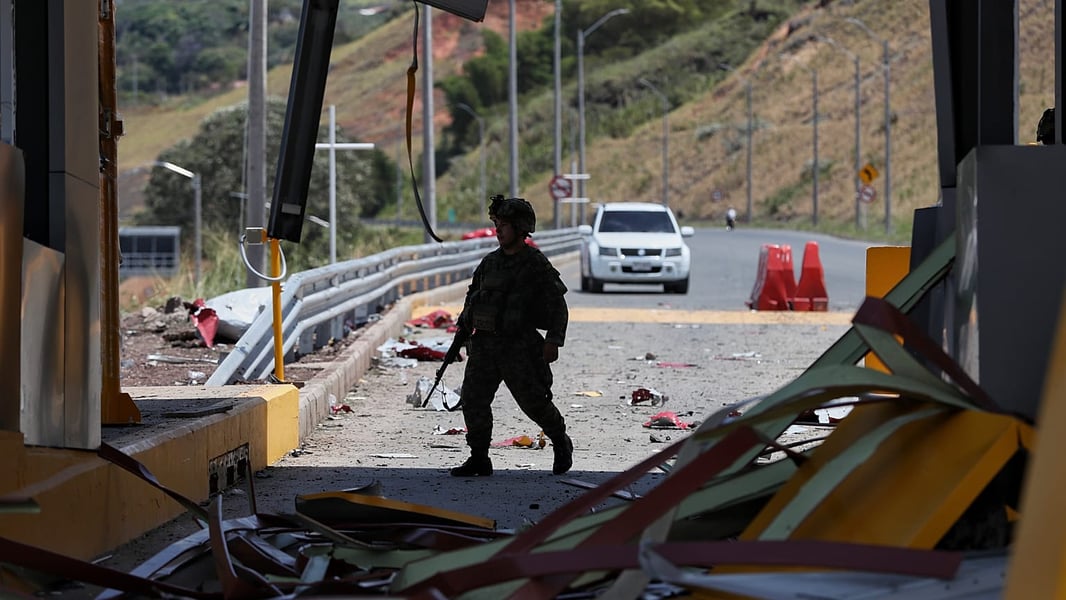
The violence has been running in both directions since the inauguration. A car bomb went off the day after de la Espriella was sworn in, which is the context in which a president elected on a security platform decided his first month would be measured in air strikes.
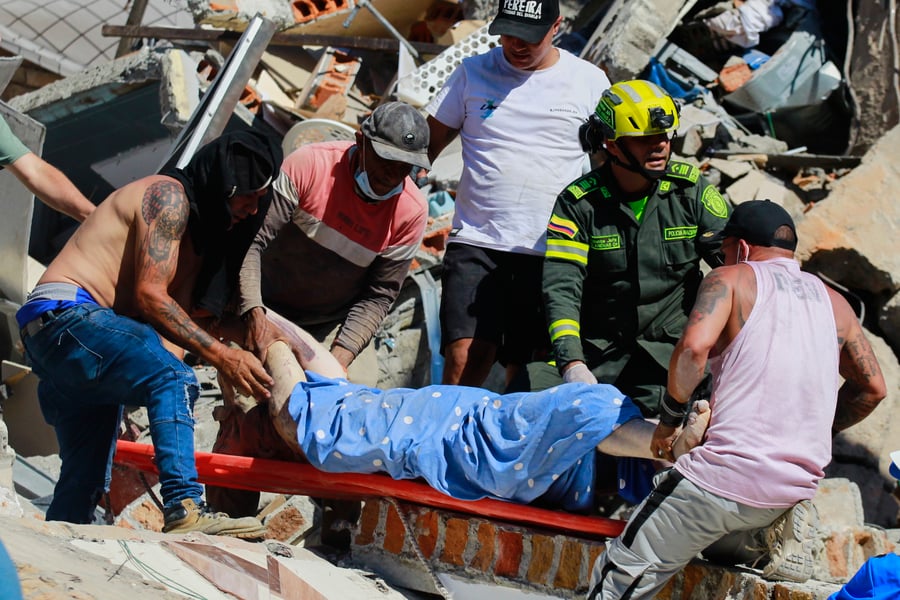
He has other problems competing for the same attention. His government is still handling the aftermath of the earthquake that killed 294 people this month, and he has been asking Washington to suspend tariffs on Colombian goods while reconstruction is costed at 6.4 billion dollars. The same administration he is asking for economic relief is the one he says will help him militarily.
Whether bombing works against this particular problem is the question the last thirty years already answered ambiguously. Colombia has killed a great many commanders from the air. The organisations reconstituted, usually smaller, usually more criminal and less political, and usually harder to negotiate with than what preceded them. That is the pattern total peace was designed to break, and it did not obviously break it either.
The things nobody has said yet are the ones that will determine how this is judged. The government has not published a final toll, has not identified the dead by name, and has not said whether it knew who was in the camp before the bombs fell. It has not said what happens to the other people the previous administration designated as facilitators, or whether that status now means anything. And it has not said whether any channel to Calarca’s structure survives.
De la Espriella has been in office for twenty-one days and has ordered two air strikes. The question is not whether he means what he says about going on the offensive. It is whether anyone is left to talk to when he is finished.