
THE HAGUE — The news of Ratko Mladic’s death reached Kada Hotic on a Thursday morning. She is 82 years old and has spent three decades searching for the remains of her son and other relatives among the mass graves that are still being excavated in the hills above Srebrenica. “Justice has been served because Mladic died in prison,” she told Reuters. “He died in disgrace.”
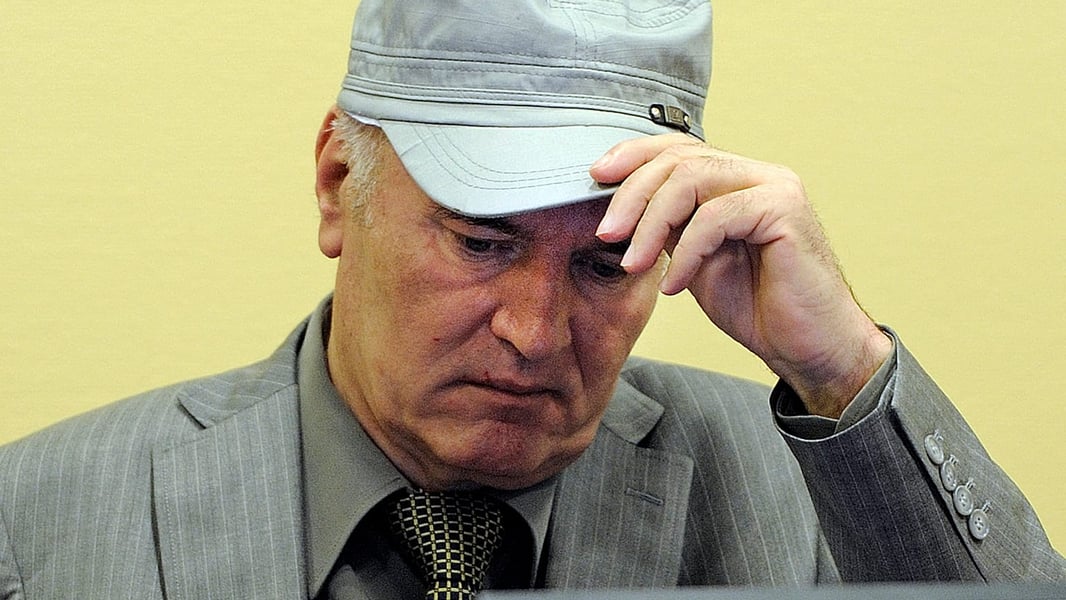
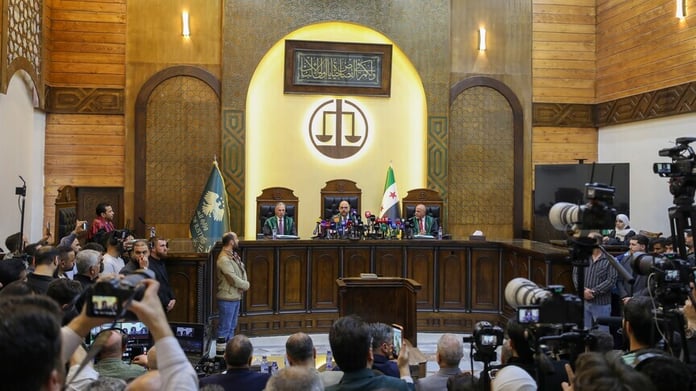
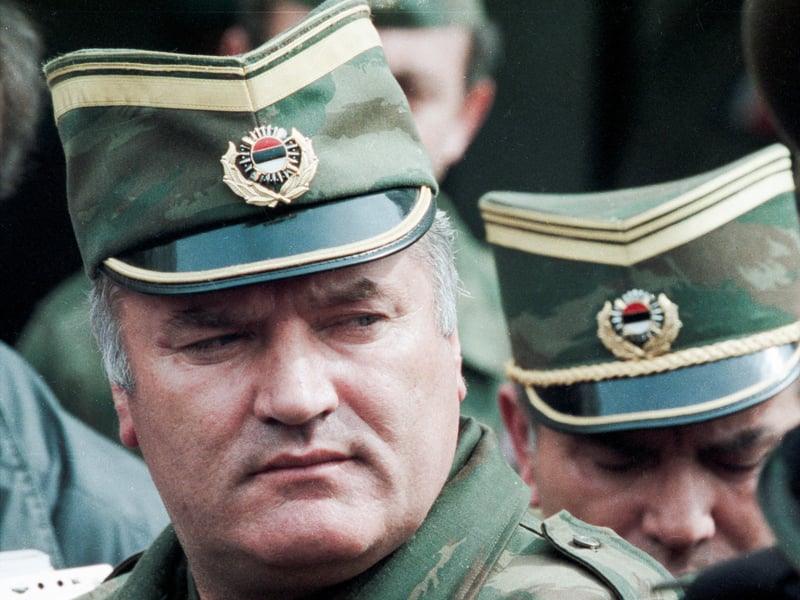
Mladic, the Bosnian Serb military commander whose forces oversaw the systematic killing of more than 8,000 Bosniak men and boys in Srebrenica in July 1995 — the worst act of genocide in Europe since the Holocaust — died on August 27, 2026 at the UN prison hospital in Scheveningen, The Hague. He was 84. He was serving a life sentence imposed by the International Criminal Tribunal for the former Yugoslavia in 2017, a verdict upheld on appeal by the UN Mechanism for International Criminal Tribunals in 2021.
His death closes no mass grave. Of the more than 8,000 people killed in Srebrenica, approximately 1,000 victims’ remains are still unaccounted for — bodies moved, scattered across multiple sites by perpetrators seeking to conceal the scale of what they had done. The forensic work continues.
“It doesn’t bring back the dead,” said Remir Suljagic, the head of the Srebrenica Memorial Center. “It doesn’t clear mass graves.”
Mladic spent nearly 16 years as a fugitive after the Dayton Peace Agreement ended the Bosnian War in 1995. He was indicted by the ICTY in 1995, the same year Srebrenica fell, but remained at large. He was finally arrested in a farmhouse in the Serbian village of Lazarevo in May 2011, found hiding in the home of a cousin.
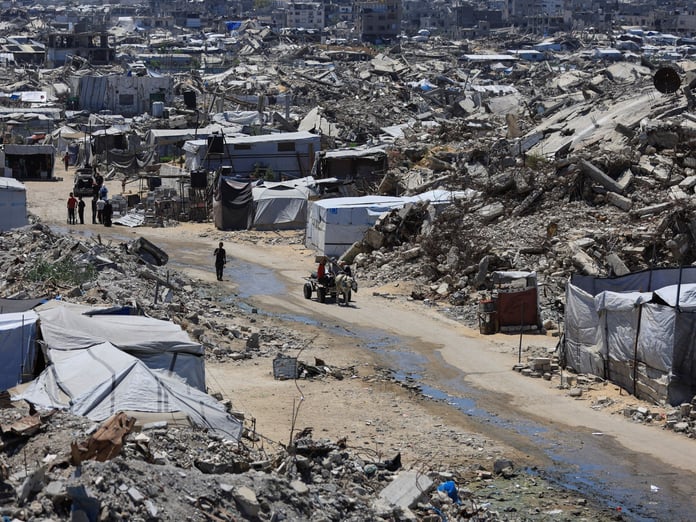
The crimes that brought him to The Hague extended beyond Srebrenica. His forces conducted the 44-month siege of Sarajevo, reducing the Bosnian capital to rubble under artillery bombardment and sniper fire, killing more than 11,500 people, roughly 5,400 of them civilians. He commanded detention camps where prisoners were systematically executed. He ordered the taking of UN peacekeepers as hostages. The ICTY found him guilty on 10 of the 11 counts in the indictment, including genocide, crimes against humanity, and war crimes.
Zeid Ra’ad al-Hussein, the former UN High Commissioner for Human Rights who attended portions of the trial in The Hague, called Mladic “the epitome of evil.”
His death arrived at a moment when the denial of the Srebrenica genocide has intensified, not receded. Bosnia’s Serb political leader, Milorad Dodik — who has spent years disputing the genocide finding and advocating for the secession of the Republika Srpska entity — responded to the announcement of Mladic’s death by claiming it was “a murder” and asserting that Mladic “was respected by Serbian people.” Investigators tracking genocide denial in Bosnia recorded 149 reported cases in the first months of 2026 alone.
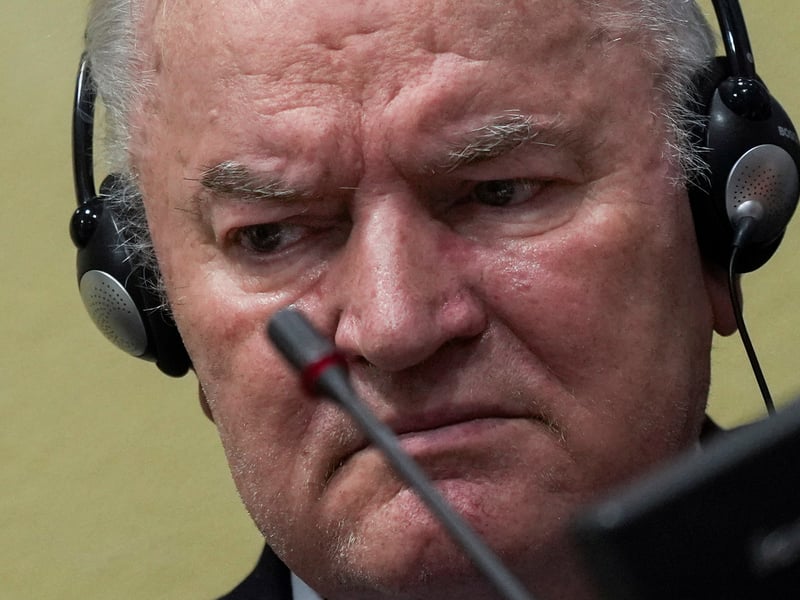
The refusal by Bosnian Serb political figures to acknowledge what international courts have established as a matter of settled law — that the killings at Srebrenica constituted genocide — creates a structural problem that Mladic’s death does not resolve. The absence of acknowledgment means the descendants of victims continue to share political institutions with politicians who deny those victims’ histories.
Mladic’s supporters within Serbia and among some Bosnian Serb communities had built a quiet mythology around him during his years as a fugitive, framing him not as a war criminal but as a defender of the Serbian people. That mythology does not disappear with his death at 84. It has been cultivating for three decades.
Whether the survivors of Srebrenica find any closure in the death of a man who spent his final years in a Dutch prison hospital, having never apologized or acknowledged the killings his forces carried out, is something only they can say. Kada Hotic spoke of disgrace. The memorial center director spoke of what remains unresolved, what the death cannot undo.
For the international criminal justice institutions that prosecuted Mladic, his case represents one of the defining prosecutions — a conviction establishing the legal framework under which acts of mass murder targeting a distinct national, ethnical, racial, or religious group constitute genocide under international law. The Russia-Ukraine war and the Iran war in the Middle East are being evaluated through exactly the accountability frameworks Mladic’s prosecution helped cement.
What that framework has not resolved, in Bosnia or elsewhere, is the political dimension: whether communities that produced and protected men like Mladic will acknowledge what those men did. His death is the closing of a chapter. The next chapter is about what his successors in power — who never faced a court — choose to do with that history.
Approximately 1,000 victims’ remains are still in the ground, not yet identified. That number will not change with his death. The excavations will continue next week, as they have every week for three decades.
Related Posts