
BRATISLAVA — Twelve days before the current package of European Union sanctions against Russia is set to expire, Bratislava is not making it easy.
The Slovak government is resisting a proposal that would shift the renewal cycle for individual EU anti-Russia sanctions from six months to twelve, according to reports published Thursday. Slovakia’s Foreign Ministry declined to specify its objections, saying only that “discussions on revising the extension period are ongoing.” A decision, the ministry added, is expected before September 15, the date on which the current round of measures, covering more than 2,700 Russian individuals and entities, lapses if not renewed.
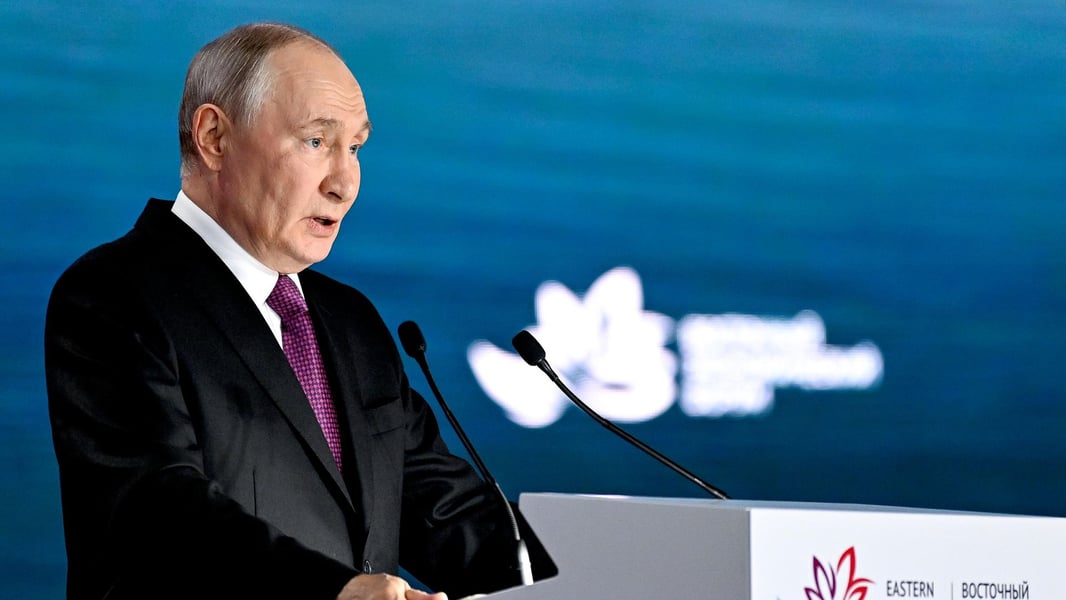
The practical stakes are immediate. Among the names on the EU’s Russia sanctions list are President Vladimir Putin and Foreign Minister Sergei Lavrov. If the bloc fails to renew by the deadline, their access to any EU-held assets would be automatically restored. A unanimity rule governs individual sanctions in the European Council, meaning any single member state retains the effective power to block renewal. Slovakia, by resisting the structural change, retains that power at more frequent intervals.
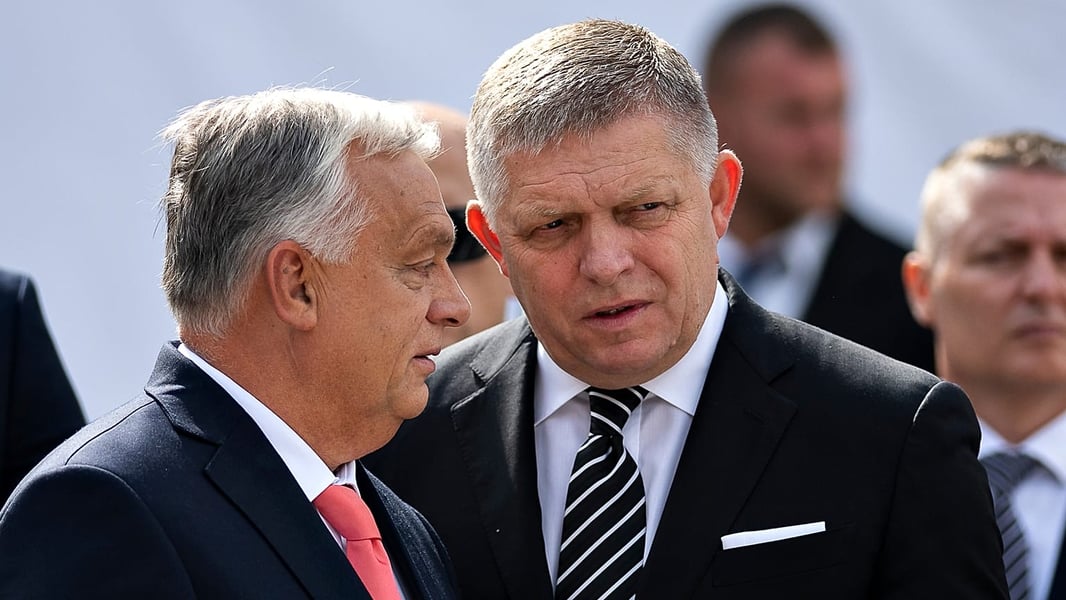
That is the geometry of Bratislava’s objection. The European Commission has sought to extend the renewal period partly to reduce administrative friction and partly, critics in smaller member states argue, to reduce the leverage of holdouts. Moving from a six-month to a twelve-month cycle means fewer renewal moments, fewer deadlines, and fewer opportunities for Prime Minister Robert Fico’s government to extract concessions at the point where Brussels requires a unanimous vote.
Slovakia is not new to this position. In March 2026, with a similar deadline approaching, both Slovakia and Hungary blocked the sanctions renewal, seeking the removal of Russian businessmen Mikhail Fridman and Alisher Usmanov from the blacklist, as Euronews reported at the time. The episode ended with the deadline extended, a weekend of high-stakes meetings, and the sanctions ultimately renewed without the delistings Slovakia had sought. What Bratislava extracted in exchange was not disclosed publicly. The pattern, however, is consistent: Slovakia uses renewal deadlines as leverage, not as occasions for policy statements.
The Druzhba pipeline runs directly through Slovakia, carrying Russian crude oil to refineries in central Europe designed for Russian-grade crude with no immediate alternative supply route. Fico has consistently framed sanctions policy through the lens of Slovak energy security, arguing that Bratislava cannot support measures whose economic cost falls disproportionately on landlocked Central European states while Western European capitals bear comparatively less. That argument has given him a domestic constituency for the holdout position that governments in Berlin and Paris do not need to manage.
The current standoff carries an additional wrinkle. In March, the ask was individual names. This time, it appears to be the architecture of the renewal mechanism itself, a structurally different demand that is harder to dismiss as a one-off concession. If Bratislava’s goal is to preserve its influence over the renewal cycle, blocking the 12-month extension achieves that by keeping the leverage mechanism intact at twice the frequency.
Russia’s Permanent Mission to the European Union, writing from Brussels on Tuesday, has argued that the EU’s sanctions posture serves domestic political purposes as much as strategic ones. Putin has stated that the policy of containing and weakening Russia is a long-term Western strategy, and that sanctions have “dealt a serious blow to the entire global economy,” a claim that lands differently in Bratislava, where energy costs and supply disruptions from the broader conflict have registered acutely in a smaller, more import-dependent economy than Germany’s.
Whether Slovakia’s objection is fundamentally about the 12-month extension or about other concessions being sought behind closed doors is not yet clear. The Foreign Ministry’s refusal to characterize its objections publicly is, in this context, more revealing than any statement it could have made. A government with a principled objection to the extension period would likely say so. A government using the deadline as leverage says as little as possible until an agreement is reached.
The September 15 deadline leaves twelve days for a resolution. Senior EU officials are already consumed by the Gymnich meeting in Wicklow, Ireland, where coordinated infrastructure attacks across northern Europe dominated an agenda that also included Ukraine’s battlefield position and asset freeze discussions. Russia’s ambassador to Belgium this week framed NATO’s posture as the principal obstacle to any resolution in Ukraine, a counternarrative being inserted at exactly the moment EU member states are being asked to demonstrate solidarity under pressure.
For the European Commission, the 12-month extension has been framed as a technical administrative reform. For Bratislava, it appears to be anything but. What Slovakia is ultimately seeking in exchange for its support, whether individual delistings, pipeline concessions, or something else entirely, is the question the Foreign Ministry’s silence is carefully declining to answer.
Related Posts