
QUETTA — The world’s largest undeveloped copper-gold deposit has effectively been put on hold. Not by commodity prices. Not by financing. By the fact that the insurgency threatening it is no longer doing what insurgencies in Balochistan are supposed to do: stay in Balochistan.
Barrick Mining Corporation announced this month it would extend its security review of the Reko Diq project through mid-2027, reducing capital spending and deferring development milestones the company had expected to hit before the end of the year. Pakistan’s chief minister of Balochistan personally assured Barrick the province had the “capacity and capability to protect foreign investors.” Arab News reported that Barrick extended its review anyway.
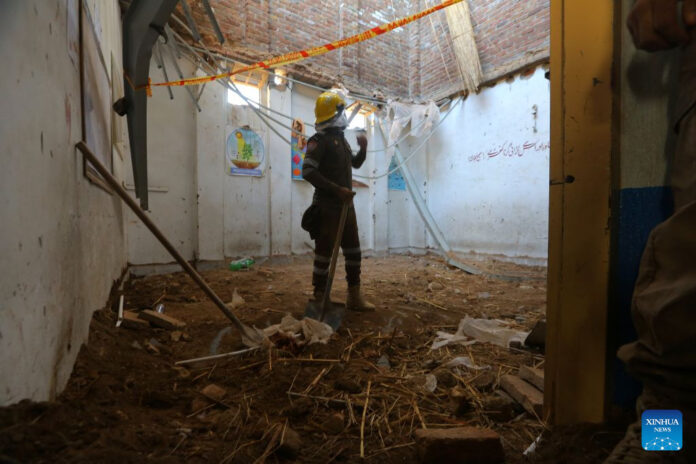
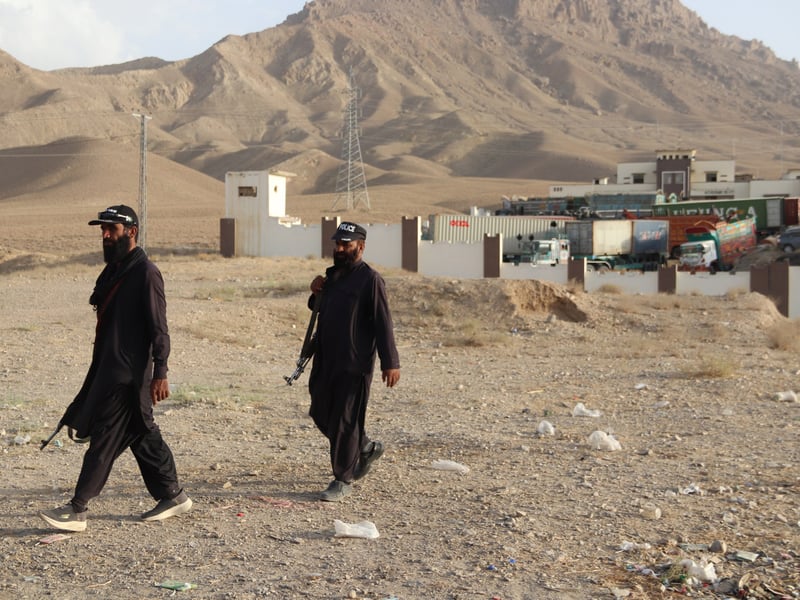
The reasoning behind the recent escalation became clearer this week. Pakistan’s military reported killing dozens of militants in Balochistan in recent days as attacks spread across 11 Pashtun-majority districts, including Zhob, Loralai, and Musakhail. None of those districts had recorded organized militant violence before June. Security analysts say the pattern may indicate more than a straightforward escalation, pointing instead to possible tactical coordination between the ethnic-Baloch Balochistan Liberation Army and the Pakistani Taliban, two groups that have historically operated along separate ethnic and ideological lines.
Rafiullah Kakar, an analyst who closely follows the Balochistan conflict, cited the geographical expansion of the violence as evidence of such coordination. The potential implications are significant. The BLA is a Baloch separatist movement with sophisticated financing networks, foreign sanctuaries, and a documented history of targeting Chinese infrastructure linked to the China-Pakistan Economic Corridor. The Tehrik-e-Taliban Pakistan, meanwhile, draws heavily on Pashtun recruitment networks concentrated in districts bordering Afghanistan.
A functioning alliance between the two organizations could expand the operational capabilities of both. The BLA could extend its activities northward into Pashtun-majority territory, while the TTP could potentially gain access to financing networks and technical capabilities that the BLA has developed over decades of insurgency.
The 13 attacks recorded in those Pashtun districts since June represent a type of militant violence the region had not previously experienced. The headline figure is 13 attacks, but the more significant geographic indicator is 11: the number of previously quiet districts that have now entered the insurgency’s operational perimeter.
The security implications extend beyond the immediate conflict. Reko Diq sits at the intersection of two competing visions for Pakistan’s economic future. Barrick holds a 50% stake in the project, Pakistani federal state-owned enterprises hold 25%, and the Balochistan provincial government owns the remaining 25%.
The project also represents Washington’s most tangible foothold in Pakistan’s critical-minerals sector. US-backed investment in Balochistan’s mining industry is valued at roughly $1.3 billion across several projects, with Reko Diq serving as the anchor. According to Barrick’s estimates, Phase 1 requires between $5.6 billion and $6 billion in capital spending, while Phase 2 would add another $3.3 billion to $3.6 billion.
First production was originally targeted for the end of 2028. With the security environment changing across Balochistan, however, that schedule is now facing uncertainty.
Against that backdrop, China’s CPEC investment carries a competitive advantage that the Reko Diq numbers alone cannot overcome. Beijing has historically tolerated security costs in Pakistan that no Western investor has matched, absorbing attacks on Chinese workers without withdrawal and continuing to build infrastructure through corridors the Pakistan military could not fully secure. That tolerance is leverage. Barrick’s decision to extend its review is, among other things, a signal that the company does not share Beijing’s risk appetite.
Pakistan’s army has deployed additional forces across the affected districts and announced plans to raise a dedicated protective force for mineral infrastructure. Similar commitments followed the suicide car bomb on a military train in Quetta in May that killed twenty-four people, and the coordinated BLA assault on a politician’s compound in Khuzdar in July that killed seventeen. Neither produced a durable improvement in Balochistan’s security trajectory.
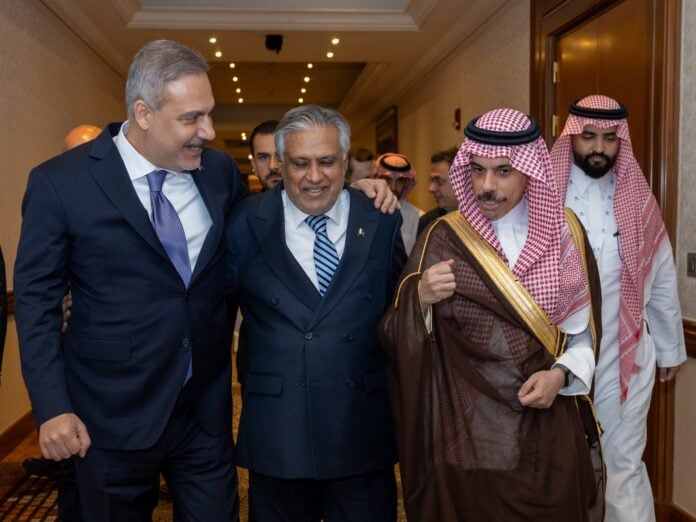
Islamabad’s strategic position is becoming uncomfortable in several directions simultaneously. Pakistan signed the Mecca Joint Deterrence Agreement with Saudi Arabia and Turkey in August, a mutual defense pledge that aligns Islamabad with Gulf-anchored security architecture; neither Riyadh nor Ankara can help Islamabad in Balochistan. The country is managing a domestic insurgency at its highest pitch in a decade, an IMF-supervised economic reform program that requires foreign investment, CPEC commitments to China it cannot abandon, and a US-backed minerals strategy that requires security conditions it cannot currently guarantee.
Barrick has not walked away from Reko Diq. The company reaffirmed its commitment to the project even as it announced the extension, and the Pakistani government has publicly insisted the mine will proceed. What the mid-2027 extension does is push first production meaningfully beyond 2028, inflate the capital budget in ways Barrick’s own disclosures describe as potentially significant, and leave the government of Balochistan, which holds a twenty-five percent stake and needs the royalty revenue, waiting for returns from an asset its province cannot yet make safe.
Whether Pakistan’s army can hold the Reko Diq corridor while simultaneously running counter-TTP operations in Khyber Pakhtunkhwa is a question neither Islamabad nor Barrick has yet answered publicly.