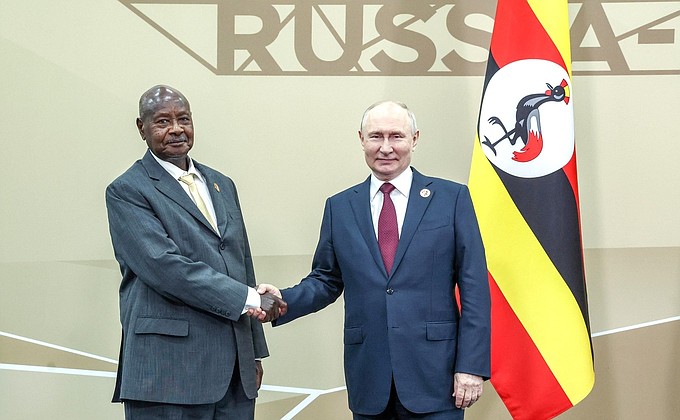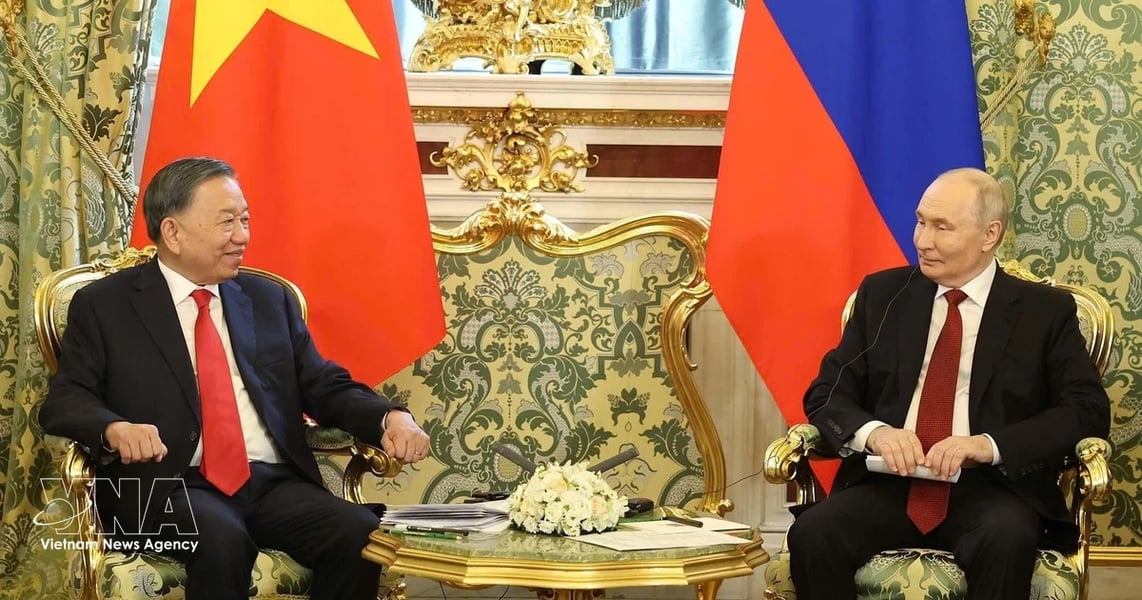

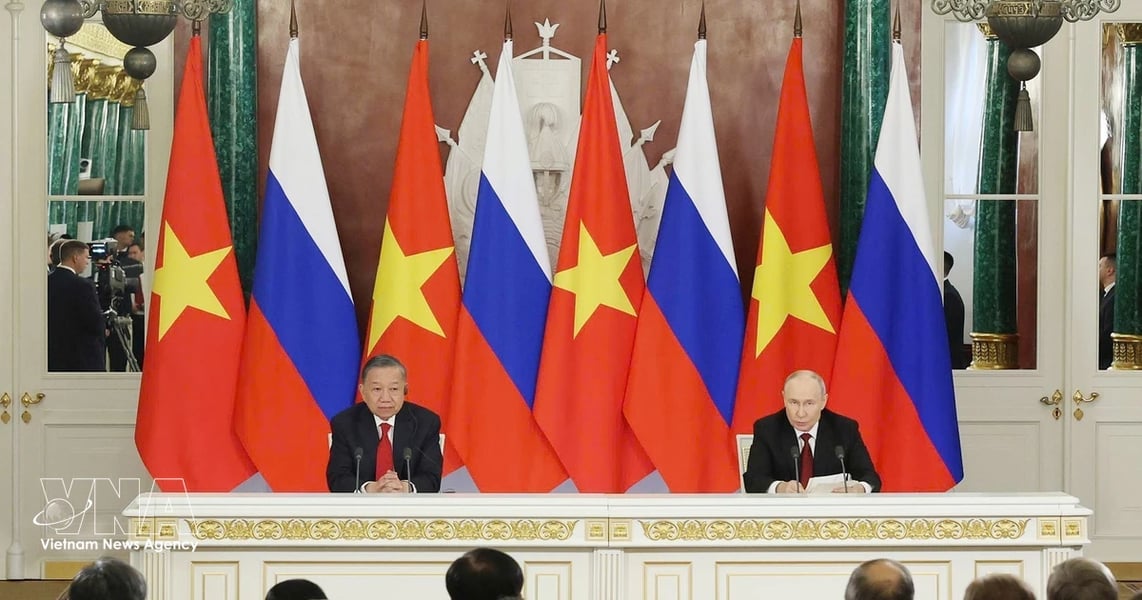
MOSCOW — When To Lam arrived at the Kremlin on Tuesday for his first state visit to Russia as Vietnam’s president, his talks with Vladimir Putin lasted long enough for both sides to abandon the pretense of a working lunch and continue their discussions. Seventeen agreements were signed, while the joint statement issued afterward extended to 50 points.
The breadth of the document made clear that the meeting went beyond routine diplomatic engagement. It reads more like a strategic roadmap for a relationship rooted in decades of Soviet-era engineering cooperation and wartime solidarity, underscoring the depth and enduring character of ties between the two countries.
The visit, the first by a Vietnamese head of state to Moscow since 1991, produced an agreement framework spanning nuclear energy, oil reserves, visa-free travel, fisheries, and maritime cooperation, according to TASS. Kremlin spokesman Dmitry Peskov described the talks as “substantive and focused,” diplomatic shorthand for two sides that arrived with pre-agreed terms and needed only the highest-level sign-off to formalize them.
Vietnam has long practiced what its own analysts call bamboo diplomacy, the art of bending toward whichever wind is strongest without breaking. Hanoi has maintained relations with Washington and Moscow simultaneously, joined ASEAN, participated in US-led security exercises, and hosted American warships, while also preserving its Soviet-built military infrastructure and close intelligence ties with Russia. That posture served Vietnam well for three decades after the Soviet collapse. Tuesday’s visit tests whether it can survive the era of Western sanctions.
The most symbolically loaded agreement concerns Rosatom, Russia’s state nuclear energy corporation. Vietnam pursued a civilian nuclear power programme for years; its first plant was initially planned with Russian involvement before Tokyo offered a competing bid that later collapsed in 2016. Rosatom has since built or contracted nuclear facilities in Turkey, Egypt, Bangladesh, and Iran. Tuesday’s agreement revives a framework that would make Vietnam Rosatom’s most significant Southeast Asian project, and the first Russian-built nuclear facility in the region. Financial terms were not disclosed, and no construction timeline was announced.
The energy dimension extends further. Russia and Vietnam signed a deal covering strategic petroleum reserves, significant given Vietnam’s position at the intersection of South China Sea oil exploration and Southeast Asian refinery capacity. Russia has also opened discussions with Vietnam and India on Northern Sea Route energy corridors that would link Arctic shipping lanes to Asian manufacturing hubs, and Tuesday’s agreements deepen that framework.
The India parallel is difficult to ignore. External Affairs Minister S. Jaishankar’s August visit to the Kremlin produced a similarly weighted economic roadmap, energy-heavy, infrastructure-forward, and free of any political concession on the Ukraine question. India has framed its continued Russia ties as sovereign economic policy, not political endorsement. Hanoi appears to be borrowing the same language. The structure of both relationships is identical: old Soviet ties reactivated under new commercial terms, insulated from Western sanction by the scale and strategic weight of the trade involved.
The timing sharpens the message. Washington has spent a decade deepening its security architecture in Southeast Asia: the Indo-Pacific Strategy, AUKUS, the Quadrilateral Security Dialogue. Vietnam has remained absent from all of them, declining any grouping that would require it to choose sides. To Lam’s Moscow trip does not represent Vietnam joining a competing bloc so much as signalling its intention to remain outside every bloc, on its own terms, while deepening the relationship that predates its modern statehood.
What Tuesday’s visit does not resolve is also visible in what was not announced. The nuclear plant agreement carries no price tag and no construction timeline. The visa-free entry framework lists no effective date. The Kremlin readout described the fifty-point statement as covering a “comprehensive strategic partnership” but did not specify which elements are binding and which are declarations of intent. That ambiguity is deliberate: Vietnam is signalling alignment without locking in anything the next government might need to reverse.
Russia’s interpretation is probably simpler. To Lam flew to Moscow nine months into his presidency, before making state visits to Washington, Brussels, or Tokyo in the same capacity. That sequence says something no joint communiqué needs to explain.