
WASHINGTON — A former Iranian diplomat dismissed the claim within hours of its making.
Donald Trump told reporters Wednesday morning that Iran had contacted the United States “directly” and that Tehran “wants to make a deal.” He offered no specifics about who made contact, at what level, through what channel, or when. Asked about whether the exchange had gone through intermediaries (the standard mechanism for US-Iran communication), Trump said simply that it was “direct,” and moved on.
By afternoon, a former Iranian diplomat speaking to Al Jazeera offered a measured rebuttal: “I don’t think there has been any additional effort beyond what was already under way in recent weeks.” No senior Iranian official confirmed the exchange. Tehran’s foreign ministry has not issued a statement.
The gap between what Trump described and what Tehran has acknowledged is not incidental to the story. It is the story.
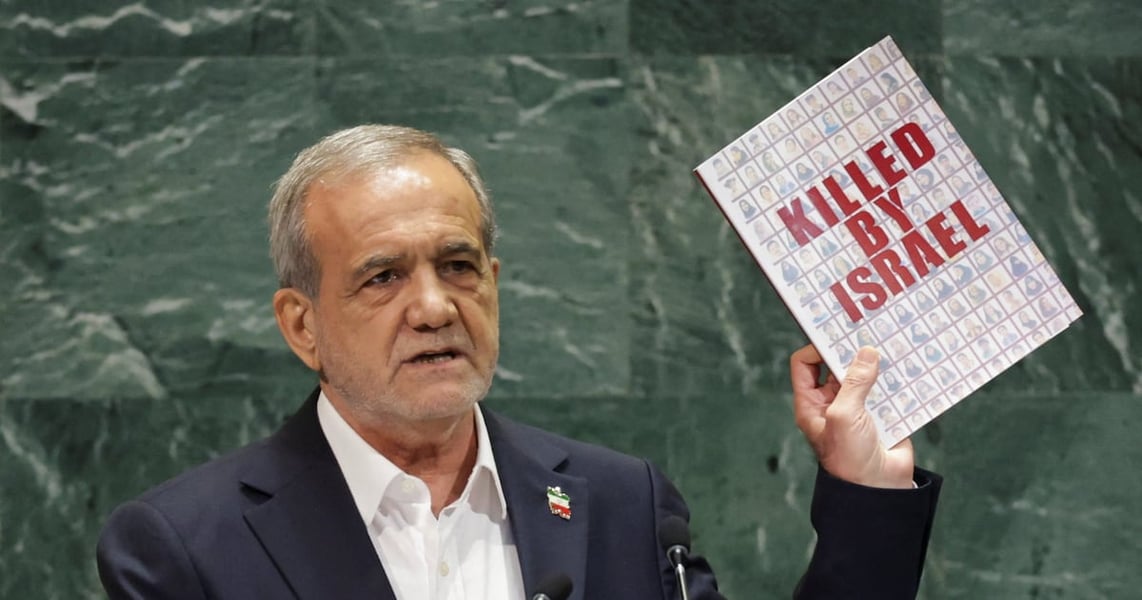
Iran’s actual diplomatic posture, as stated publicly by Masoud Pezeshkian’s government, is conditional: Tehran would “immediately reciprocate,” in Pezeshkian’s words, if the United States returned to its commitments under the Islamabad Memorandum of Understanding. The MOU, signed June 18 with Pakistan acting as mediator, called for a permanent end to military operations and established a framework for negotiations on sanctions relief, Iranian frozen assets, and US military positioning in the region. Iran says the US has not fulfilled its side of the framework. On nuclear negotiations specifically, Tehran has continued to reject direct talks while leaving what it describes as “indirect negotiations” open.
None of that nuance appeared in Trump’s remarks on Wednesday. “They want to make a deal,” he said, “and we’ll see how it plays out.”

The day before Trump’s remarks, Russia and China vetoed a US-drafted Security Council resolution to extend the mandate of the Panel of Experts overseeing Iran’s sanctions committee, the fifth consecutive veto in twelve months. That panel’s mandate expires September 27. The collapse of the sanctions monitoring architecture and the claim of direct diplomatic contact with Tehran arrived within twenty-four hours of each other, neither fully consistent with the other.
Trump is scheduled to meet leaders of the six Gulf Cooperation Council states in New York on Tuesday, September 22, on the sidelines of the UN General Assembly’s high-level week. The gathering, involving Saudi Arabia, the UAE, Qatar, Bahrain, Kuwait and Oman, is expected to focus on US proposals for a post-war framework. Whether Trump’s claim of direct Iranian contact will reshape those conversations, or is being presented to Gulf partners as evidence that US pressure is working, was not addressed in Wednesday’s remarks.
The broader context complicates the diplomatic picture. The war has spread into Yemen, where Houthi forces continue operations against US and allied assets. The Strait of Hormuz, through which roughly a fifth of global oil and gas passes, remains under effective Iranian disruption. The Islamabad MOU, which included provisions for restoring freedom of navigation, expired in August without a successor agreement.
“Direct contact” from Iran, in this context, could mean several things: a formal back-channel from Iranian officials, a signal relayed through an intermediary that Trump characterised differently, a message through the Swiss diplomatic conduit that serves as the standard US-Iran channel, or a communication through any of the Gulf states that act as informal go-betweens. The former Iranian diplomat’s dismissal (nothing beyond “what was already under way”) suggests the communication, whatever its form, did not represent a new initiative from Tehran’s side.
What Tehran ultimately decides to do with Trump’s public framing is the question Wednesday’s remarks leave open. Confirming direct contact would validate his characterisation of Iran as a government seeking an exit. Denying it directly would force an escalation. Staying silent, which is Tehran’s current posture, maintains ambiguity that serves Iran’s position without committing to a diplomatic track it has not yet accepted.
Iran is not without leverage. The war has not achieved its stated objective of dismantling Iran’s nuclear programme, the Hormuz disruption continues, and seven weeks remain before an American election that Trump has publicly tied to the conflict’s outcome.
How Tehran plays this moment will signal more about the war’s diplomatic trajectory than the claim itself.