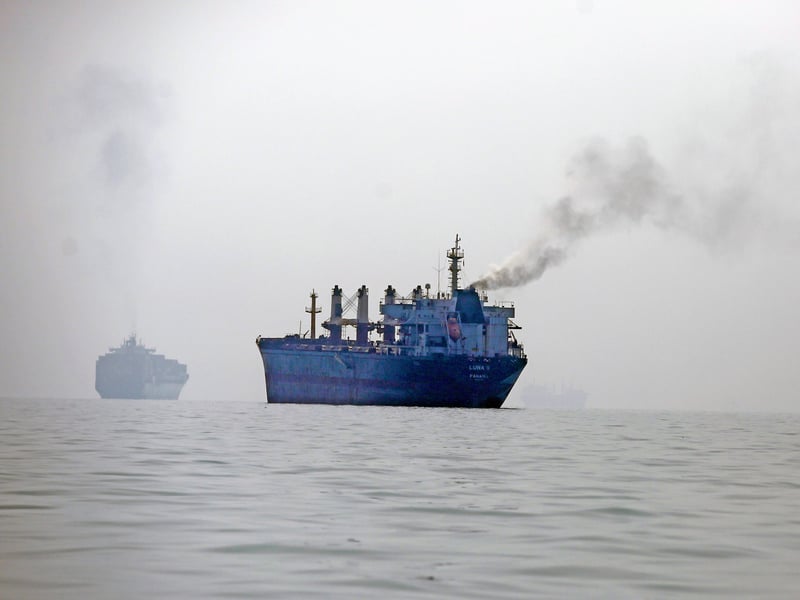

DUBAI — The Togo-flagged tanker Trend was moving through the Strait of Hormuz on Thursday when Iran’s Islamic Revolutionary Guard Corps said it had struck the vessel for attempting what Tehran called an “illegal passage.” The words that followed mattered more than the damage report: the IRGC did not fire on a random ship. It fired a message, and its timing was not incidental.
In New York on the same day, Donald Trump told Axios reporter Barak Ravid that he was approaching what he described as a “big decision” on whether to “go in and annihilate” the Iranian regime. “Anything could happen,” he said.
The two statements arrived simultaneously: Iran asserting that it still controls who moves through its waters, and Trump signaling that he is measuring something larger than a tanker strike. On Tuesday, Trump is scheduled to meet the leaders of Saudi Arabia, the United Arab Emirates, Qatar, Bahrain, Kuwait, and Oman on the sidelines of the UN General Assembly in New York. They are the parties most directly in the path of whatever Trump decides.
The Trend was the most recent ship hit in a maritime war that has reshaped the global energy order since July, when a ceasefire between Washington and Tehran collapsed and Iran resumed its campaign of targeted strikes on vessels it deems in violation of its declared Hormuz protocols. No casualties or environmental damage were initially reported in Thursday’s strike, according to Al Jazeera‘s live coverage of the incident. The IRGC provided no further details about the specific violation it attributed to the tanker’s operators.
What “illegal passage” means in Iran’s operational framework has shifted several times since the conflict began. In early summer, Tehran demanded notification protocols for commercial vessels above a certain tonnage. After the Salalah navigation framework was signed on September 13, those protocols were given a multilateral structure that failed its first test within hours: an Iranian cargo ship was struck near Qeshm Island in the same waterway the agreement was supposed to reopen. The Salalah accord gave IRGC commanders a legal vocabulary, not a ceasefire. They are using it accordingly.
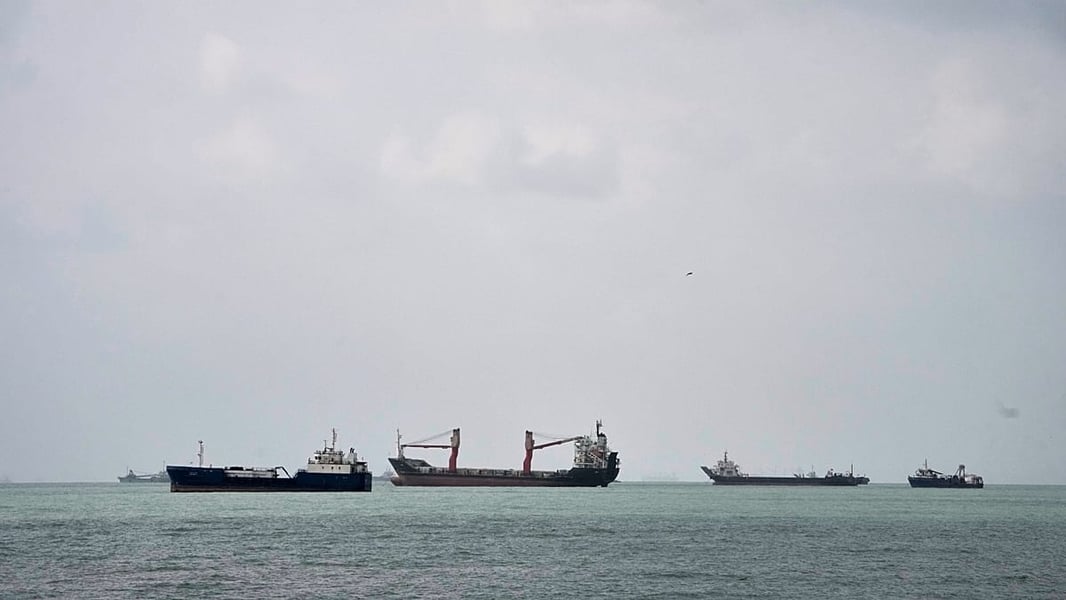
The conflict’s maritime dimension began as an enforcement campaign against Iranian oil tankers and mutated into something more symmetrical than Washington anticipated. US Central Command destroyed five Iranian tankers on September 8, citing the vessels’ role in financing IRGC proxy networks. Iran responded by attacking ten commercial ships near the strait and firing twenty ballistic missiles at a Jordanian base hosting American forces. Brent crude, which held near $101 a barrel in that week’s aftermath, has not dropped meaningfully since.
Trump’s language, delivered in an interview published the same day, was characteristically unanchored to any specific military planning timeline. “I have a big decision coming up. Do I want to go in and annihilate them [the Iranian regime] or do I not?” he told Axios. The use of “annihilate” was not accidental vocabulary; it is the sharpest word in the register of existential threat, and Trump chose it in the context of a conflict he has previously said will end “immediately” after November’s midterm elections. Whether he means regime destruction, a renewed air campaign, or something in between, he did not explain.
The Gulf leaders he meets Tuesday at UNGA are carrying the question at a different scale. Saudi Arabia, Qatar, and the UAE have the financial infrastructure and the geographic proximity that a widened campaign would render economically uninsurable. Trump’s own earlier statements connecting the war’s timeline to the midterms had given those governments a fixed window in which to extract whatever assurances they can about the conflict’s perimeter. An “annihilate” option dissolves that window.
NBC News reported that the meeting with Gulf leaders was requested by the White House and is expected to cover both the military situation in the strait and the economic consequences of sustained disruption to Hormuz traffic. No formal agenda has been made public. Whether any Gulf government has extracted a private commitment from Trump about the scale of any planned escalation is not known.
The war’s economic cost has already moved beyond the strait. US diesel prices have risen above six dollars per gallon, driven by a sustained reduction in Hormuz throughput that has cut the waterway’s commercial traffic to roughly ten percent of its pre-conflict baseline, according to Al Jazeera’s coverage. Those figures carry a political timeline of their own: they compound on voters before the November elections Trump has described as his exit ramp.
What the IRGC has not done is signal any readiness to change its behavior at Hormuz in response to Trump’s deliberative language. Tehran framed Thursday’s strike as routine enforcement of a protocol it has declared and publicized. The Trend attempted an illegal passage; the IRGC responded. The logic is self-contained. Whether Trump’s “big decision” changes the calculus is a question that lands precisely on the UNGA sidelines where, by Tuesday, some of the world’s largest crude producers will be sitting across the table from the man who says he has not decided yet.