
WASHINGTON — On Friday afternoon, journalists from CNN, MSNBC and Politico were still moving through the White House grounds, press badges working, hours after President Trump posted on Truth Social that they were banned. By Saturday morning, the badges were being taken.
Betsy Klein, a veteran CNN White House correspondent, arrived at the security entrance near the West Wing to find her badge deactivated. A security officer she had known for years told her she would need to contact the White House press office for an explanation. Akayla Gardner, a correspondent for MSNBC, passed multiple checkpoints before her badge triggered a red signal at an interior scanner. The officer asked her to hand it over. She set up a workspace at an outdoor cafe outside the grounds. Cheyenne Haslett, Politico’s White House reporter, was also denied entry. The Politico editor in chief, Jonathan Greenberger, said the outlet “will vigorously defend our First Amendment rights.”
Friday’s ban announcement was so abrupt that it caught some administration officials off guard, including aides in the press office, according to three people informed about those conversations. Chief of staff Susie Wiles was out of town when the Truth Social post went out. White House communications director Steven Cheung said in an email Saturday that Trump’s senior staff were with him when he published the post. “We all fully support his decision,” Cheung wrote.
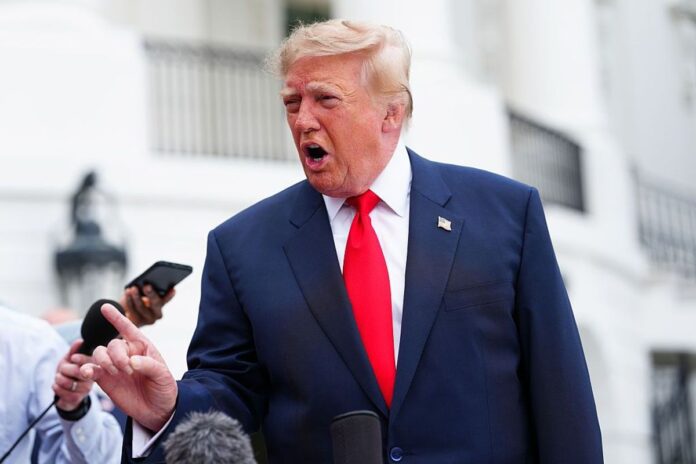
The president explained his reasoning directly. “There’s something wrong with a country that can allow people to write purposely negative stories,” he told reporters in the Oval Office on Friday. “Now, if they want to write them, that’s fine, but I don’t have to let them into my — into the people’s house.”
The legal landscape is not favorable to that argument. Bruce D. Brown, president of the Reporters Committee for the Freedom of the Press, said the ban was “textbook viewpoint discrimination,” because Trump explicitly connected the decision to the content of those outlets’ reporting — the precise criterion courts have historically disallowed under the First Amendment. Jameel Jaffer of the Knight First Amendment Institute at Columbia University said the press pool functions as a public forum under the First Amendment, meaning the government cannot exclude journalists based on their editorial viewpoints. During Trump’s first term, a court restored CNN correspondent Jim Acosta’s credentials after the administration revoked them. That precedent is established.
CNN described the ban as “illegal” and said it would continue reporting on the US government “regardless of any attempts to restrict physical access to the White House and other government buildings.” MSNBC said it “intends to take any and all steps necessary to defend our First Amendment rights and the essential role of independent journalism in our democracy.”
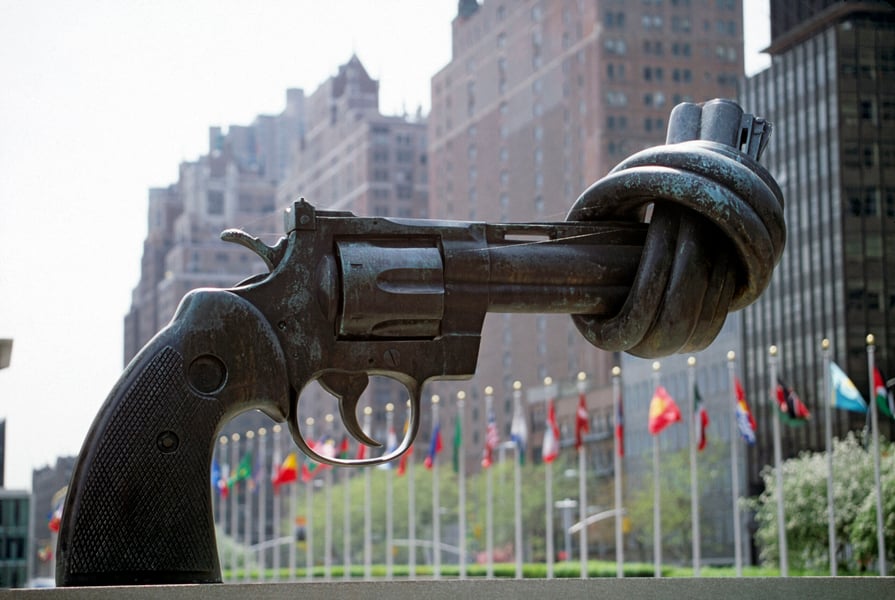
The practical stakes rise sharply in the coming days. CNN is scheduled to serve as the designated television pool crew for Trump’s visit to the United Nations General Assembly in New York this week. Five networks — ABC, CBS, CNN, NBC and Fox News — rotate in that pool, sharing costs. If the other networks refuse to substitute for CNN, Trump would arrive at the UNGA without mainstream television coverage of his movements and Air Force One travel. There is a precedent for such collective action: in 2009, when the Obama administration attempted to exclude Fox News from a Treasury Department event, the other major networks refused to participate without Fox, and the administration backed down.
Jacqui Heinrich, the president of the White House Correspondents’ Association and a Fox News senior correspondent, called the ban a First Amendment violation on Saturday and demanded the administration “immediately restore our colleagues’ access.” Heinrich does not work for any of the banned outlets. Her statement signals that the broader White House press corps regards this as a breach of conditions under which all of them operate, not merely a problem for three organisations.
The administration’s confrontations with the press have escalated steadily across this term. Hostile briefings gave way to subpoenas, litigation, and the administration’s takeover of the daily White House press pool selection process, which was previously managed by the Correspondents’ Association. Physical credential confiscation is the furthest point yet along that trajectory.
What happens on Monday remains open. CNN, MSNBC and Politico have pledged legal action without specifying timing. The other major networks have not publicly stated whether they will substitute for CNN in the UNGA pool rotation. A judge issuing a temporary restraining order before Monday would resolve the immediate logistics. Trump has warned other outlets may be added to his ban list. The New York Times confirmed its reporters retained access as of Saturday. That may not last.