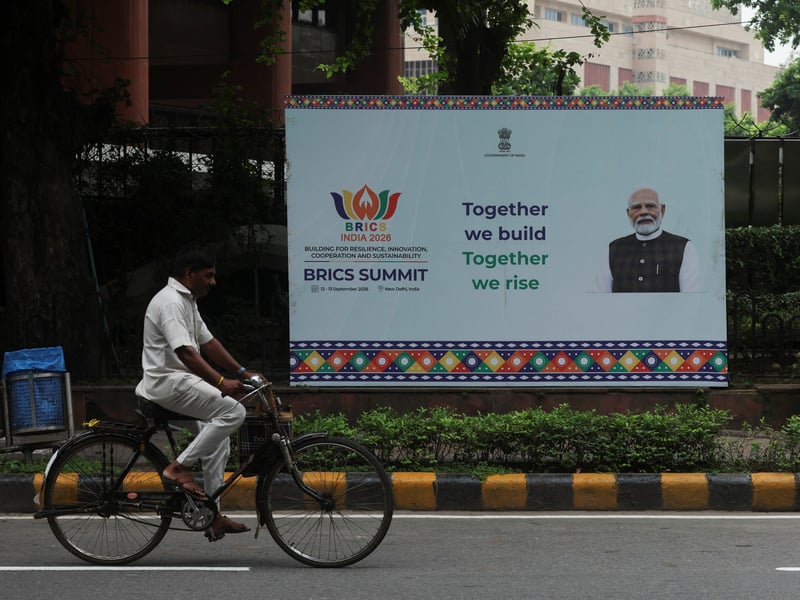

NEW DELHI — For most of its eighteen-year existence, BRICS has been an economic argument. It was born from a Goldman Sachs analyst’s forecast that Brazil, Russia, India, and China would together dominate the world economy by mid-century. It expanded into South Africa, then the Arab world, then beyond, always measured in GDP and trade corridors and reserve currency shares. India, in taking the bloc’s rotating presidency for 2026, is trying something different.
At the heart of this year’s 350-meeting schedule, the largest programme any BRICS presidency has mounted, is an argument about what development actually means. Narendra Modi‘s government has used the presidency to push a framework it calls “holistic development”: not growth abstracted from people, but growth that preserves the traditional knowledge systems, cultural identities, and healthcare practices that communities have carried for centuries without a ticker symbol.
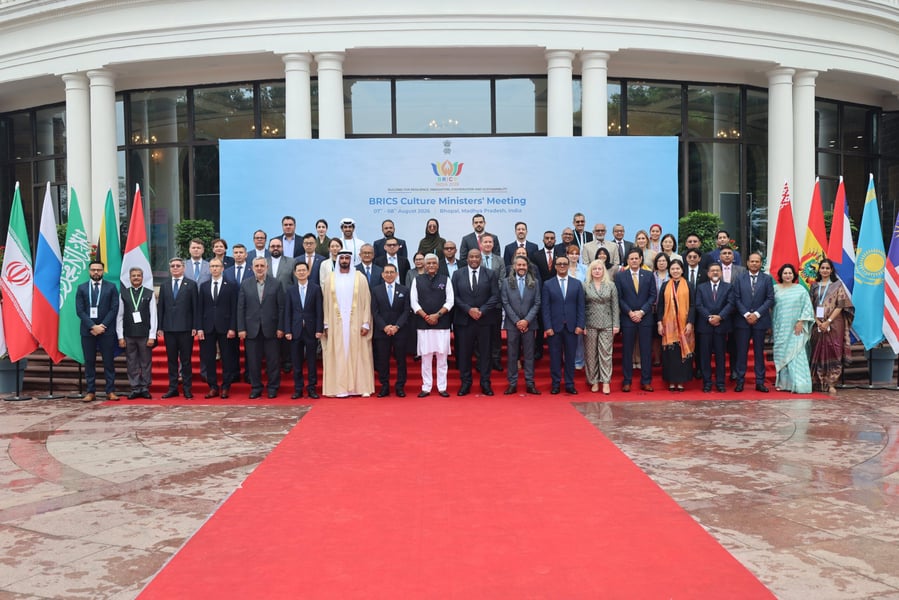
The most concrete expression of that argument is the Bhopal Declaration on Traditional Knowledge, adopted this month by cultural ministers from all BRICS member states. The declaration asserts that traditional medicine, handicraft techniques, and local ecological knowledge are not pre-industrial relics to be documented and shelved. They are live intellectual property, and the countries that hold them have a right to govern their use. “Culture is the soul of our civilizations,” the declaration reads. “It shapes our collective identity and guides us toward a more equitable and sustainable world.”
That language would be easy to dismiss as summit boilerplate. But the mechanisms India has designed around it are harder to ignore. The Bhopal Declaration commits member states to a Voluntary Artist Registry: a shared database of BRICS artisans and cultural practitioners that would allow practitioners in Russia’s Gzhel porcelain tradition or Brazil’s capoeira schools to access cross-border markets without intermediaries who capture most of the value, according to Visvaniti, which has tracked the full scope of India’s cultural presidency programming. Companion measures include a framework for registering traditional medicine knowledge in ways that prevent patent exploitation by pharmaceutical companies outside the bloc.
The declaration also addresses what India’s negotiators call the “digital enclosure” problem. Artificial intelligence systems trained on the world’s online data have absorbed centuries of traditional knowledge — recipes, plant-identification techniques, weaving patterns, medicinal compound combinations — without any compensation mechanism for the communities that developed them. The Bhopal Declaration’s AI provisions would require BRICS member states to establish domestic frameworks governing AI training on traditional knowledge datasets, and to negotiate reciprocal protections at the multilateral level. It is the first formal international commitment of its kind from any grouping of this economic weight.
BRICS has a specific structural problem that cultural diplomacy does not resolve: its members are in conflict with each other. Russia is conducting a military operation in Ukraine under sanctions from the broader international community. China and India have unresolved border disputes that required bilateral talks in September to paper over. The bloc’s new members, Egypt, Ethiopia, Iran, and the UAE, bring their own fractured alignments. Ayurveda and Gzhel ceramics are genuine shared interests. They are not a substitute for an institutional framework capable of managing disagreement.
India has tried to address the permanence problem through institutions rather than declarations alone. The BRICS Cultural Commission, launched under this presidency, is designed as a standing body with a mandate to meet annually and develop joint programmes. The BRICS Youth Cultural Exchange Programme aims to connect university students and young artists across member states. The BRICS Bazaar 2026, scheduled for October in Bhopal, will put artisans from all member states in a physical market together for the first time.
The institutional calendar extends further. The BRICS Culture Festival, held under the theme “Harmony and Peace to All,” brought performing arts groups from all member states to India for a public programme that ran alongside the September summit. It was the first time the culture festival operated simultaneously with the heads-of-state gathering rather than as a separate event months removed. The timing was deliberate: India wanted the cultural programme visible to the delegations themselves, not just to domestic audiences.
These are real structures. Whether the member states fund them adequately after India hands over the presidency to Brazil in 2027 is another question the September summit communiqué has not yet been asked to answer. Multilateral cultural bodies have a long history of being announced with fanfare and staffed at minimums. UNESCO’s World Intangible Cultural Heritage programme, for all its prestige, has faced sustained criticism for lacking enforcement mechanisms. India’s BRICS Cultural Commission risks the same trajectory.
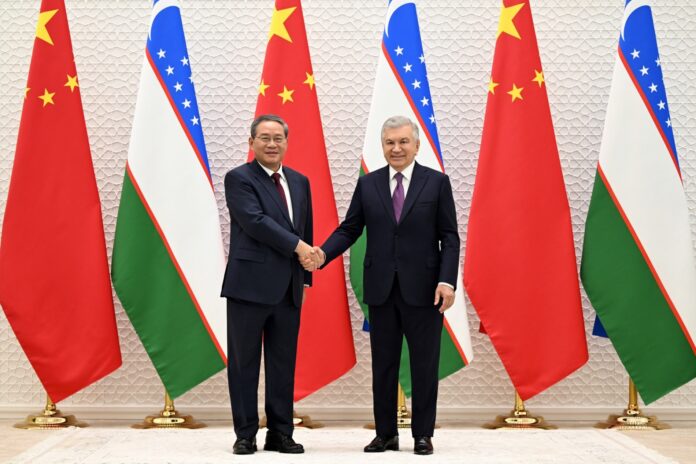
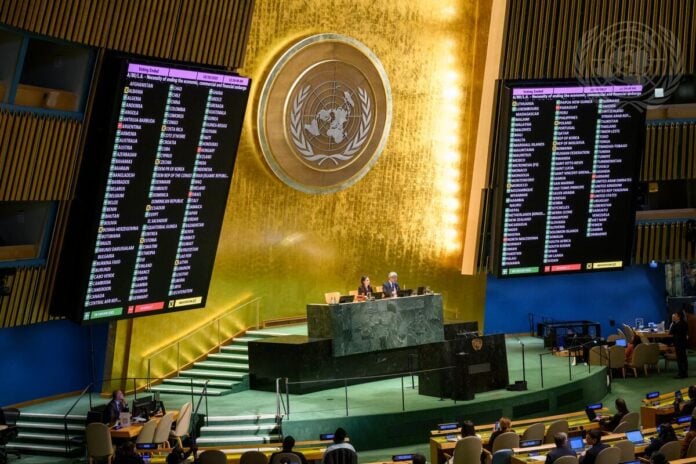
The New Delhi Declaration, adopted at the September summit, includes the cultural framework alongside the bloc’s economic and geopolitical agenda. That formal integration matters: it signals that India negotiated cultural programming not as a sideshow but as a peer-level commitment alongside the finance ministers’ communiqué on alternatives to dollar-denominated trade. Whether successive presidencies treat it that way will be the test.
The summit also produced a unanimous BRICS endorsement of India’s candidacy to host COP33 in 2028 — a move that underlines the overlap between the cultural-knowledge and climate agendas. India’s position is that traditional ecological knowledge constitutes a set of climate adaptation strategies developed over centuries, in precisely the arid, coastal, and forest-margin zones most exposed to climate disruption. A successful COP33 bid would give the traditional knowledge framework another international venue in which to operate.
What India has achieved with certainty is the reframing. For the first time in BRICS history, cultural and traditional-knowledge protection appeared at the level of heads-of-state declarations, not working-group annexes. The Voluntary Artist Registry and the traditional medicine knowledge framework give member states something concrete to build on, or to quietly defund. The New Development Bank‘s cultural-sector lending proposal, still in draft form, would give the institutional architecture a financing dimension that declarations alone lack.
The argument India is making is ultimately about the limits of the economic lens that created BRICS in the first place. A bloc that can only measure its coherence in trade volumes will fracture along the same lines as the global economy every time those volumes disappoint. A bloc that can argue credibly that its members share a common stake in protecting human knowledge and practice from extraction has a different kind of floor.
Whether that floor holds depends on decisions India cannot make for other countries. The Bhopal Declaration exists. The Cultural Commission exists. The Voluntary Artist Registry is in design. For a BRICS presidency, that is more institutional groundwork than most. For the sixteen years the bloc took to get here, it is overdue.