
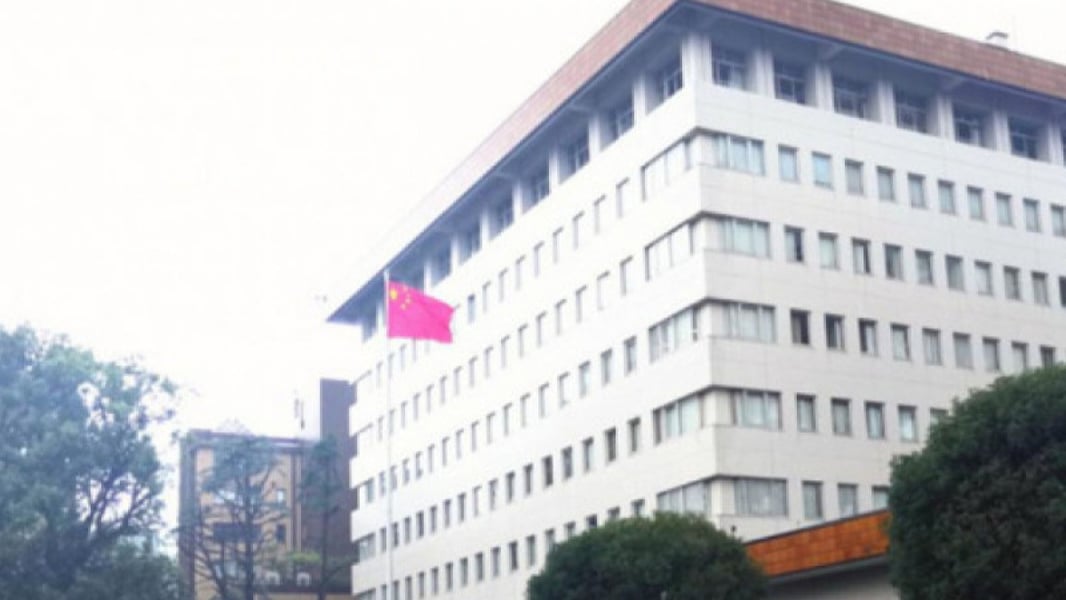
TOKYO — The Chinese Embassy in Japan on Saturday condemned what it called Japan’s latest negative moves at Yasukuni Shrine, saying Japanese leaders had sent ritual offerings and some cabinet members and lawmakers had visited it, according to Xinhua.
A spokesperson said Japan launched wars of aggression during World War II and committed heinous crimes, and called the shrine, which enshrines 14 Class-A war criminals, “a spiritual tool and symbol of Japanese militarism.” Whatever excuses Japanese officials give for paying homage there, the spokesperson said, they cannot conceal an intent to rehabilitate war criminals, cover up wartime crimes, distort historical facts and speed Japan’s remilitarization.
Xinhua’s report of the statement does not name the leaders, ministers or lawmakers it refers to, and it gives no detail of what was offered or by whom. The spokesperson spoke in response to media inquiries.
Such acts, the spokesperson said, “desecrate historical justice, challenge the bottom line of human civilization and constitute a provocation to the postwar international order.” The spokesperson also noted that this year marks the 80th anniversary of the opening of the Tokyo Trials, and said a correct understanding of history is a political foundation for Japan’s relations with its neighbors, according to Xinhua. China urged Japan to “completely break with militarism,” the statement said.
The shrine’s autumn festival has become a recurring flashpoint. TASS reported that the last time a Japanese head of government personally made a pilgrimage to Yasukuni was in December 2013, under Shinzo Abe.
August followed a similar pattern. TEH reported then that Japan’s defense minister visited Yasukuni on the surrender anniversary while Prime Minister Sanae Takaichi sent a monetary offering, and that China’s foreign and defense ministries both objected.
The embassy’s statement lands on strained ground. In August, TEH reported that Japanese lawmakers had flown to Beijing to break a freeze in Japan-China relations that followed Takaichi’s remarks on Taiwan.
None of the reports TEH read carries a response from the Japanese government to the embassy’s statement, and none says which officials the embassy had in mind.