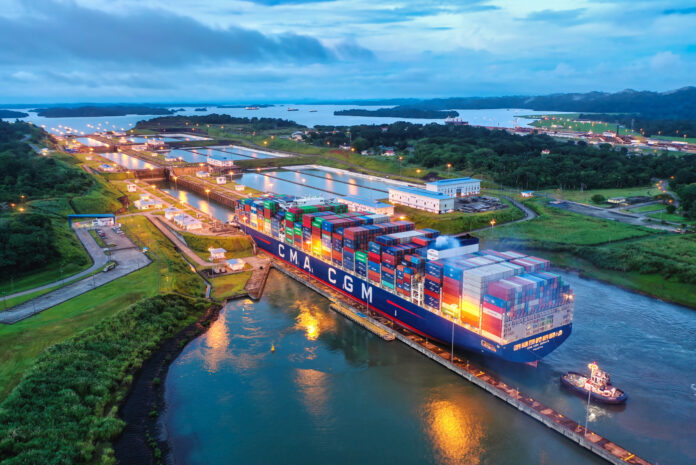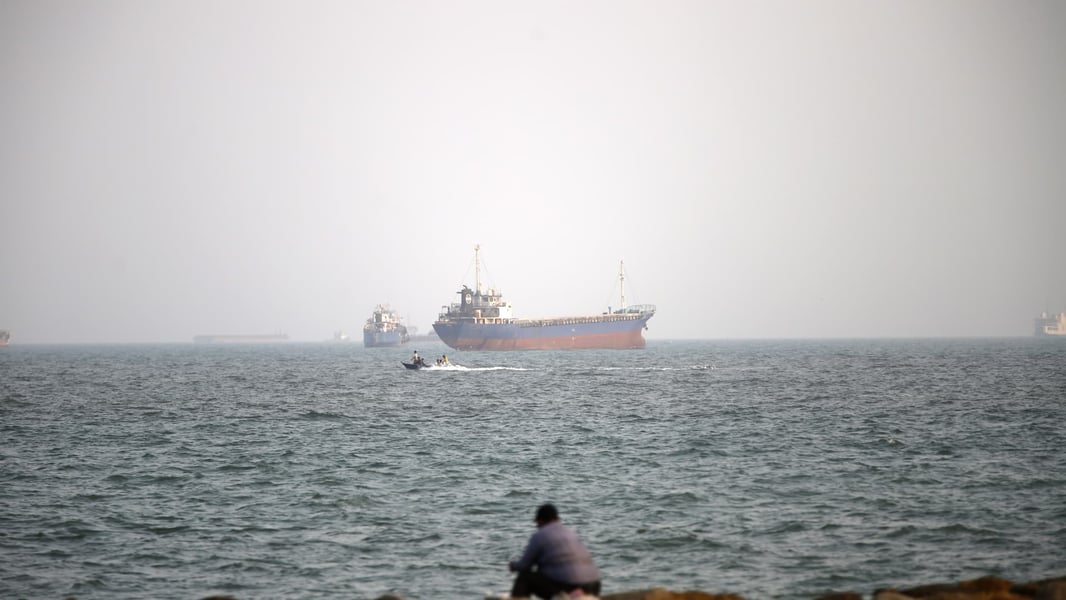

NEW YORK — For three straight days, selling pressure had been building on the Street, rooted in something Wall Street could do nothing about: a waterway six thousand miles away that carries roughly twenty percent of the world’s seaborne oil through a twenty-one-mile channel. Thursday changed the math, at least for one afternoon.
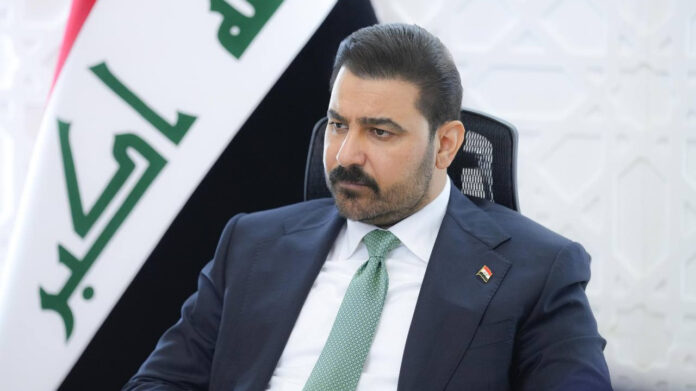
Iran’s foreign minister Abbas Araghchi, speaking at the sidelines of the United Nations General Assembly in New York, told reporters his government could reopen the Strait of Hormuz within seven days, contingent on the United States lifting its naval blockade and releasing $12 billion in frozen Iranian assets. Whether Washington was serious about either condition, or whether Tehran was, remained unclear well after trading closed. But Brent crude, which had been threatening to crack through $110 a barrel, fell five dollars to around $103. That was enough.
The Dow Jones Industrial Average ended Thursday down 159 points, or 0.31 percent, at 51,349.98. The S&P 500 lost two points, 0.02 percent, to close at 7,704.13. The Nasdaq Composite added a narrow two points, up 0.01 percent, to finish at 26,939.37. In a week that saw the Dow shed more than 1,200 points across Monday through Wednesday, flat was a victory.
“The Araghchi statement was not a deal. It was not even close to a deal,” one oil market analyst told Al Jazeera. “But it was the first senior Iranian official to put a number on a timeline: seven days. That mattered.”
The ten-year Treasury yield, which had spiked toward 5.15 percent earlier in the week as investors priced in prolonged oil disruption and inflation, retreated to around 4.97 percent by the close. The pullback reflected a market that had been leaning hard on its worst assumptions for four sessions and found, briefly, a reason not to.
The Iran ceasefire roadmap offered by Araghchi at UNGA was not strictly about the strait. It was framed as a broader de-escalation proposal linking Hormuz, the frozen assets dispute, and a reduction of US naval presence in the Persian Gulf. Those are not conditions the White House has shown any inclination to meet. But commodity traders did not need to believe the deal was coming to sell their long positions; they needed only to believe the most catastrophic scenario, a full and sustained Hormuz closure, was slightly less inevitable than it had looked on Wednesday.
The day’s biggest equity gains were concentrated in consumer-facing technology. Meta Platforms added 4.5 percent on no specific news, the kind of move analysts attributed to a combination of short-covering and rotation out of energy-adjacent names. Alphabet rose 1.34 percent. Tesla fell 0.57 percent. Nvidia lost 0.41 percent after four sessions of losses that have stripped roughly $180 billion from its market cap, a figure that reflects as much anxiety about chip export controls and Taiwan Strait tensions as it does about Hormuz.
The week’s damage was visible in the numbers that did not change. The Federal Reserve rate path was not touched; markets continued to price no cuts in 2026, with the first reduction expected in late first quarter of next year at the earliest. Governor Christopher Waller’s comments earlier this week, ruling out a rate cut this year absent a dramatic deterioration in labor markets, have effectively removed the Fed as a market stabilizer for the near term.
JPMorgan Chase fell 0.38 percent, giving back part of Wednesday’s modest gain. Regional banks broadly weakened as credit markets absorbed data suggesting commercial real estate stress has begun spreading to mid-tier lenders. The SPDR S&P Regional Banking ETF fell 1.1 percent, its fifth straight day of declines.
Energy stocks split. Exxon Mobil fell 1.2 percent on the crude pullback. Schlumberger lost 1.9 percent. But exploration-focused producers in the Permian Basin held gains, on the view that $103 Brent still represents a generational windfall for domestic producers insulated from Hormuz risk.
The S&P 500 ended the week down about 2.4 percent, its worst five-day stretch since March 2026. The index is still up 9.3 percent year-to-date. The Dow Jones is higher by 6.1 percent over the same period.
What Thursday did not resolve is the more uncomfortable question building since the U.S. Navy established its blockade framework in mid-September: whether the global economy can absorb $100-plus oil for a sustained period without triggering a recession in rate-sensitive economies. The IMF has not updated its forecasts to reflect the Hormuz disruption. Several G7 finance ministers are expected to meet informally on the sidelines of UNGA on Friday.
Friday’s session has no scheduled Federal Reserve appearances and a light economic calendar. What is not light is the diplomatic calendar: Araghchi is expected to meet a U.S. envoy Friday morning, and if that meeting produces anything, it will reach the market well before the closing bell.