
LONDON — For buyers watching the fourth-quarter jewellery season, Wednesday brought a rare window. Gold in the United Kingdom slipped to its lowest level in two weeks as the London Bullion Market Association afternoon benchmark settled lower, pulled down by a strengthening dollar and a US Federal Reserve message that upended whatever lingering hope remained for a 2026 rate cut.
| Purity | Per Gram | Per Troy Oz | Change |
|---|---|---|---|
| 24K — 999 Fine | £104.03 | £3,234 | ▼ £0.62 |
| 22K — 916 KDM | £95.43 | £2,966 | ▼ £0.57 |
| 18K — 750 Fine | £78.02 | £2,426 | ▼ £0.46 |
| Indicative retail selling prices for September 24, 2026, based on LBMA afternoon fix. Exclude VAT, making charges, and dealer margins. Verify with your jeweller before purchase. | |||
The LBMA afternoon fix on Wednesday settled at $4,292.90 per troy ounce in dollar terms, converting to approximately £3,234 at the prevailing sterling rate. The pound itself held steady near $1.327 against the dollar, so the decline in UK gold prices tracks almost entirely to the Comex move rather than any sterling-specific pressure. For buyers, the practical effect is that 24K gold is now roughly £0.62 per gram cheaper than it was 24 hours earlier — meaningful on larger purchases, marginal on single pieces.
The immediate driver came from Washington. Federal Reserve Board Governor Christopher Waller’s statement that the Fed would deliver no rate cut in 2026 reinforced the hawkish consensus that has been building through the autumn. US 10-year Treasury yields pushed toward 5.1%, dragging UK gilts higher in sympathy. Gold, which yields nothing and therefore loses relative appeal when risk-free rates rise, responded with institutional selling on Comex. Two other Fed governors backed Waller’s position in separate remarks, effectively closing the debate on 2026 easing.
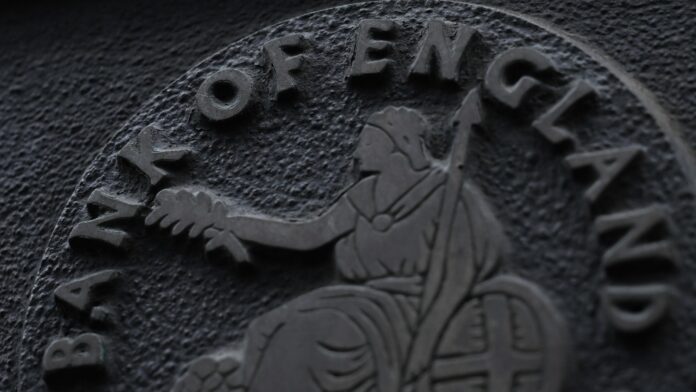
The Bank of England faces a different calculation. Domestic inflation has eased faster than the Monetary Policy Committee projected at the August meeting, and markets were pricing a quarter-point cut before year-end even before Wednesday’s US data added complication. Whether the MPC moves independently of Fed paralysis or waits for a cleaner global backdrop will shape sterling’s direction and, by extension, how much of any future Comex recovery actually reaches UK retail gold buyers. For now, the World Gold Council data shows the UK retail market absorbing the current retreat without sharp demand disruption — physical buyers have been conditioning themselves to prices in this range since July.

For context on how UK prices compare internationally, the table below shows the same LBMA fix converted across major gold markets.
| Country/Market | Currency | 24K/gram | 24K/troy oz | Change (oz) |
|---|---|---|---|---|
| United Kingdom | GBP (£) | £104.03 | £3,234 | ▼ £19 |
| United States | USD ($) | $138.03 | $4,293 | ▼ $26 |
| Eurozone | EUR (€) | €123.41 | €3,838 | ▼ €23 |
| UAE (Dubai) | AED | AED 506.81 | AED 15,764 | ▼ AED 94 |
| India | INR (₹) | ₹15,283 | ₹4,75,471 | ▼ ₹1,524 |
| Based on Comex spot $4,292.90/oz, September 23, 2026 New York close. Converted at prevailing mid-market rates. Indicative only; excludes local taxes and duties. | ||||
UK gold retail prices are largely uniform across regions — unlike markets such as India where state-level levies create distinct pricing tiers, the LBMA benchmark flows through to dealers and jewellers across England, Scotland, Wales, and Northern Ireland at effectively the same rate. The table below shows the September 24 indicative retail price across major UK cities.
| City | Region | 24K/gram | 22K/gram | 18K/gram |
|---|---|---|---|---|
| London | England | £104.03 | £95.43 | £78.02 |
| Birmingham | England | £104.03 | £95.43 | £78.02 |
| Manchester | England | £104.03 | £95.43 | £78.02 |
| Leeds | England | £104.03 | £95.43 | £78.02 |
| Liverpool | England | £104.03 | £95.43 | £78.02 |
| Sheffield | England | £104.03 | £95.43 | £78.02 |
| Bristol | England | £104.03 | £95.43 | £78.02 |
| Nottingham | England | £104.03 | £95.43 | £78.02 |
| Leicester | England | £104.03 | £95.43 | £78.02 |
| Newcastle | England | £104.03 | £95.43 | £78.02 |
| Glasgow | Scotland | £104.03 | £95.43 | £78.02 |
| Edinburgh | Scotland | £104.03 | £95.43 | £78.02 |
| Cardiff | Wales | £104.03 | £95.43 | £78.02 |
| Swansea | Wales | £104.03 | £95.43 | £78.02 |
| Belfast | Northern Ireland | £104.03 | £95.43 | £78.02 |
| UK retail gold prices are benchmark-driven with minimal regional variation. Rates are indicative for September 24, 2026. Exclude VAT, making charges, and retailer margins. | ||||
Silver fell in step with gold on Wednesday. The 999 fine benchmark declined £0.05 per gram to £0.75, with sterling and 800-grade silver moving proportionally lower as Comex silver tracked the gold correction.
| Silver Grade | Per Gram | Per Troy Oz | Change |
|---|---|---|---|
| 999 Fine | £0.75 | £23.30 | ▼ £0.05 |
| 925 Sterling | £0.69 | £21.50 | ▼ £0.05 |
| 800 Grade | £0.60 | £18.65 | ▼ £0.04 |
| UK silver prices for September 24, 2026. Indicative only; exclude VAT and making charges. | |||
What is the gold price in the UK today, September 24, 2026?
On September 24, 2026, the indicative UK retail price for 24-karat gold is £104.03 per gram, or £3,234 per troy ounce, based on the LBMA afternoon benchmark converted at the prevailing GBP/USD rate of approximately 1.327. The 22-karat price is £95.43 per gram and 18-karat stands at £78.02 per gram. All prices exclude VAT and any making charges applied by individual jewellers.
Why did UK gold prices fall on September 24, 2026?
The decline was driven by the same macro forces affecting gold globally: US dollar strength and hawkish Federal Reserve guidance. Fed Governor Waller’s explicit statement that no rate cut would come in 2026 lifted Treasury yields and the dollar index. Since gold is priced in dollars on Comex and converted to sterling at the spot rate, a stronger dollar reduces the sterling price independently of any UK-specific factors. The pound held steady near $1.327, so Wednesday’s price fall in the UK reflects almost entirely the Comex-dollar dynamic rather than any domestic sterling weakness.
Is now a good time to buy gold jewellery in the UK?
From a price-cycle perspective, Wednesday’s level represents a two-week low and sits roughly 2% below the early-September peak. Whether that constitutes a buying opportunity depends on what gold does next: if Friday’s US PCE inflation data comes in above the 2.3% consensus, the dollar could strengthen further and press gold lower still. If the data is in line or softer, Comex could stabilise and UK retail prices would follow. Buyers with a specific jewellery purchase in mind may find the current level reasonable; investors in bullion typically watch the LBMA fix daily rather than acting on a single session’s move.
How does the LBMA fix set UK gold prices?
The London Bullion Market Association publishes a twice-daily benchmark fix — an AM fix at approximately 10:30am GMT and a PM fix at approximately 3pm GMT — through an electronic auction process involving major bullion banks. The PM fix is the more widely cited reference for daily closing prices. UK dealers and jewellers use this benchmark, converted to sterling at the prevailing exchange rate, as the basis for their retail prices. Dealer spreads and making charges are applied on top, meaning the price a consumer pays in a UK jeweller is always somewhat above the LBMA benchmark figure.
The next significant directional test for UK gold prices comes Friday, when the US Personal Consumption Expenditure index for August is published. A reading that reinforces the case for sustained dollar strength would maintain the current downward pressure on sterling-denominated gold prices. Longer term, the Bank of England’s next Monetary Policy Committee decision — and whether it diverges from the Federal Reserve’s on-hold stance — will determine how much of any global gold recovery translates into UK pricing.