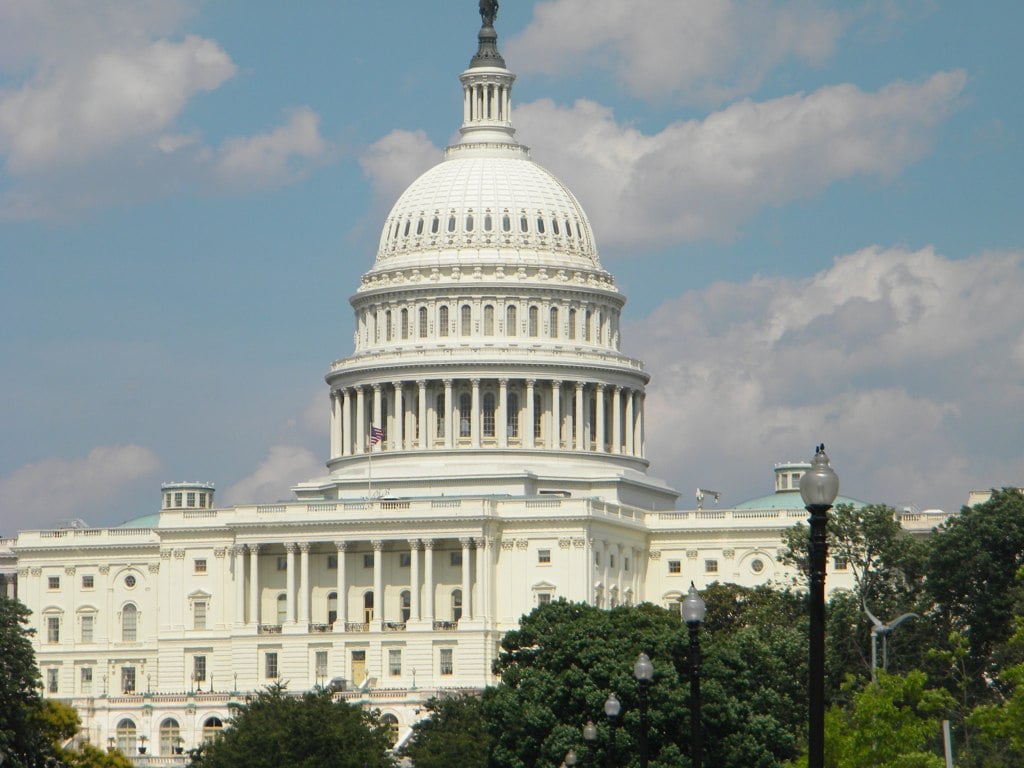

WASHINGTON – The House passed its 2027 defence spending legislation on Wednesday by 216 votes to 212, the narrowest possible margin for a measure that for decades has been one of the rare pieces of American legislation that moved through Congress with broad, quiet support. This year it did not. Seven Republicans joined 205 Democrats in opposing a bill that its critics on both sides of the aisle described less as a defence authorisation and more as a political document committing the United States to a deeper military partnership with Israel at a moment when that partnership has no domestic consensus behind it.
Republican Representative Thomas Massie of Kentucky was among the seven members of his own caucus who voted no. “Final vote total for the NDAA today which tragically merges our military technology and supply chains with Israel’s,” Massie wrote after the vote, a formulation that treated expanded Israel cooperation not as a strategic asset but as a structural entanglement that would outlast any individual policy decision about Gaza or the Iran conflict. He did not elaborate on the specific provisions he found objectionable; no House Republican leadership statement addressed his objection directly.
The bill, formally the 2027 National Defence Authorisation Act, would set the ceiling for military spending at $1.15 trillion and push toward a longer-term target of $1.5 trillion, the largest defence budget in American history if enacted. Among its provisions is a section expanding military technology collaboration with Israel, including joint development programmes, supply chain integration, and enhanced intelligence sharing protocols. The specifics of what is to be shared, and under what oversight conditions, were not made public in the summary materials released before the vote.
Senate Democrats blocked debate on an earlier version of the measure, and Senate Minority Leader Chuck Schumer called the House vote a “permission slip” for the administration’s war against Iran. The Senate faces a more difficult arithmetic. Democrats retain enough seats to block cloture, and the provisions that drove seven Republicans away from the House bill have not grown less controversial in the upper chamber. Whether Senate Republican leadership will negotiate those provisions down to recover Democratic votes, or press the bill through reconciliation procedures that bypass a filibuster, was not clear by Wednesday evening.
The NDAA passes every year. It has passed every year since 1961, a record of legislative continuity that has survived divided government, wars, and impeachments. The House has never previously passed it by a margin as thin as four votes. The majority of those four votes came from six Democrats who broke with their caucus to support the measure; without them, the bill would have failed. They have not collectively explained their reasoning, and leadership has not publicly identified them as having been persuaded rather than having acted independently.
The legislation also includes Ukraine aid and a provision known as the SAVE America Act, which introduces federal voting restrictions and has been characterised by Democrats as a voter suppression mechanism. Both provisions pulled at different wings of each party in different directions, complicating any straightforward account of what the 216-212 outcome actually represents. What it does not represent, by almost any reading of the vote count, is a mandate.
The Israel cooperation provisions drew the most sustained opposition, and the most unusual coalitions. That a Kentucky Republican could characterise the bill as a tragedy and Senate Democrats could call it a permission slip for a wider war captures something the vote count itself does not. The supply chain integration Massie criticised has been building for years; this NDAA would codify and accelerate it. Once military procurement infrastructure is merged across two defence establishments, reversing that integration becomes a project measured in decades, not election cycles.
The vote came as the United States has been supplying Israel with weapons packages totalling $6.7 billion since October 2023, covering attack helicopters, heavy bombs, and armoured vehicles; supplies that human rights organisations and United Nations investigators have stated are being used in the killing of Palestinian civilians in Gaza. The number of Palestinians killed in Gaza since October 7, 2023 exceeds 50,000 by most credible counts, with independent investigators from the UN special rapporteur’s office characterising the pattern of killing and starvation as genocide. Deepening the military supply chain partnership between Washington and Tel Aviv in this context is not a neutral administrative act.
The congressional vote was also not occurring in isolation from European movement in the opposite direction. The Netherlands announced this week a ban on imports from Israeli settlements, a step that reflects a broader European reckoning with what continued economic cooperation with Israel means in the context of the genocide in Gaza. Where European governments have been restricting commercial ties, the House has voted to expand military ones.
In Gaza, Hamas leader Yahya al-Hayya delivered his inaugural address this week pledging to rebuild the territory and pursue a Palestinian state, a statement that arrived in the context of a civilian population attempting to articulate a future while living in rubble. The political infrastructure of that future exists entirely separately from the congressional vote in Washington; the two processes are proceeding on parallel tracks with no evident point of intersection in the near term.
The bill moves to the Senate, where its path remains uncertain. The specific Israel technology-sharing provisions have not been publicly detailed by any congressional committee. What they contain, which programmes they authorise, and what accountability mechanisms govern joint development arrangements is not yet part of the public record. That absence of detail did not stop the House from voting; it may make the Senate’s job harder.
The 216 members who voted yes passed a bill that seven of their own party’s members called a mistake; one called it a tragedy. That language does not typically attach to legislation the majority is comfortable with. The narrowness of the margin and the character of the opposition say something that the final headline number, a number that will be characterised as a win, does not.