Iran has demanded that the countries responsible for attacking its territory compensate the Islamic Republic for the destruction caused during the ongoing regional conflict, with Tehran insisting that those responsible for launching military strikes must ultimately pay for the damage inflicted on the country.
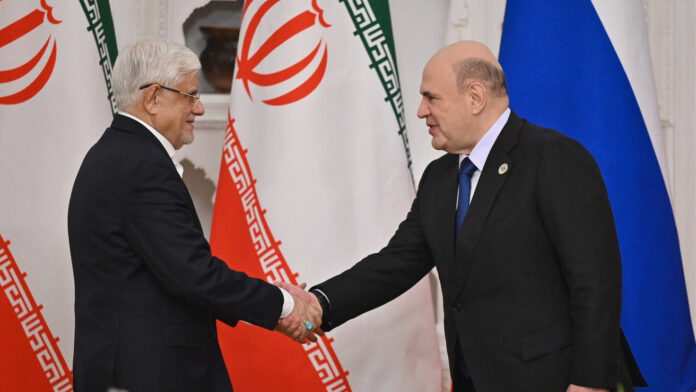
Iran’s ambassador to Russia, Kazem Jalali, said in an interview that all destruction caused during the conflict must be assessed and that the countries responsible for initiating the attacks should compensate Iran for the losses. The ambassador emphasized that the full scale of the damage cannot yet be determined because the war is still ongoing. According to the diplomat, damage inflicted on Iran must be assessed so that aggressors compensate once the conflict ends.
“All damage inflicted on us must be assessed so that those who started the war and the aggressors can compensate,” Jalali said, adding that calculating the exact losses at this stage would be premature because the situation on the ground continues to evolve as military operations persist. :contentReference[oaicite:0]{index=0}
The remarks come as the confrontation between Iran, the United States and Israel continues to escalate across the Middle East, with strikes, counterstrikes and mounting casualties raising fears of a prolonged regional war.
Strikes that triggered the war
The latest phase of hostilities began on February 28 when the United States and Israel launched large-scale strikes on targets across Iran. The attacks reportedly hit military installations and strategic facilities in several cities, including Tehran, causing significant destruction and civilian casualties.
Iranian officials say the attacks targeted both military and civilian infrastructure, including facilities located near densely populated urban areas. According to Iranian authorities, the strikes resulted in widespread damage to homes, industrial sites and key infrastructure.
The offensive marked one of the most significant direct military confrontations between Iran and Israel in decades, drawing the United States directly into the conflict and dramatically escalating tensions across the region. Separate reporting about explosions and strikes reported in Tehran during the opening phase of the conflict described heavy smoke rising above parts of the Iranian capital as attacks unfolded.
The conflict also triggered broader instability across the Middle East. Analysts say the confrontation that erupted after Israel attacks Iran has begun reshaping regional geopolitics and security alliances.
Iran launches retaliation
Following the initial strikes, Iran launched retaliatory operations targeting Israeli territory and American military facilities across the region.
Iranian missile and drone attacks have struck a range of military and strategic targets, including locations linked to US forces stationed in the Middle East. International reporting on missile and drone retaliation linked to the escalating conflict indicates that the confrontation has quickly expanded beyond the initial strikes.
The escalation has transformed the confrontation into a wider regional conflict involving several countries and military theaters. Analysts warn that the growing exchange of strikes could draw additional regional actors into the conflict.
The widening battlefield has also raised concerns among governments and international organizations that the confrontation could trigger a broader Middle East war if diplomatic efforts fail.
Impact on global energy markets
The war has had immediate consequences for global energy markets as tensions around the Strait of Hormuz, one of the world’s most critical oil transit routes, intensified.
The strategic waterway carries roughly one-fifth of the world’s seaborne oil supply, making it a crucial artery for global energy markets. Disruptions in the area have already caused spikes in oil prices and raised concerns about long-term supply instability.
Recent reporting has highlighted how the crisis has placed global shipping routes under pressure, particularly after Tehran signaled maritime restrictions affecting vessels linked to countries involved in the attacks.
The conflict has also raised concerns in Asia, where energy-importing nations rely heavily on Gulf oil supplies. Amid the disruption, Iran has indicated that it may allow safe passage for Indian ships through the Strait of Hormuz, signaling an attempt to avoid broader disruption to global trade routes.
Tehran demands accountability
Iranian officials say that compensation for war damage will be a central condition for any future negotiations aimed at ending the conflict.
Jalali stressed that Tehran is not rejecting diplomacy but said talks must lead to tangible results and guarantees that similar attacks will not occur again.
“Iran never refuses negotiations,” the ambassador said, adding that discussions must ensure lasting peace and security in the region.
According to the envoy, any political settlement must also address the material damage inflicted on Iran during the war.
The Iranian leadership has repeatedly argued that recognition of the country’s rights and compensation for losses are essential components of a durable peace settlement. Coverage from Iran’s demand that the US and Israel pay for war crimes and destruction has reinforced the government’s position that reparations remain central to Tehran’s diplomatic demands.
Global reactions and diplomatic tensions
The conflict has drawn strong reactions from governments and international organizations around the world.
Diplomatic efforts to de-escalate the crisis have intensified, with several countries urging an immediate ceasefire and negotiations aimed at preventing further regional instability.
However, divisions have emerged among Western allies. Some European governments have signaled reluctance to join military operations, with reporting indicating that Germany and Norway rejected joining a US-led military campaign linked to the conflict.
The war has also sparked demonstrations around the world. Reports describing global protests against attacks on Iran show that the conflict has generated widespread public debate about the geopolitical consequences of the war.
Meanwhile, Gulf governments are increasingly concerned about the security implications of the confrontation. Analysts say the regional security architecture is under strain as Gulf nations question the reliability of US security guarantees amid expanding missile and drone attacks.
Rising casualties and destruction
The ongoing conflict has already caused heavy casualties and significant destruction across several countries in the region.
Airstrikes, missile attacks and drone strikes have hit cities, military bases and industrial facilities, leaving thousands displaced and causing extensive damage to residential neighborhoods.
Reports indicate that civilian casualties have been recorded in multiple areas affected by the fighting, while infrastructure damage has disrupted transportation networks, hospitals and power facilities.
The scale of destruction is still being assessed as the war continues.
Uncertain path ahead
As the conflict continues, analysts warn that the situation could remain volatile for an extended period.
Military operations by both sides show no immediate signs of slowing, and diplomatic initiatives have yet to produce a breakthrough.
Iran has signaled that it will continue responding militarily until what it describes as aggression against its territory ends.
At the same time, Tehran insists that compensation for war damage must be addressed before any long-term political settlement can be reached.
For now, the war that erupted after Israel attacks Iran continues to reshape the geopolitical landscape of the Middle East while raising new questions about regional security, global energy stability and the prospects for diplomacy.