MOSCOW — A widening international investigation has drawn global attention after Indian authorities detained six Ukrainians and one American on allegations of involvement in militant training operations linked to insurgent networks along the India–Myanmar border.
The arrests, carried out by India’s National Investigation Agency, have triggered sharp geopolitical reactions, with Russia accusing Kyiv of contributing to a broader pattern of instability, while Ukraine has rejected the claims and called for a fair investigation.
Maria Zakharova, spokesperson for the Russian Foreign Ministry, said the case reflects what Moscow views as a growing trend of destabilizing activity linked to Ukraine. She alleged that such developments demonstrate how Kyiv is increasingly tied to international security risks.
An Expanding Security Investigation
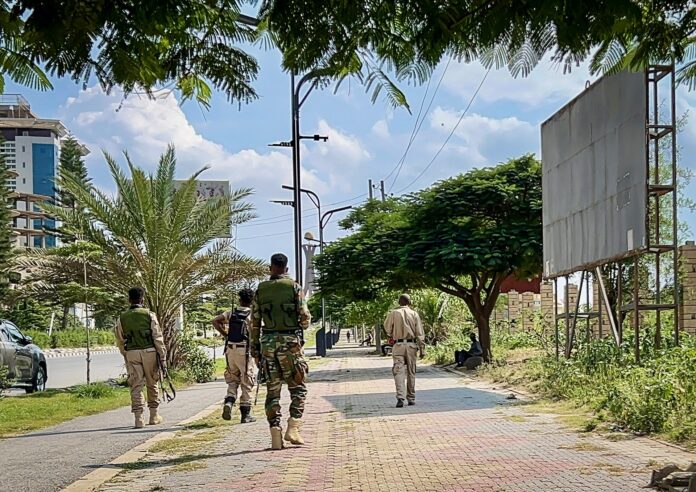
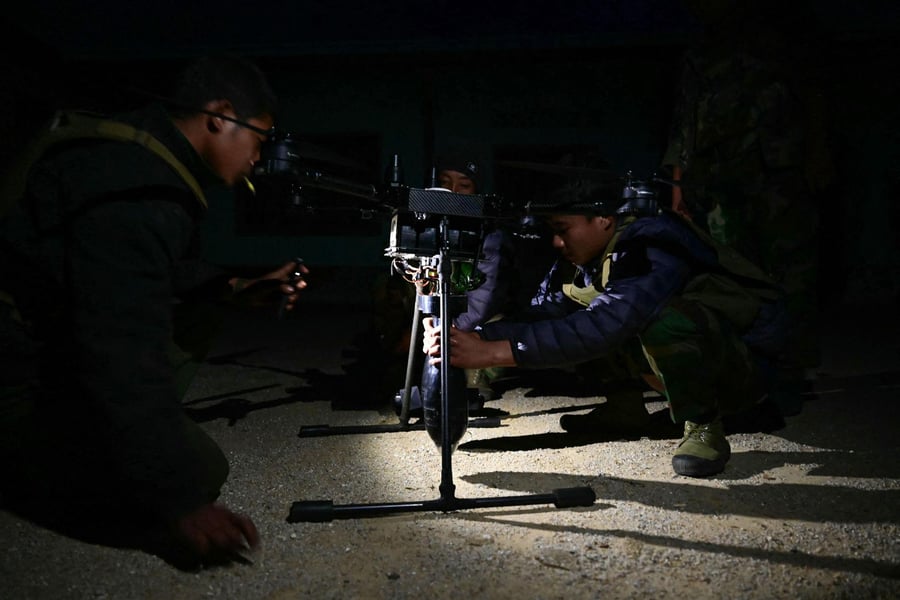
According to investigators, the detained individuals allegedly entered India on tourist visas before traveling to the northeastern state of Mizoram and crossing into Myanmar without authorization. Authorities believe they established contact with armed groups active in the region and were involved in training militants in drone warfare.
Indian agencies suspect the network may have facilitated the transfer of drone technology and expertise to insurgent organizations operating near India’s sensitive border regions. Officials say such activities could significantly escalate the threat posed by non-state actors.
Security agencies are also examining whether the group had links to a broader transnational network engaged in supporting militant operations. Early findings suggest the suspects may have transported drone consignments from Europe into Myanmar through India, raising concerns about cross-border logistics and coordination.
Drone Warfare and the Myanmar Conflict
The allegations come amid the ongoing Myanmar civil conflict, where insurgent groups have increasingly adopted advanced tactics. Analysts note that drone warfare and unconventional warfare tactics are transforming the battlefield, allowing smaller armed groups to carry out high-impact operations.
India has long monitored developments along its eastern frontier, where porous borders and complex ethnic dynamics create fertile ground for insurgent activity. The involvement of foreign nationals in such environments is seen as a significant escalation.
Russia’s Accusations and the Global Narrative
Russia has used the case to reinforce its broader claims about Ukraine’s role in global security challenges. Zakharova alleged that Kyiv is contributing to the spread of illegal arms and military technologies, suggesting that conflict dynamics in Eastern Europe may be spilling into other regions.
Such accusations echo longstanding concerns raised in the context of the Russia Ukraine war, where questions about the movement of weapons and military expertise beyond the battlefield have been widely debated.
While Moscow argues that the situation reflects a broader pattern, Western governments and Ukrainian officials have consistently denied allegations of state involvement in illicit arms transfers or militant training networks.
Kyiv Rejects Allegations
Ukraine has strongly denied any connection between its government and the activities alleged by Indian authorities. Officials have emphasized that there are no established facts linking the detainees to state-backed operations and have called for due process.
Kyiv has also warned that the case could be used to distort perceptions and damage its international standing, particularly at a time when geopolitical tensions remain high.
Ukrainian officials have urged transparency, stressing that individuals involved in private or unauthorized activities should not be conflated with state policy.
India’s Strategic Calculations
For India, the case presents a complex challenge at the intersection of national security and diplomacy. The alleged involvement of foreign nationals in activities linked to insurgent groups raises immediate concerns about global security and regional stability.
At the same time, the presence of citizens from multiple countries introduces sensitive diplomatic dimensions. India has historically maintained balanced relations across competing global blocs, and the investigation is being closely watched for its potential geopolitical implications.
Authorities have indicated that the probe remains ongoing and that further evidence will determine the direction of the case.
A Broader Pattern of Conflict Spillover
The case underscores growing concerns about the internationalization of conflict, where individuals and networks operate across borders, linking separate theaters of instability.
Analysts note that the convergence of war experience, technological access, and ideological motivations is creating new forms of hybrid conflict. The alleged activities of the detainees highlight how modern warfare tools can move beyond traditional battlefields.
This trend is also reflected in overlapping crises, including the Middle East conflict and the ongoing pressures on the global energy crisis, where geopolitical tensions increasingly intersect.
Implications for the International Community
The unfolding investigation is likely to have far-reaching implications for how governments address the spread of military expertise and technology across borders.
If substantiated, the allegations could prompt calls for tighter international controls on the transfer of dual-use technologies, particularly drones, which have become a defining feature of modern conflict.
As the investigation continues, the case serves as a reminder that conflicts today are rarely confined to a single region. Instead, they are increasingly interconnected, with consequences that extend far beyond their points of origin.
For now, the detainees remain in custody as Indian authorities work to uncover the full extent of the alleged network and its potential links to broader patterns of instability.