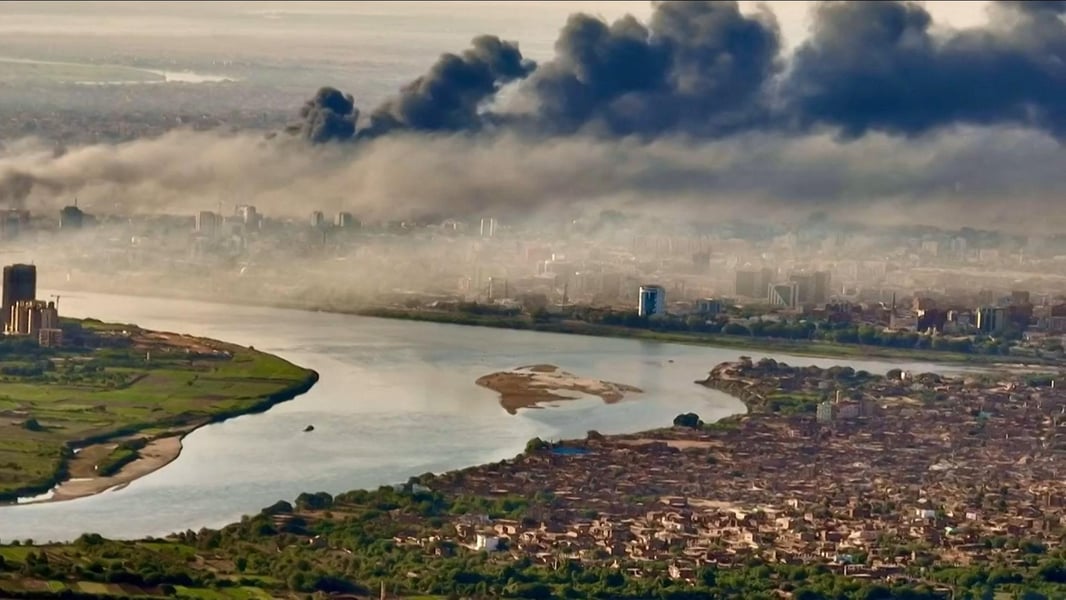

The war in Sudan is no longer just a civil conflict. It is a slow-moving catastrophe that has dismantled an entire nation’s ability to sustain life, while the world’s most powerful governments watch from a distance, issuing statements that rarely translate into meaningful action.
What began in April 2023 as a power struggle between the Sudanese Armed Forces and the Rapid Support Forces has evolved into something far more dangerous: a regional crisis with the potential to redraw the geopolitical map of the Horn of Africa. Yet despite the scale of destruction, the Sudan Civil War has been met with a striking absence of urgency from Western capitals.
Instead, Sudan has become a case study in selective outrage.
A Healthcare System Reduced to Rubble
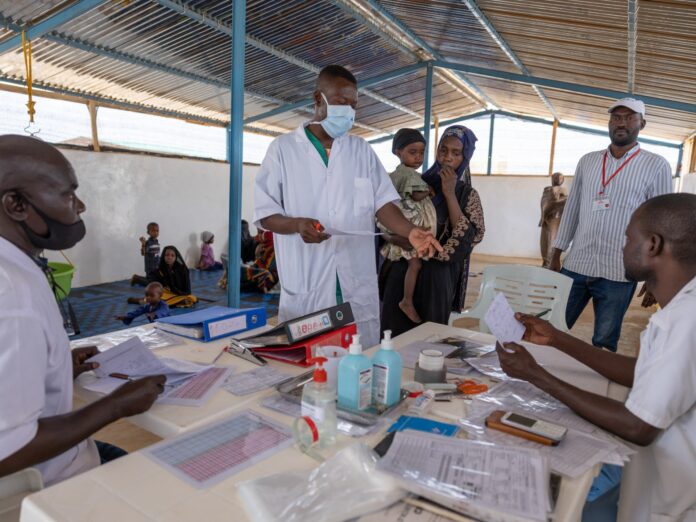
Across Sudan, hospitals are no longer sanctuaries. They are targets, ruins, or empty shells.
The country’s healthcare system has effectively collapsed under the weight of sustained violence. More than 70 percent of health facilities in conflict zones are no longer functioning, leaving millions without access to even the most basic care.
Recent reporting confirms that a strike on a hospital in Darfur killed at least 64 people, rendering the facility inoperable and cutting off critical services for entire communities.
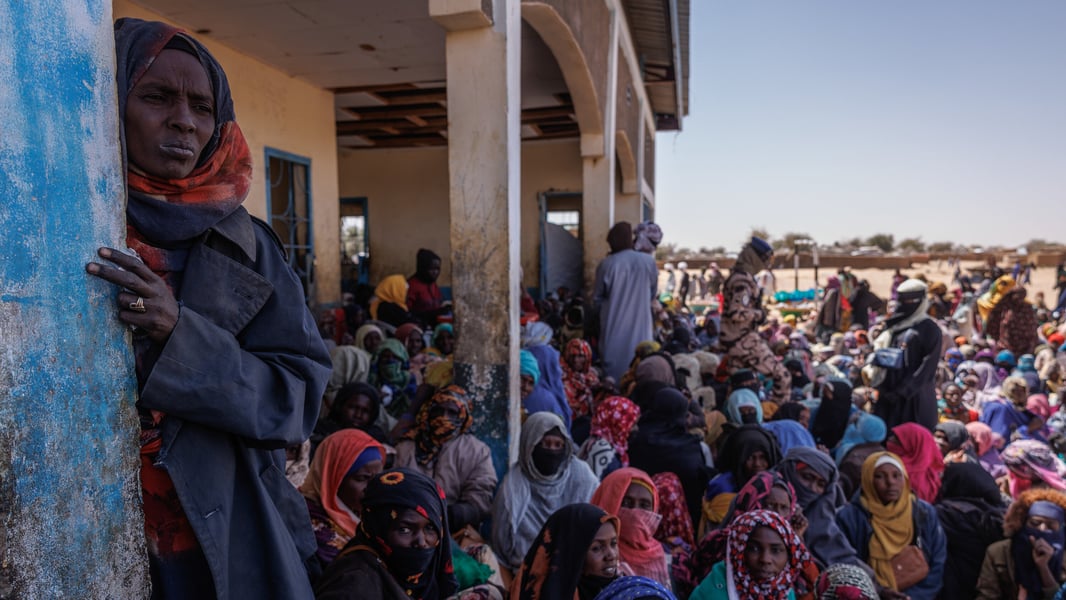
The result is the near-total destruction of Sudan’s medical infrastructure, leaving entire regions without surgical care, emergency response, or disease control systems.
In areas already devastated by violence, record child casualties in urban warfare reflect the scale of civilian suffering.
What remains is not a healthcare system, but a vacuum.
The War Crosses Borders
The consequences of Sudan’s collapse are no longer contained within its territory.
In recent weeks, cross-border violence left at least 17 civilians dead as clashes spilled into neighboring Chad.
In response, Chad deployed troops after cross-border attacks killed civilians, signaling a dangerous escalation that could transform a domestic war into a regional conflict.
The spread of violence mirrors earlier patterns, including drone strikes on markets killing civilians, which have intensified fear and instability across the region.
Analysts warn that the Sudan war is already destabilizing neighboring countries like Chad, creating conditions for a broader conflict.
A Humanitarian Catastrophe of Historic Scale
The human toll is staggering, even by the standards of modern warfare.
Across Darfur and other conflict zones, civilian deaths surging across Darfur underscore the severity of the crisis.
At the same time, Western failure and complicity amid genocide in Darfur has drawn increasing scrutiny from analysts and humanitarian observers.
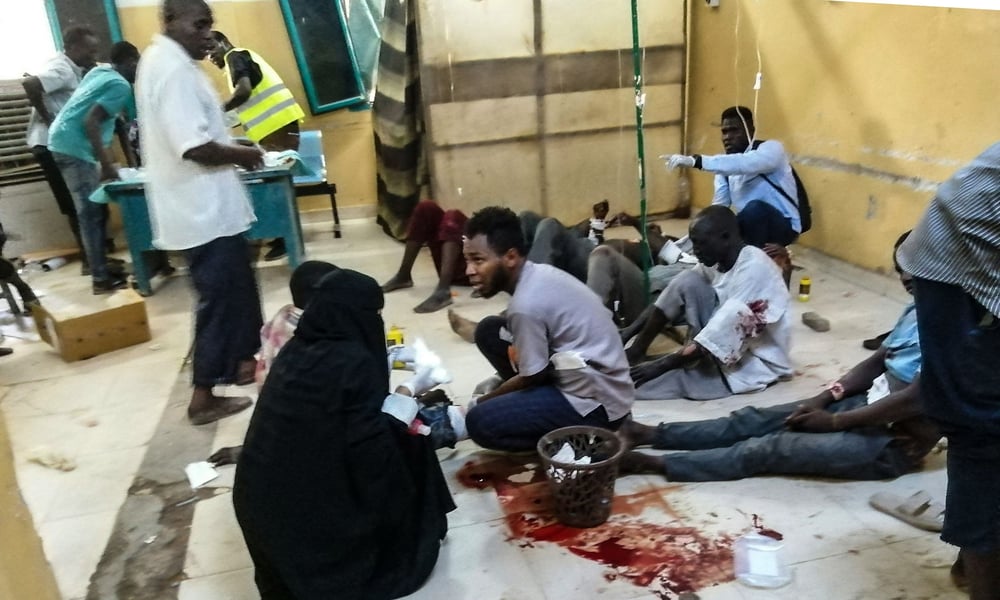
Meanwhile, hospital attacks have killed civilians and medical workers, further compounding the humanitarian emergency.
Western Inaction and Selective Priorities
The scale of suffering in Sudan raises an uncomfortable question: why has the response been so limited?
Despite early warnings, Western governments have failed to mount a decisive response. Diplomatic efforts remain inconsistent, while humanitarian funding falls far short of what is needed.
This pattern of Western neglect fueling displacement and instability has contributed to the deepening crisis.
Even initiatives such as US push for ceasefire amid worsening violence have failed to produce meaningful results on the ground.
The disparity highlights a broader pattern in global politics, where crises in the Global South are often deprioritized unless they intersect directly with Western strategic interests.
Foreign Influence and a Fragmenting Battlefield
Complicating the conflict further is the growing role of external actors.
Both sides in the Sudan Civil War have drawn support from regional and international networks, prolonging the fighting and reducing incentives for negotiation.
In some areas, drone strikes on civilians are intensifying across Sudan, reflecting a shift toward more destructive forms of warfare.
At the same time, US escalation shaping the Sudan conflict has added further complexity to an already fragmented battlefield.
Events such as RSF seizure triggering humanitarian catastrophe illustrate how control over territory continues to shift, often with devastating consequences for civilians.
The Collapse of a State
At its core, the Sudan Civil War represents the unraveling of a state.
Government institutions have ceased to function in large parts of the country. Public services have disappeared, replaced by fragmented authority controlled by armed groups.
What remains is a patchwork of territories defined by violence rather than governance.
This collapse has far-reaching implications, not only for Sudan but for the entire region.
The Cost of Indifference
The Sudan Civil War is approaching a critical juncture.
A collapsed healthcare system, cross-border violence, and rising foreign involvement all point toward a conflict that is expanding beyond Sudan’s borders.
The story of Sudan is not just one of war. It is one of neglect.
A nation has been allowed to disintegrate in plain sight, its people caught between armed factions and an international system that has failed to act with urgency or resolve.
As the conflict spreads, the cost of that failure is becoming impossible to ignore.