
In a rare and striking admission, US President Donald Trump confirmed that American forces deliberately destroyed their own aircraft during a high-risk rescue mission deep inside Iranian territory, an operation that has exposed the extraordinary scale, secrecy, and escalating dangers of Washington’s expanding military campaign.
The revelation came as new details emerged about one of the most complex combat search-and-rescue operations in modern US military history, involving an astonishing deployment of airpower and covert deception tactics. According to officials, the mission was so sensitive that US forces ultimately chose to destroy their own aircraft rather than risk advanced systems falling into Iranian hands, a move confirmed in multiple reports describing how US forces destroyed aircraft to prevent capture.
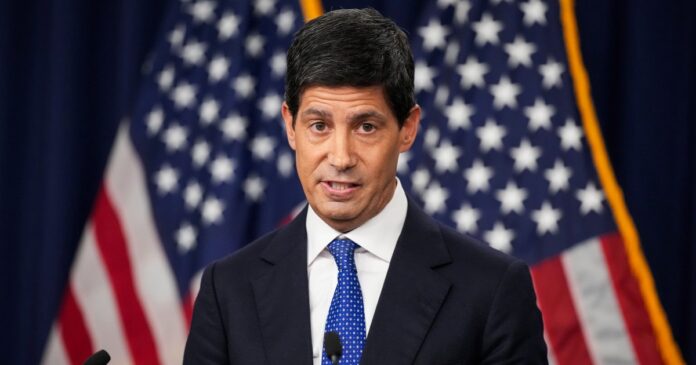
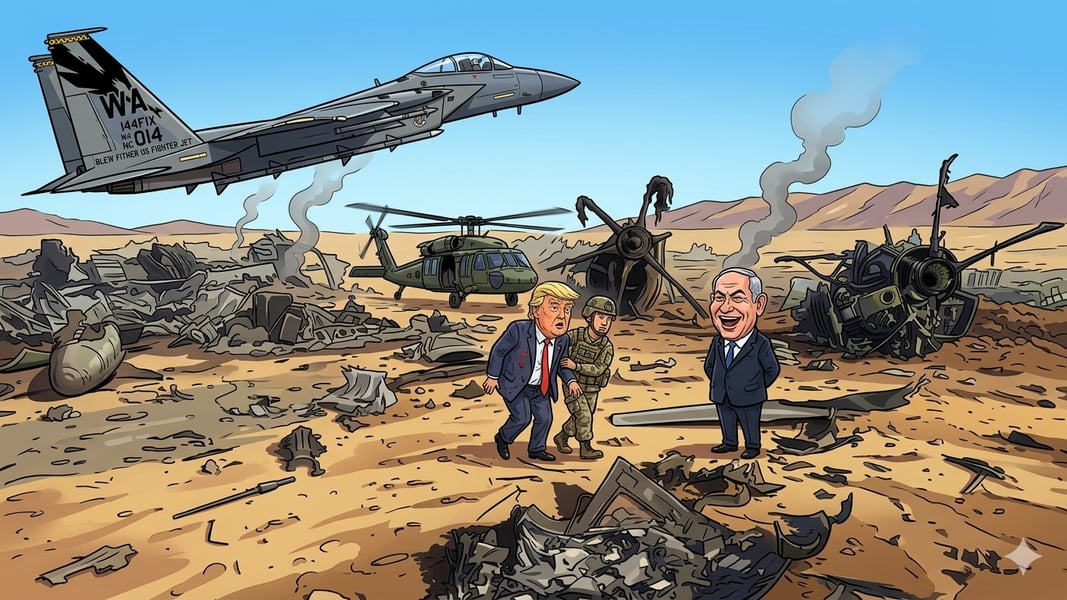
“We blew up the old planes… to smithereens,” Trump said during a press briefing, underscoring the urgency of the decision. The destroyed platforms reportedly included transport aircraft and helicopters that could not be safely recovered, reinforcing what analysts describe as a doctrine of technological denial in modern warfare.
A Mission Behind Enemy Lines
The operation was launched after an F-15E Strike Eagle was shot down over Iran, forcing its two crew members to eject into hostile terrain. While one pilot was recovered quickly, the second remained stranded in mountainous territory, evading capture for nearly two days as Iranian forces intensified search operations.
The so-called rescue quickly took on a far darker dimension. What was officially framed as a high-risk recovery mission deep inside Iranian territory instead exposed troubling decisions at the highest levels. Reports confirm that US forces destroyed their own aircraft after they became immobilized, a move justified as preventing sensitive technology from falling into enemy hands. But the admission raises deeper questions: why were such critical assets deployed into conditions where failure was so likely, and why was destruction the only fallback?
Even more alarming, the operation unfolded amid a broader US-Israel military attacks, fueling speculation that the downed US fighter jet and subsequent rescue may have been part of a larger strategic gamble rather than an isolated incident. With aircraft failing, troops exposed, and emergency destruction orders issued, the mission bore signs of a dangerously overstretched operation that risked both equipment and lives. The fact that a US pilot was left stranded for days in hostile terrain before extraction underscores how close the mission came to catastrophe.
While officials have portrayed the outcome as a success, the reality appears far more alarming. A mission that ended with the US destroying its own aircraft, after they became stranded and unusable, raises serious questions about leadership and planning. What is being presented as a “rescue” instead looks like a reckless escalation that put American lives directly in danger.
Blowing up military assets, exposing pilots to days in hostile territory, and pushing forces into a collapsing operation reflects not strength but a dangerous gamble, one that risks violating basic principles of proportionality and responsibility in conflict. Rather than protecting soldiers, this strategy appears to have put them in the line of fire, turning a rescue into a high-risk scenario where even US personnel and equipment were effectively expendable.
155 Aircraft and a War-Level Deployment
Trump later revealed that a second phase of the operation involved 155 aircraft involved in the rescue mission, including bombers, fighters, refueling tankers, and rescue units.
The scale of the deployment has drawn widespread attention from military analysts, who note that such a massive concentration of airpower is typically reserved for major combat operations rather than isolated rescues.
Officials also confirmed that the operation relied on a CIA deception campaign to mislead Iranian forces, creating multiple false signals and dispersing aircraft across different locations to obscure the real rescue effort.
Technology Denial and Strategic Calculations
The decision to destroy US aircraft highlights a central concern in modern warfare: preventing sensitive military technology from being captured and exploited. Reports indicate that the destroyed platforms contained advanced communications and defense systems, making recovery operations too risky under hostile conditions.
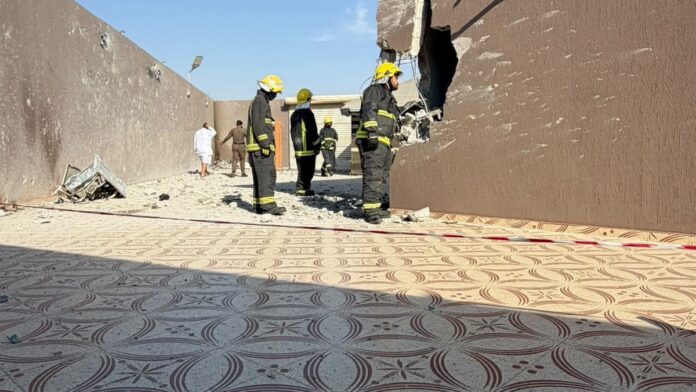
Images and footage circulating after the mission appear to show destroyed US aircraft left behind in Iran, reinforcing claims that the destruction was deliberate rather than the result of enemy action.
Financially, the mission came at a staggering cost. Analysts estimate that the operation cost hundreds of millions of dollars, reflecting the enormous logistical and operational effort required to execute such a complex extraction.
A Conflict Spiraling Wider
The rescue mission unfolded amid a broader US-backed war between Israel and Iran, which has intensified since late February following coordinated strikes on Iranian territory.
Since then, the conflict has expanded rapidly, with Iranian retaliatory strikes targeting Israeli positions and US military assets across the region. The downing of the F-15E has become a stark symbol of the risks facing US forces operating in contested airspace.
Additional reports suggest that several aircraft were hit or damaged during the rescue effort, with Iran claiming that multiple “enemy aircraft” were destroyed during the operation.
The broader escalation has triggered economic and geopolitical shockwaves, contributing to what analysts describe as a global economic shock triggered by Iran war.
Escalation Signals and Strategic Messaging
Trump has paired the rescue narrative with increasingly aggressive rhetoric, including warnings that Iran could face devastating strikes if it fails to meet US demands. In recent remarks, he indicated that Washington is prepared to escalate further, a stance reflected in reports that Trump warned Iran of further strikes.
This messaging aligns with a broader pattern of escalation, as the US-backed war expands across the Middle East, drawing in additional actors and increasing the risk of a wider regional conflict.
Meanwhile, Iran has continued to signal resistance, warning global powers as tensions spill into neighboring regions, including Lebanon, further complicating diplomatic efforts to contain the crisis.
A Defining Moment in Modern Warfare
The rescue mission, and the extraordinary decisions behind it, highlight the evolving nature of modern conflict, where technology, deception, and overwhelming force intersect in high-stakes operations.
It also underscores the growing risks of direct confrontation between major powers in contested environments, where even a rescue mission can escalate into a near full-scale military engagement.
The destruction of US aircraft, once an unthinkable admission, now stands as a stark illustration of the lengths to which modern militaries will go to protect their technological edge.
For now, the rescued airman is safe. But the operation leaves behind deeper questions about the trajectory of the conflict—and how close it may be to crossing into something far more dangerous.