



A criminal complaint filed by German lawyers has brought an uncomfortable question to the center of Europe’s political landscape: how far does support for an ally extend before it becomes legal exposure?
The complaint, submitted to federal prosecutors in Karlsruhe, accuses Chancellor Friedrich Merz and several current and former officials of aiding what the filing describes as a “Gaza genocide.” It is not a ruling, nor an indictment, but a detailed legal argument that seeks to transform long-standing policy decisions into matters of criminal responsibility.
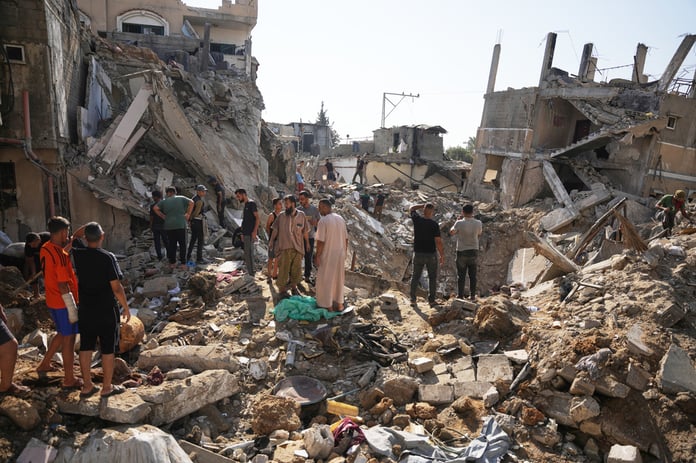
At the core of the criminal complaint lies a simple but consequential claim: that Germany’s continued approval of arms exports to Israel during the ongoing Genocide of Palestinians in Gaza, amounts to material support for actions now under intense international scrutiny.
The numbers cited are difficult to ignore. Germany approved more than €485 million in arms exports to Israel between October 2023 and May 2025, maintaining its position as Israel’s second-largest supplier after the US. That policy trajectory has been documented in reports such as Germany lifts arms exports to Israel, which traced the expansion of Berlin’s military support during the war.
For decades, Germany’s relationship with Israel has been framed through the language of historical responsibility. That framework has shaped foreign policy, guided diplomatic positions, and justified military cooperation. Yet the complaint suggests that this same framework may now be colliding with another legal obligation: the duty to prevent international crimes.

Germany has consistently rejected these accusations. At the International Court of Justice, Berlin denied complicity in genocide, arguing that its arms exports comply with international law and that the allegations lack sufficient evidence.
Yet the legal complaint challenges that position not through rhetoric, but through structure. It lays out what it describes as a chain of support: political endorsement, industrial cooperation, and sustained weapons transfers. Each element, the lawyers argue, reinforces the others.

What makes the case politically volatile is not only its legal argument, but its timing. Germany itself has shown signs of internal tension over the Gaza war. Chancellor Merz has described aspects of Israel’s military campaign as disproportionate, even while maintaining firm support for Israel’s security.
That tension has extended to the international legal arena. In a notable shift, Berlin stepped back from defending Israel at the world court, a move detailed in Germany withdraws from Israel’s ICJ defense, signaling growing pressure on Western governments over their role in the conflict.
Public pressure has followed a similar trajectory. In Germany and across Europe, demonstrations, legal petitions, and political debates have intensified. The Gaza war has increasingly become a test not only of military alliances, but of the consistency of international law.

For now, the complaint remains exactly what it is: a legal request for investigation. German prosecutors must decide whether there is sufficient suspicion to proceed. No charges have been filed. No court has ruled on the claims.
But even without a courtroom outcome, the filing has already altered the terms of debate. It challenges the assumption that foreign policy decisions exist outside legal scrutiny. It questions whether long-standing alliances can shield governments from accountability when their policies come under global examination.
As the war in Gaza continues to draw international attention, the focus is no longer limited to events on the ground. It is increasingly about how support is given, how it is justified, and whether the law is prepared to follow that chain to its source.
Related Posts













Alemania es en esencia fascista, hay q ver la violencia sideral de la policia alemana sobre manifestantes q apoyan a Palestina o contra el genocidio, cuesta ver videos dónde la barbarie es puesta sobre los cuerpos de jovenes, mayores. hombres y mujeres, los policias parecen tener la orden de propinar sobre esos cuerpos dolor, humillación, censura. Es asustador.