
US Vice President JD Vance on Tuesday rejected reports claiming Washington had reduced its military presence in Poland by 4,000 troops, insisting the Pentagon had merely postponed a scheduled rotation rather than ordered a withdrawal.
The clarification comes at a sensitive moment for NATO as tensions with Russia remain high and concerns mount across Europe over the future of America’s military commitment to the continent under President Donald Trump’s administration.
“We’ve not reduced the troop levels in Poland by 4000 troops,” Vance told reporters during a White House press briefing. “What we did is that we delayed a troop deployment that was going to go to Poland. That’s not a reduction, that’s just a standard delay in rotation that sometimes happens in these situations.”
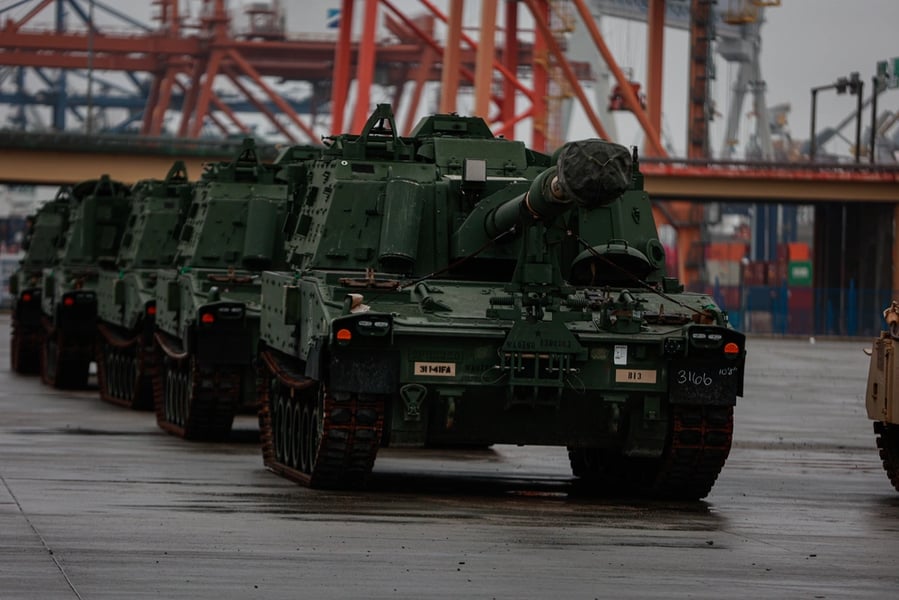
The statement followed reports earlier this month that the Pentagon had canceled the deployment of the 2nd Armored Brigade Combat Team of the 1st Cavalry Division, a combat formation consisting of more than 4,000 US troops and heavy military equipment that had been expected to rotate into Poland this year. According to a Reuters report, the decision sparked concern among NATO allies already uneasy over Washington’s changing military posture in Europe.
The development comes days after Trump freezes 4,000-troop Poland deployment, a move that intensified debate over the future of the US military presence in Europe.
The sudden halt triggered alarm among European officials and criticism from both Republican and Democratic lawmakers in Washington, many of whom argued the decision could weaken deterrence on NATO’s eastern flank at a time of continuing instability in Eastern Europe. A Wall Street Journal analysis said the deployment pause was part of broader Pentagon restructuring discussions tied to President Trump’s pressure campaign on NATO members.
According to Defense News reporting, Army officials privately acknowledged that the cancellation reflected wider force reassessments taking place inside the Pentagon.
The Pentagon’s handling of the issue has raised fresh questions over Washington’s long-term troop footprint in Europe, especially after reports suggested the administration was also considering reductions in Germany.
Several lawmakers criticized the Defense Department for failing to notify Congress or NATO partners before the decision became public. Representative Don Bacon warned the move could send the wrong signal to Moscow during a period of heightened geopolitical tension.
The canceled rotation reportedly involved troops from Fort Hood, Texas, who had already begun preparations for deployment before the order was halted, according to Associated Press report.
The controversy also follows reports that Washington may further reduce forces stationed across Europe as part of Trump’s broader military strategy. Recent coverage on US freezes troop rotations in Europe highlighted growing anxiety among NATO states over the alliance’s future security structure.
President Trump has repeatedly argued that European allies spend too little on defense while depending heavily on American military protection. Since returning to office, Trump has renewed demands that NATO members significantly increase defense spending commitments.
Poland, however, remains one of Washington’s closest military allies in Europe. Warsaw has rapidly expanded defense spending and recently accelerated modernization programs, including plans involving advanced fighter aircraft. Earlier this year, Poland to receive first batch of F-35 fighter jets in May underscored the country’s strategic military partnership with the United States.
Polish Prime Minister Donald Tusk attempted to calm fears following reports of the deployment pause, saying US officials had assured Warsaw that Poland’s security would not be affected by the delayed troop movement. An Anadolu Agency report said Polish authorities were seeking further clarification from Washington regarding future troop rotation schedules.
The incident comes amid broader geopolitical strains tied to the Russia-Ukraine conflict and worsening tensions between NATO and Moscow. Recent developments including Kremlin says Russia keeps constant contact with US over Ukraine settlement and Russian Navy fully complies with international law, warship spotted near German coast have further heightened security concerns across Europe.
Analysts say even temporary deployment suspensions can carry symbolic consequences, especially in Eastern Europe where NATO troop presence is viewed as a critical deterrent against potential escalation.
Military observers also warn that uncertainty over America’s long-term strategic commitment could deepen divisions inside NATO at a time when European governments are already struggling with defense spending pressures and political disagreements over Ukraine aid. Recent disputes such as Hungary blocks €90 billion EU loan to Kyiv in oil pipeline standoff exposed widening fractures inside the European bloc.
Meanwhile, security tensions surrounding the region’s nuclear infrastructure have also intensified after Rosatom chief claims IAEA overlooks Ukrainian attacks on ZNPP, adding further pressure to an already volatile geopolitical environment.
For now, Vance and the White House are attempting to frame the delayed Poland deployment as a routine logistical adjustment rather than a strategic retreat. However, with Congress demanding answers and NATO allies watching closely, the controversy is likely to remain a major issue in transatlantic security discussions in the weeks ahead.
—Inputs from Sputnik.