
US President Donald Trump said a framework for a possible agreement with Iran has been “largely negotiated” as indirect talks between Washington and Tehran entered a critical phase, raising cautious hopes that months of military confrontation and economic disruption in the Gulf could move toward de-escalation.
The negotiations, mediated primarily by Pakistan with support from Gulf states, focus on ending the conflict that erupted earlier this year and restoring stability around the Strait of Hormuz, one of the world’s most important oil shipping corridors. While both sides acknowledged progress, Iranian officials stressed that major disagreements remain unresolved, particularly over uranium enrichment, sanctions relief, and maritime security arrangements in the Gulf.
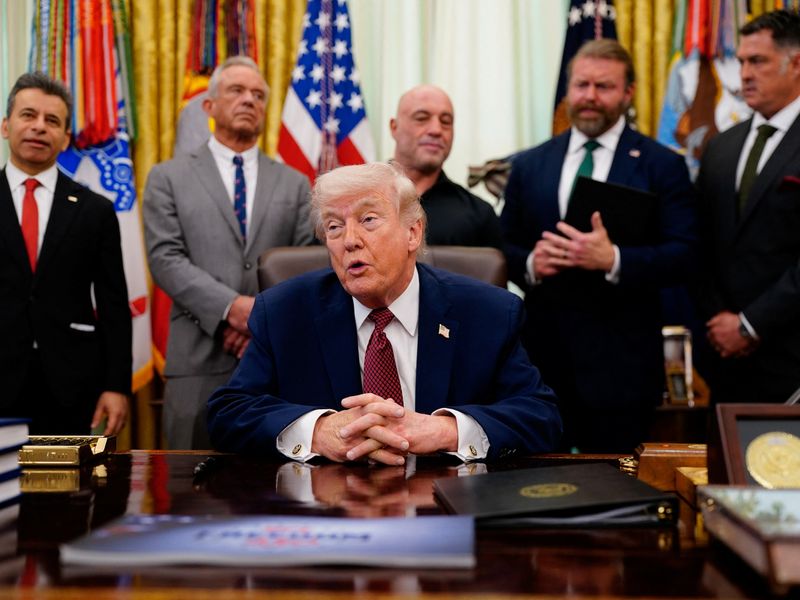
Trump told reporters that negotiators were “getting closer” to a workable arrangement after several rounds of indirect talks. Al-Jazeera reported that the White House is reviewing the latest Iranian proposals while consulting regional allies and military advisers before deciding the next phase of negotiations.
The talks mark one of the most serious diplomatic efforts since the outbreak of hostilities between the US and Iran destabilized energy markets and heightened fears of a broader regional conflict involving Israel and several Gulf states. Shipping traffic through the Strait of Hormuz has faced repeated disruptions in recent months, affecting oil prices and international trade routes.
Iranian negotiators have pushed back strongly against suggestions that a final agreement is imminent. Tehran insists that any future arrangement must include meaningful sanctions relief and guarantees against future military attacks. Iranian officials also reiterated that the country would not abandon what it describes as its legitimate nuclear rights under international law.
Senior Iranian officials accused Washington of attempting to pressure Tehran into accepting unilateral concessions after months of conflict. According to Reuters, Iranian negotiators said deep and significant disagreements still exist despite recent diplomatic momentum.
Pakistan has emerged as a central diplomatic intermediary during the crisis. Pakistani military and political leaders have reportedly conducted intensive shuttle diplomacy between Tehran, Washington, and Gulf capitals in an effort to prevent another major escalation. Reuters reported that Pakistani mediation helped establish the current negotiating framework now under discussion by both sides.
The proposed framework under discussion reportedly includes several stages beginning with de-escalation measures in the Gulf, reopening secure maritime transit routes, and broader negotiations involving sanctions and nuclear oversight mechanisms. However, neither side has publicly confirmed the exact contents of the draft proposals.
Washington continues demanding guarantees that Iran will never develop nuclear weapons capability and that commercial shipping through the Strait of Hormuz remains unrestricted. US Secretary of State Marco Rubio said progress had been made but warned that “hard issues” remain unresolved.
Iran has repeatedly denied pursuing nuclear weapons and argues that its nuclear activities remain within its sovereign rights. Tehran has also demanded the lifting of US economic sanctions that have severely affected the Iranian economy for years.
The negotiations are being closely monitored by global energy markets, where traders fear renewed fighting could trigger another major supply shock. The Strait of Hormuz handles a substantial share of the world’s oil exports, making stability in the region critical for both Asian and European economies.
Analysts say the next few days could prove decisive. Trump has warned that failure to reach an acceptable agreement could result in renewed military escalation, while Iranian officials warned that any new attacks would trigger a stronger response from Tehran and its regional allies.
Despite continuing tensions, diplomatic activity across the Middle East has intensified in recent days. Qatar, Turkey, and several Gulf states are reportedly supporting mediation efforts aimed at preventing a wider regional conflict. European governments have also urged both Washington and Tehran to continue negotiations rather than return to direct confrontation.
The current negotiations come after months of instability that reshaped political dynamics across the Middle East. The conflict disrupted shipping lanes, intensified military deployments across the Gulf, and increased pressure on global energy markets already facing uncertainty from other geopolitical crises.
Vice President JD Vance recently said that a lot of progress had been achieved in recent discussions, though he also acknowledged that the path toward a durable settlement remained uncertain.
For now, both Washington and Tehran appear determined to keep diplomacy alive even as fundamental disagreements continue to divide the two sides. Whether the talks eventually produce a formal agreement or collapse into renewed confrontation may shape the future security architecture of the Middle East for years to come.