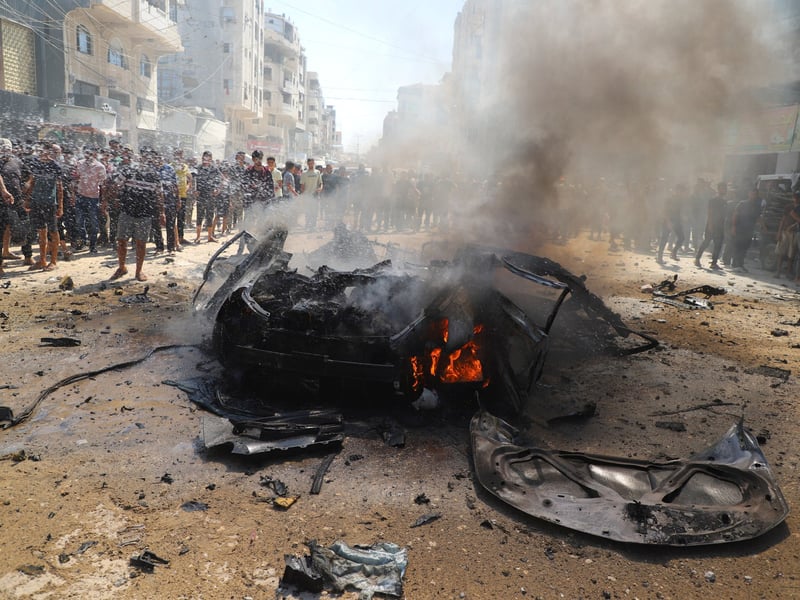

BEIRUT — The vehicle was a marked Lebanese army car traveling a road it had used dozens of times. By the time the strike came, on a Saturday morning on the Khardali-Nabatieh highway in southern Lebanon, a brigadier general was dead, along with a captain and a third soldier, and Beirut was confronting a question it had avoided for weeks: what exactly does the ceasefire protect?
The Lebanese Armed Forces confirmed the deaths in a statement posted to X, calling the strike a “barbaric Israeli raid targeting a military vehicle on the Khardali-Nabatieh road.” Lebanon’s state-run National News Agency identified the senior officer killed as a brigadier general. The Israel Defense Forces confirmed the strike, saying the vehicle had been moving “suspiciously” in what it described as an active combat zone.
That framing cuts to the central dispute. The ceasefire between the Lebanese government and Israel, brokered in Washington and declared effective April 17, has never established clear boundaries between what constitutes a permitted Lebanese military patrol and what the IDF treats as a threat inside its self-declared operational perimeter. Saturday’s strike made that ambiguity lethal.
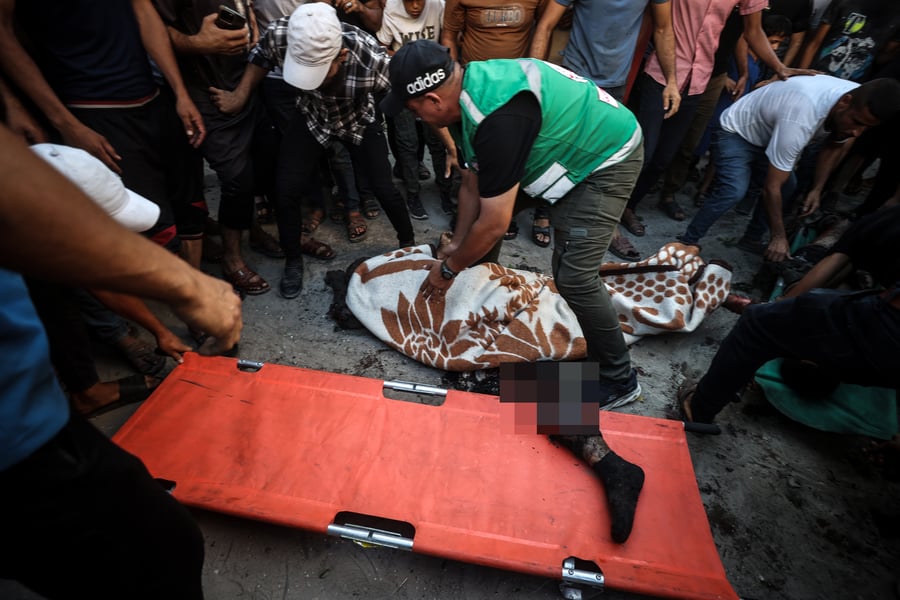
The killing of a senior Lebanese army officer is a significant escalation in a conflict that has already killed thousands of civilians. The Lebanese Ministry of Health said Saturday that 3,558 people have been killed and 10,870 injured since fighting intensified on March 2. Those figures include civilians, Hezbollah fighters, and soldiers — a toll that has continued to climb through every announced pause, proposal, and diplomatic overture.
The Lebanese army is not a party to the fighting in the same sense as Hezbollah. It does not fire on Israeli positions. It has repeatedly tried to establish its neutrality precisely to preserve its freedom of movement in the south — and, by extension, to serve as a credible security guarantor in any post-conflict arrangement. Saturday’s strike erodes that logic. If the IDF treats uniformed Lebanese soldiers as indistinguishable from combatants in a combat zone, the army cannot function as a buffer force, and the ceasefire has no institutional architecture on the Lebanese side.
Hezbollah, for its part, has not accepted the ceasefire. The group rejected the Washington-brokered agreement as a capitulation, vowing to continue fighting as long as Israeli forces remain on Lebanese soil. That posture has given Israel the operational pretext it needs to maintain a military presence and strike posture across southern Lebanon, even as the Lebanese state claims a ceasefire is in force.
Israel has continued carrying out strikes on settlements across the south. Two strikes in the Nabatieh area earlier this week killed a Lebanese soldier and injured two others — incidents that drew condemnation from Beirut but no halt in Israeli operations. The pattern before Saturday’s strike, then, was already one of incremental military action against Lebanese army positions in territory the IDF considers within its operational authority.
What changed Saturday was rank. A brigadier general is the Lebanese army’s institutional face in the south, not a foot soldier caught in an ambiguous zone. His death cannot be explained away as collateral contact. The Lebanese state now faces the question of how to respond — politically and diplomatically — to an ally of Israel, the United States, which brokered the ceasefire those same strikes are dismantling.
The ceasefire agreed in Washington was constructed with a significant structural flaw: it bound the Lebanese government without binding the party actually fighting Israel. Hezbollah was not a signatory. That asymmetry has left the Lebanese state holding obligations it cannot fully enforce while Israel faces no meaningful constraint on operations it frames as counterterrorism. Saturday’s death of a brigadier general is the sharpest expression yet of what that asymmetry costs.
The IDF has not issued a formal statement explaining why a Lebanese military vehicle was struck in an area it knew the army operates in. That silence — whether it is stonewalling, bureaucratic delay, or deliberate policy — will determine how Beirut calibrates its next move. What Beirut has not yet said, and what Saturday’s strike will force it to eventually address, is what it will do if the IDF continues treating its soldiers as threats rather than partners in a ceasefire neither side fully controls.