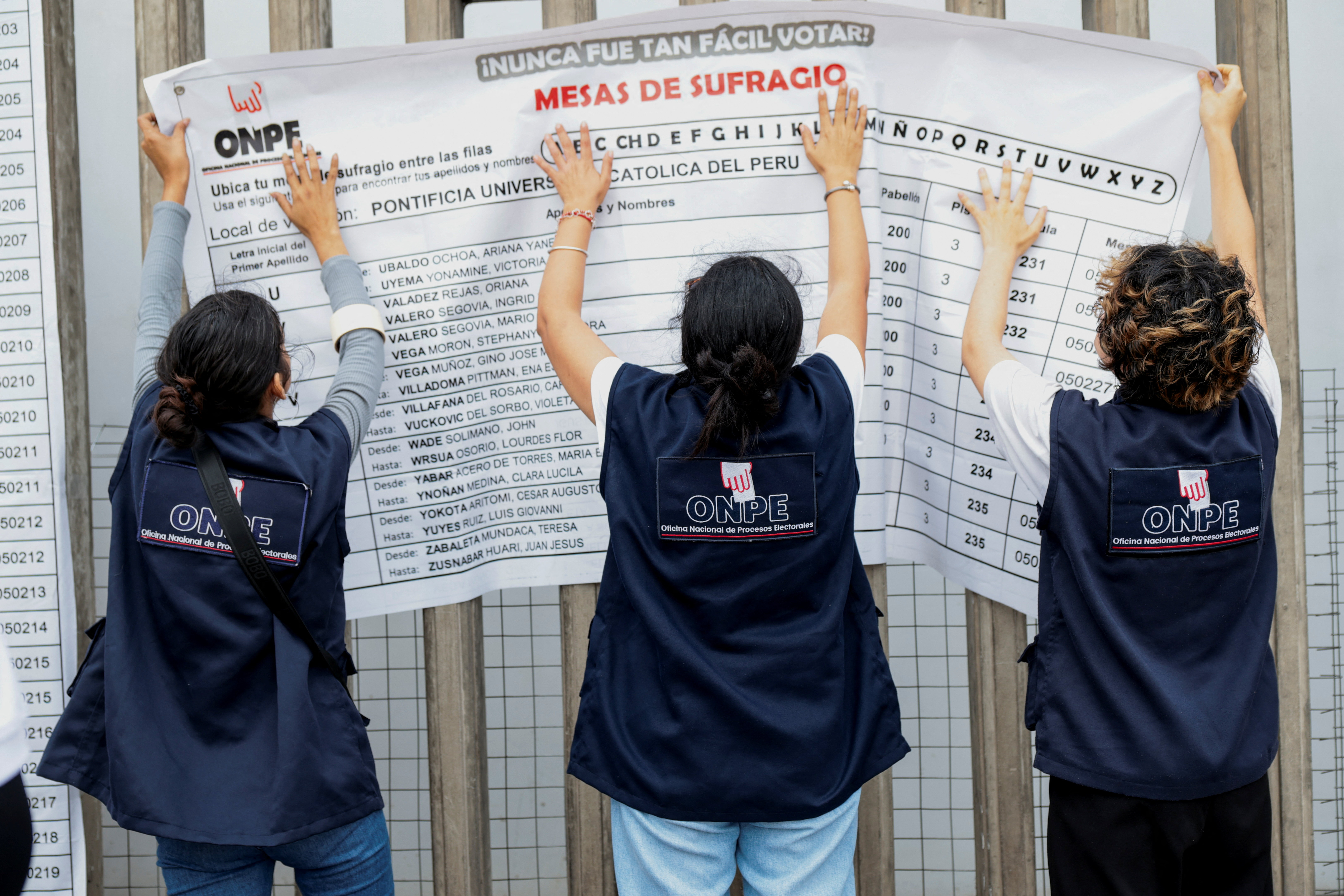

LIMA — The queues formed before dawn outside Lima’s polling stations, and by the time election workers unlocked the booths at the start of voting Sunday, something unusual had settled over the crowd: wariness. Not apathy, which Peru knows well, but a specific anxiety about what comes after the ballots are cast.
Polling stations opened across the country at 8:00 a.m. local time and will remain open until 5:00 p.m. (22:00 GMT), with the second round of the 2026 presidential election pitting right-wing former first lady Keiko Fujimori against left-wing congressman Roberto Sanchez of the Together for Peru party. The result will determine Peru’s ninth head of state in a decade.
But the most consequential question Sunday may not be who wins. It is whether either candidate — and the country — can accept the result.
Evelyn Pazos, 43, told AFP she came to vote early for one reason above all others. “I hope the entire process is carried out transparently, that the people’s vote is respected,” she said outside a Lima polling station. Hugo Vasquez, a 67-year-old craft seller, was blunter about his choice. “There is a lot of disorder and corruption, and we’re going to vote, as always, for the ‘lesser evil,'” he said.
That exhaustion is structural, not incidental. Over the past decade, Peru has cycled through eight presidents, with elected heads of state repeatedly impeached or forced to resign by Congress. The presidency has been hollowed out not by military coups but by legislative attrition — a constitutional design that concentrates obstruction power in Congress and leaves executives perpetually vulnerable. Sunday’s winner inherits that architecture regardless of their political program.
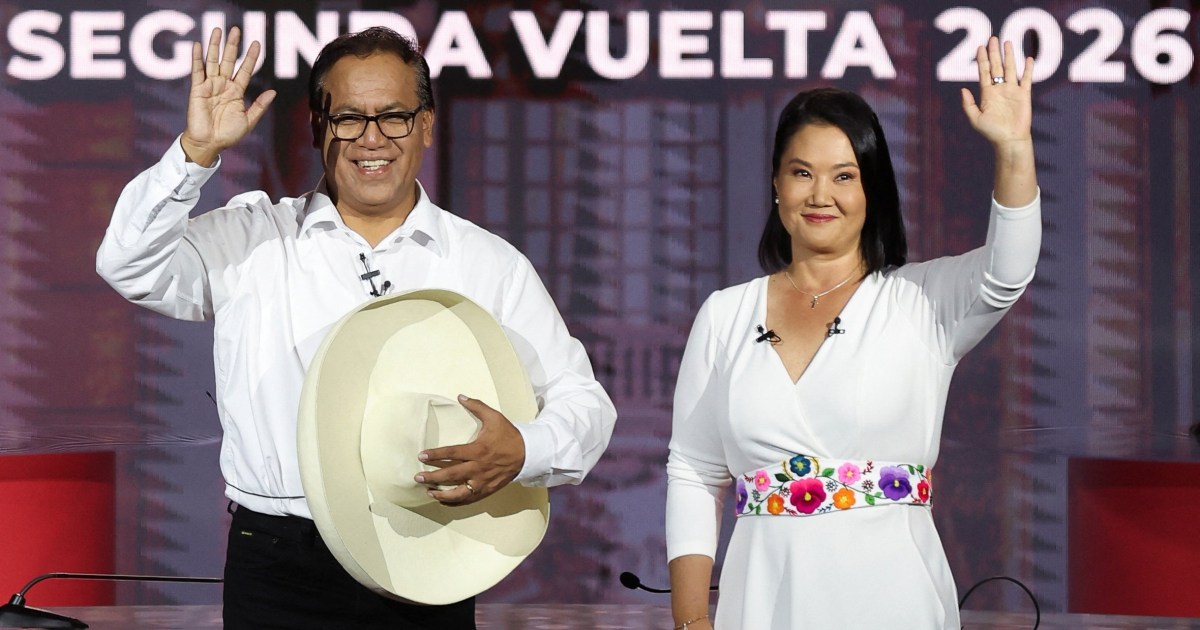
The runoff itself emerged from a first round that shook public confidence in the electoral system. Voting on April 12 was disrupted by logistical breakdowns, particularly in parts of Lima, that required election authorities to extend the vote by a full day. What followed was worse: authorities took more than a month to confirm Sanchez’s second-place finish, allowing far-right former mayor Rafael Lopez Aliaga — who finished third — to allege fraud without evidence. International monitors found nothing to substantiate the claims, but the delay handed the narrative to those who wanted one.
Sanchez secured approximately 12 percent of the first-round vote against Fujimori’s 17 percent, according to previous Eastern Herald reporting on the contest. The two candidates together represent a combined first-round total that barely topped 29 percent — meaning more than 70 percent of Peruvian voters in April supported someone other than either finalist. That is the democratic reality both of them now ask to govern.
The race itself is genuinely close. According to the Center for Economic and Policy Research, the most recent Ipsos poll conducted on June 3 showed the candidates statistically tied, with Sanchez at 43.8 percent and Fujimori at 43.2 percent, while 13 percent of voters remained undecided or intended to cast a blank ballot. A range of other late polls showed Fujimori with margins of between three and eight percentage points, methodologies varying. Nobody knows which number is right.
What the polls cannot measure is the depth of anti-Fujimori sentiment baked into Lima’s urban electorate, or how much Sanchez’s association with former president Pedro Castillo — who was arrested after a failed self-coup attempt in 2022 — costs him in provincial Peru. Castillo’s abbreviated, chaotic presidency remains the left’s most recent governing record in the country’s memory.
Fujimori, 51, is attempting the presidency for the fourth consecutive time, having lost narrowly in 2011, 2016, and 2021. After her 2016 loss she refused for months to concede. After her 2021 loss to Castillo she spent weeks advancing fraud allegations that international observers rejected. Eastern Herald reported Sunday on the legitimacy crisis that has shadowed her candidacy throughout the campaign. She is campaigning as a guarantor of the 1990s economic model her father’s administration installed — a market-oriented framework that delivered GDP growth but also included documented human rights abuses, for which Alberto Fujimori was sentenced to 25 years in prison before his death last year.
Sanchez, a congressman affiliated with Together for Peru, has campaigned on rewriting Peru’s market-friendly constitution to redirect revenue from the country’s mining sector toward social programs and regional redistribution. Al Jazeera reported Sunday that his first-round confirmation took weeks in part because the ballot itself was the size of a pizza box — featuring 36 candidates — creating counting complications that election workers had not fully anticipated.
Peru’s 27 million eligible voters are legally required to vote. The turnout in the first round was 73.81 percent. Some 411,000 Peruvians cast ballots from abroad in April, with 2,506 overseas polling stations now open across 63 countries from Cuba to Qatar to the United States.
What the next several hours will not resolve is the deeper question that Sunday’s vote has always carried: whether any president, regardless of who wins, can survive the congressional arithmetic long enough to govern. Peru does not have a presidential stability problem. It has a constitutional one — and the ballot closed at 5:00 p.m. does not contain a box to fix that.