
WASHINGTON — Tehran has been asking for the money first. Donald Trump made clear Sunday that it will not work that way.
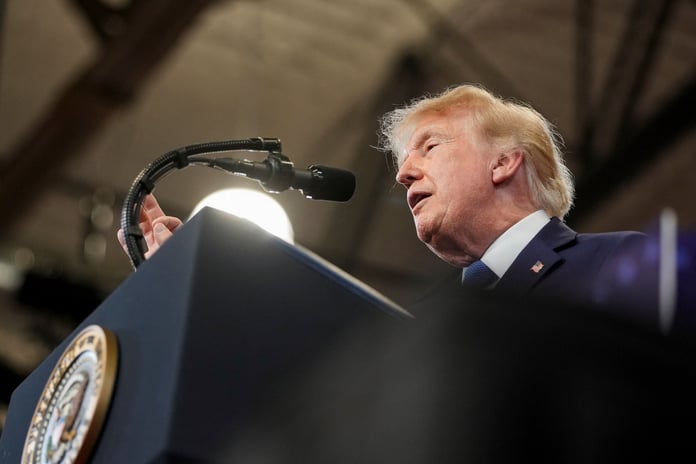
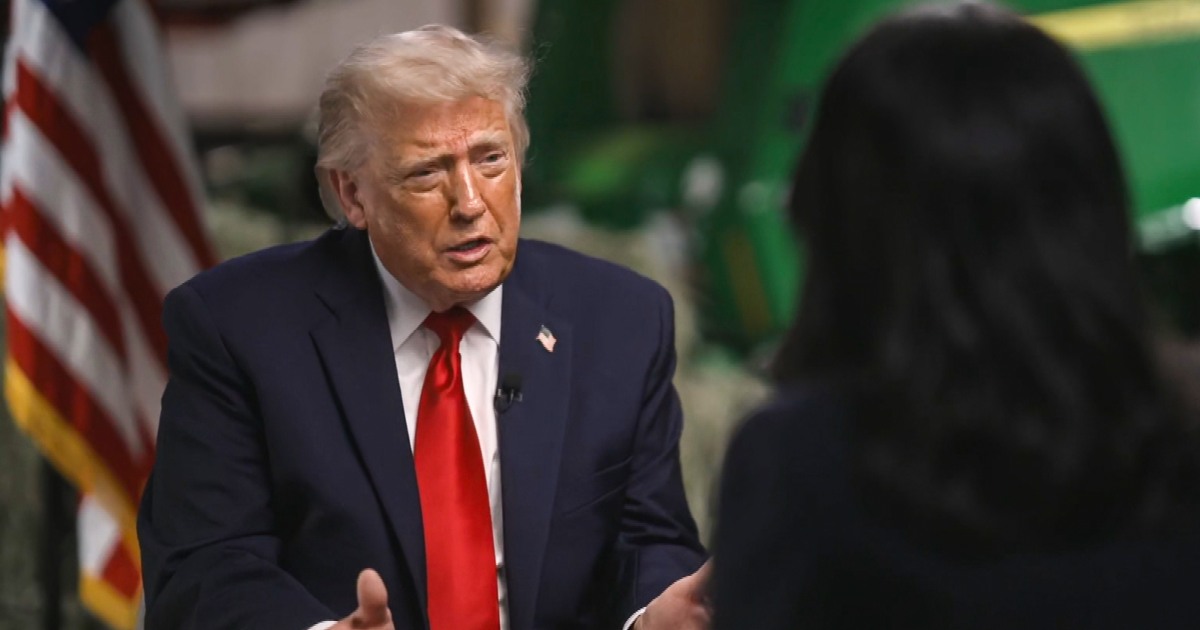
In an interview recorded Friday at Custer Farms in Chippewa Falls, Wisconsin, and aired on NBC News’ “Meet the Press,” the president was asked directly whether he would unfreeze Iranian assets or lift sanctions before a peace agreement was signed. “Comes after,” Trump replied. “Yeah. If they behave, if they do a good job, we start talking. Yeah.”
The answer was brief, but its diplomatic weight was not. Iran’s senior adviser Mohsen Rezaei had told CNN last week that any peace deal to end the three-month war hinged on the release of roughly $24 billion in frozen assets. Treasury Secretary Scott Bessent was separately directing a team to assess whether Iranian assets could be redirected toward covering damage Iran’s strikes inflicted on Gulf allies — a move that would effectively shrink the pool of money Tehran is counting on as a negotiating prize. As Eastern Herald reported, Bessent had already told Congress that Gulf allies were concealing Iranian oil ties, signaling the administration’s intent to use financial exposure as leverage throughout the diplomatic process.
That tension — Iran seeking assets as a precondition, Washington treating them as a reward — sits at the center of talks that Trump described as close to resolution but not yet there. “We’re very close to a deal, or I’m going to blow the hell out of them,” he told NBC. On Lebanon, he left himself room: he said he was not demanding that Beirut be part of any short-term arrangement with Tehran. “I think they’d like to see it, but I’m not demanding,” he said.
According to Iran’s foreign ministry, messages between Washington and Tehran are still flowing through Pakistani intermediaries, though Tehran’s spokesperson accused the United States of complicating the talks with shifting demands. Earlier in the week, Pakistan’s defense minister delivered a joint military-civilian message to Iran’s supreme leader, Mojtaba Khamenei, who has not appeared publicly since sustaining wounds early in the conflict. Trump, in the NBC interview, called the new supreme leader “more rational” than his predecessor and described him as showing “bravery.”
The nuclear file is threading through every part of these negotiations in ways that go well beyond the asset question. Trump said the United States would work with Iran to retrieve and destroy its highly enriched uranium stockpile if a deal could be reached. “We’ll take it out and destroy it, whether it’s on-site or whether we take it off-site,” NBC News reported him saying. “And we will go with them, or without them. But we won’t have people shooting at us.” In the absence of an agreement, he added, the United States would degrade Iran’s military further before retrieving the material on its own.
What exactly remains of Iran’s nuclear stockpile is a matter of open dispute. American strikes on Iranian nuclear sites in June 2025 were described by U.S. officials as causing extreme damage, but the International Atomic Energy Agency has been unable to return to those sites since. According to IAEA assessments available before the conflict, Iran held nearly 21,800 pounds of enriched uranium, with more than 970 pounds enriched to 60 percent — a level that weapons experts consider usable as a nuclear explosive, though not yet weapons-grade. Where that material is now, and what condition the enrichment infrastructure is in, remains unverified by any independent body.
Separately, the United States circulated a draft resolution to countries on the IAEA’s 35-nation Board of Governors ahead of its quarterly meeting this week. The text, seen by Reuters, demands that Iran provide “precise information” on its bombed nuclear sites and the enriched uranium stored there, and grant inspectors all access required to verify it — “without delay.” The resolution faces an uncertain reception. It is the United States that bombed the very sites it is now asking the agency to inspect.
Iran’s stated position heading into any final agreement has remained consistent: no permanent forfeiture of enrichment capability, no compensation for war damage drawn from frozen assets, and sanctions relief before compliance rather than after. As Eastern Herald reported last week, Tehran had demanded the immediate release of at least half its frozen assets before signing even a preliminary memorandum of understanding. Trump’s NBC interview addressed all three implicitly. He offered to destroy uranium alongside Iran — which does not foreclose some form of retained enrichment capacity. On compensation, the Bessent asset-redirection directive remains live. On sanctions and assets, the position was unambiguous: they come after.
What neither side has yet explained is what “after” means in practice — after signing, after implementation, after verification, or some combination of all three. That ambiguity is not a detail. At this stage of the negotiations, it is the negotiation.
Related Posts