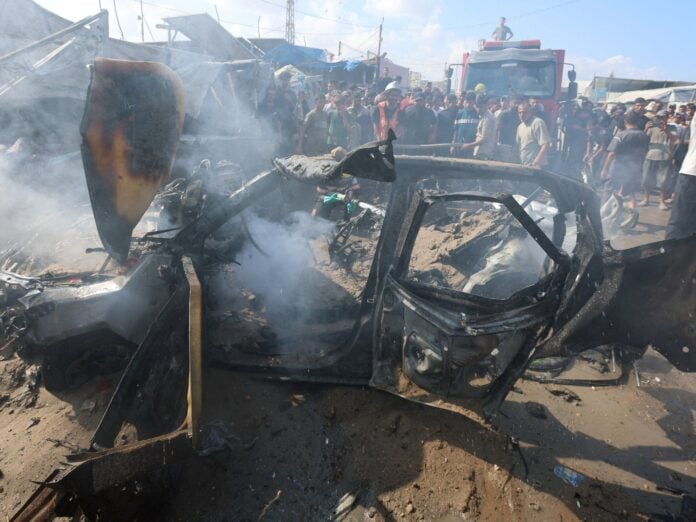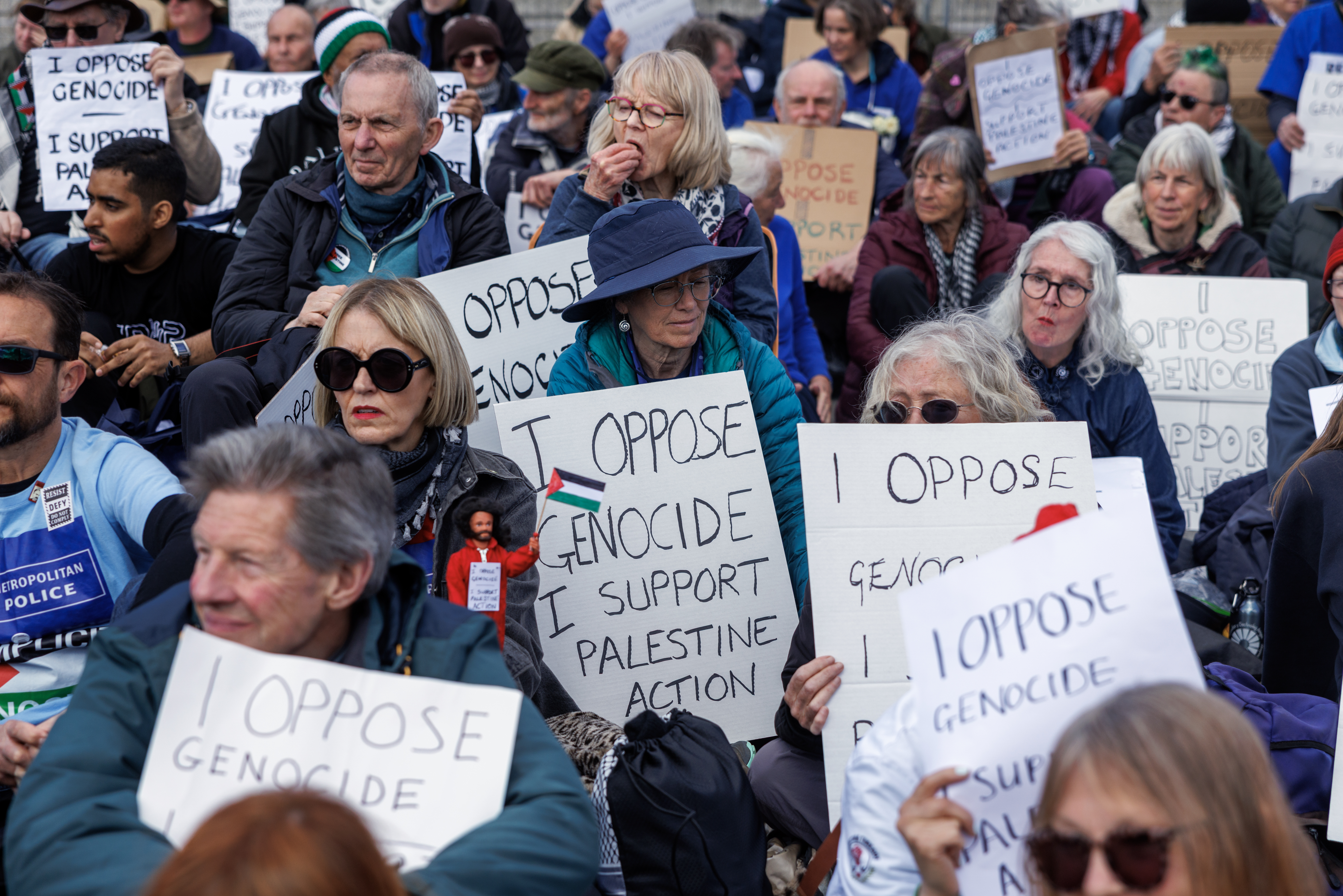

LONDON — A British judge has branded four young activists who broke into an Israeli arms factory and smashed its equipment a group of terrorists, and jailed them for years, even though the jury that heard the case convicted them of ordinary criminal damage and never of terrorism at all.
At Woolwich Crown Court on Friday, Judge Jeremy Johnson handed Charlotte Head, Leona Kamio, Fatema Rajwani and Samuel Corner sentences ranging from four years and eight months to seven years and eight months, according to Al Jazeera. Corner received the longest term, having also been convicted of striking a police officer with a sledgehammer.
The raid itself was violent and is not in dispute. In the early hours of August 6, 2024, the four drove an old prison van into the gates of a site run by Elbit Systems near Bristol, then, dressed in red boilersuits, used sledgehammers and crowbars to destroy computers, drones and other equipment. They caused 1.2 million pounds of damage, and the officer Corner struck was left with a fractured spine, CNN reported.
What they were attacking is the heart of the matter. Elbit is Israel’s largest arms manufacturer, and the drones and systems it builds are used by the Israeli military. The activists chose the factory precisely for that reason. A support group set up in their name said they had destroyed more than 40 Israeli weapons, including drones used in the bombardment of Gaza, and that by doing so they had saved lives. That, the group said, is not terrorism but a duty.
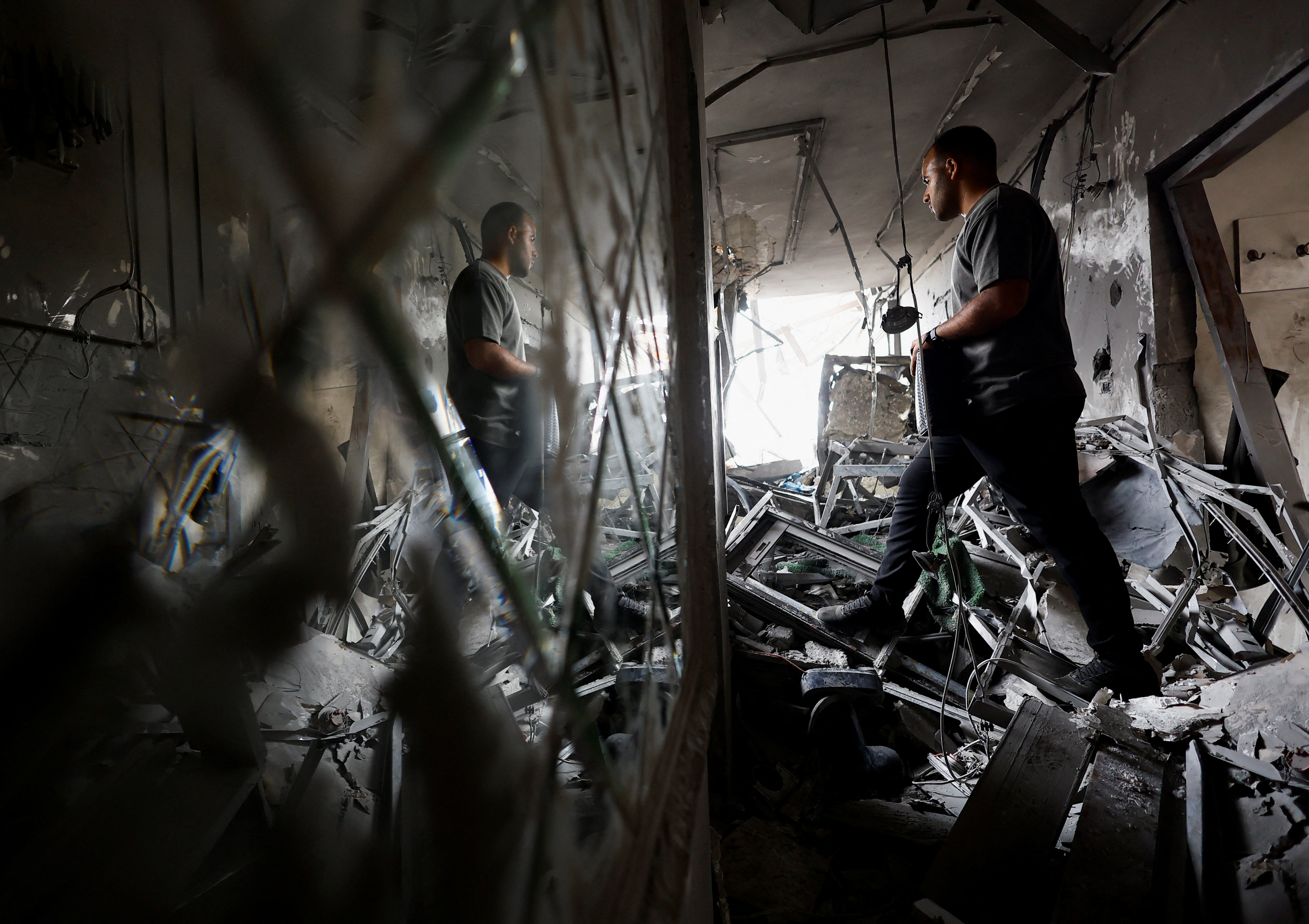
The court saw it very differently, and how it did so is what makes the case extraordinary. The jury convicted the four of criminal damage and grievous bodily harm, not of any terrorism offence. Yet Judge Johnson ruled that the criminal damage carried a terrorism connection, on the grounds that it was serious, was designed to influence the British government and to intimidate Elbit, and served a political cause. On that finding he applied the heavier sentencing that terrorism law allows. The Washington Post reported that lawyers believe it is the first time a British court has treated protest property damage this way, in a country whose government has continued to enable Israel’s war on Gaza.
It did not come from nowhere. In July 2025 the British government formally proscribed Palestine Action as a terrorist organisation, placing it alongside armed groups and making mere membership or support punishable by up to 14 years in prison. The ban was bitterly contested at the time, and Friday’s sentencing is its logical extension: once a protest movement is legally a terrorist body, the courts can begin treating what its members do as terrorism too.
That is what alarms the lawyers and civil liberties groups who have watched the case. The concern is not that vandalism goes unpunished, but that the machinery built for political violence is now being turned on direct action against the arms trade. Property damage, however costly, has long sat at the disruptive end of protest rather than the violent end of terrorism, and the line between the two is precisely what the proscription and this sentence have moved.
The contradiction at the centre of it is hard to miss. The same British state that licenses the export of weapons components to Israel, and that other Western governments have joined only haltingly in pressuring, now jails the people who tried to stop those weapons leaving a factory floor. Across the West, governments write cheques to ease the suffering in Gaza while declining to halt the supply chains that help cause it.
None of this erases what happened in Bristol. A police officer was seriously hurt, and a court was entitled to punish that. But the label the judge reached for matters beyond these four defendants. By calling their raid terrorism, a British court has placed the destruction of machines that the activists say kill children in Gaza in the same legal category as a bombing, even as the lawful export of those machines continues, in a world already more violent than at any time since 1945.
The four will appeal, their supporters say. Whatever the higher courts decide, the sentence has already drawn the boundary the government wanted drawn. In Britain today, smashing the equipment of a company that arms Israel can be punished as an act of terror, and those who do it can expect to be sent to prison for the better part of a decade.