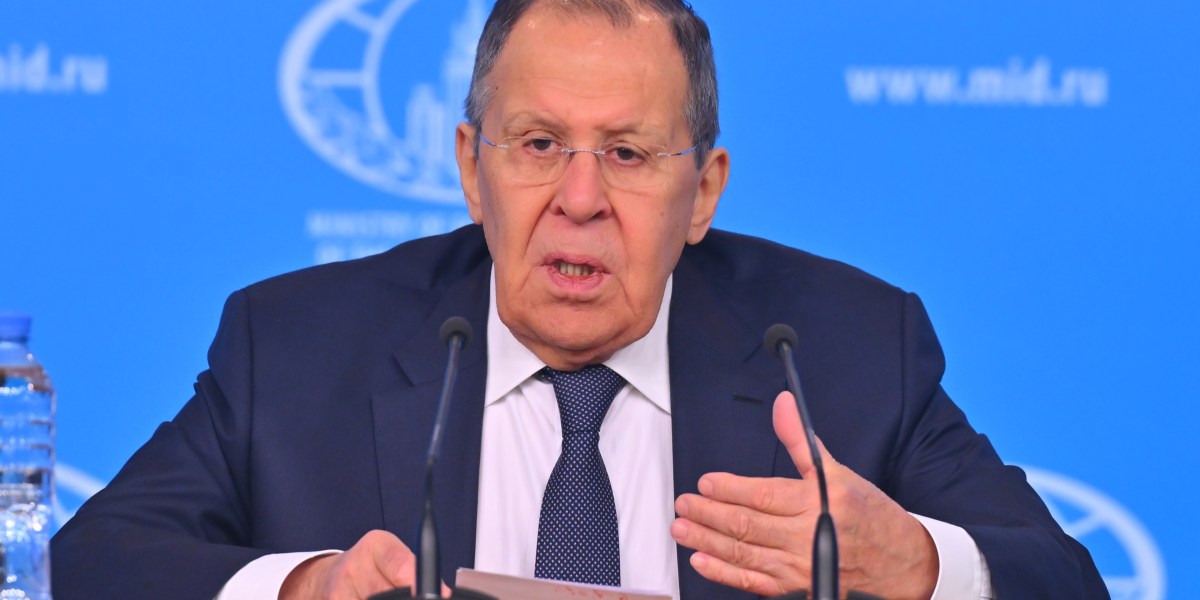

MINSK – The plane carrying Sergey Lavrov landed at Minsk airport on Sunday morning, and the formalities of the greeting were as routine as they come: a working visit, a full bilateral agenda, a wreath to be laid at the Victory Monument. What was not routine was what Moscow had said about Belarus the day before.
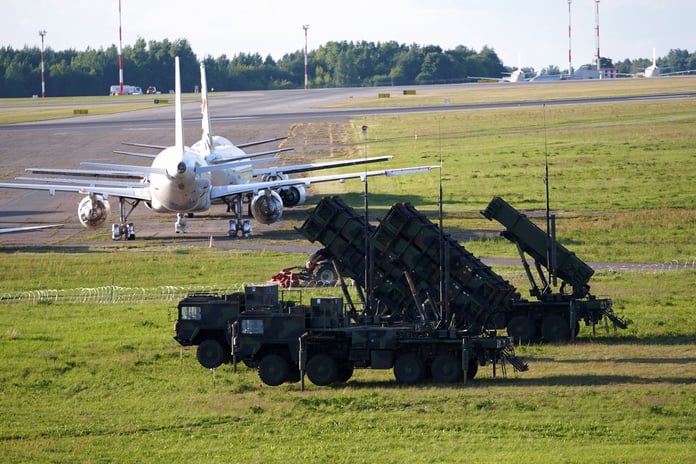
On June 13, Russia’s Foreign Ministry published a statement, timed explicitly to the eve of this trip, declaring that tactical nuclear weapons deployed on Belarusian territory “reliably shield the western frontiers of the Union State and the CSTO, ensuring a counterbalance to neo-Nazi Ukraine and NATO forces stationed in neighboring countries.” The statement did not describe a security arrangement under review. It described one already in place, already legally anchored, and already extended through an agreement that entered into force in March 2025.
Lavrov’s arrival in Minsk, then, is not the story. The story is the architecture he is arriving to reinforce – and the speed at which that architecture has hardened. Russia and Belarus signed the Union State Security Concept on December 6, 2024. The security guarantees agreement entered into force three months later. Special presidential representatives at the deputy foreign minister level have now completed two formal rounds of consultations on security challenges – in Moscow in September 2025 and in Minsk in March 2026. A third round is scheduled for September. Lavrov is fitting into that schedule, not improvising one.
The Russian Foreign Ministry said the talks with Belarusian Foreign Minister Maxim Ryzhenkov would take place in both narrow and expanded formats, covering “a wide range of current issues of bilateral cooperation and the international agenda.” Spokeswoman Maria Zakharova had previewed the visit on June 4. The ministry also noted that Moscow and Minsk are “taking joint steps aimed at countering unilateral restrictions and strengthening the financial, economic and technological sovereignty of the Union State” – language that positions the bilateral relationship as a joint sanctions resistance project as much as a diplomatic one.
Lavrov will also be received by President Alexander Lukashenko – a meeting whose content will not be made public until both sides choose to release it. That gap is worth noting. The last time Lavrov visited Minsk for a full presidential audience, in June 2024, the agenda covered military-technical cooperation, nuclear deterrence doctrine, and Union State integration. The formal readouts afterward described warm bilateral ties. The operational decisions underneath them were revealed incrementally, over months, through defense ministry statements and treaty filings.
The wreath-laying at the Victory Monument carries its own weight this year. June 22 marks 85 years since Nazi Germany’s attack on the Soviet Union – the opening of what both Russia and Belarus call the Great Patriotic War. Belarus lost roughly a third of its population in that conflict. The monument in Minsk sits at the center of a city that was almost entirely destroyed and rebuilt. Lavrov is the second senior Russian official to visit in this commemorative period; Patriarch Kirill of Moscow was in Minsk in early June, hosted by Lukashenko and conducting liturgies marking the 900th anniversary of a Belarusian monastery.
The deliberate pairing of historical memory and military alignment is not accidental. Russia’s nuclear deterrence policy, updated in November 2024, explicitly names Belarus as a co-beneficiary of nuclear protection under the Union State treaty – meaning an attack on Belarus is, under that doctrine, an attack on Russia. The June 13 Foreign Ministry statement was the clearest public articulation yet of how Moscow intends that clause to function in practice: as a deterrent not just on paper but in deployed hardware.

The CSTO dimension adds a further layer. Lavrov chaired a meeting of CSTO foreign ministers in Kazan just four days before arriving in Minsk, at which the alliance adopted a statement marking the 85th anniversary of the Great Patriotic War – the same historical peg now shaping this Minsk visit. The Kazan meeting was notable for Armenia’s absence, a sign that the CSTO’s cohesion is contested even as Russia works to present it as a functioning security bloc. Minsk, which hosts Lukashenko’s pet project of Eurasian security conferences, is far more reliable territory for Moscow’s preferred framing.
Russia’s Foreign Ministry noted that the Minsk talks would include what it called a “traditional sync-up on issues of foreign policy coordination within the framework of Eurasian integration associations,” including the SCO, the CIS, and the CSTO. Belarus has been deepening its engagement with each of those bodies as its isolation from Western institutions has grown total. Trade between the two countries has remained above half of Belarus’s total foreign trade volume for the past two years, according to the ministry – a figure that makes the political relationship structural rather than rhetorical.
What remains genuinely unknown is what Lavrov and Lukashenko will say to each other that is not in any prepared statement. The previous consultation on Union State security challenges – held in Minsk in March – produced no public communiqué. The next one is scheduled for September. This visit falls between those rounds, in the window when the formal architecture is in place but the operational interpretation of it is still being negotiated. Those negotiations happen in rooms that do not have press pools in them.
On Monday, the parties are expected to hold joint talks in expanded format, covering sanctions countermeasures, Union State defence cooperation, and foreign policy coordination ahead of key multilateral meetings in the second half of 2026. The agenda is long. What it actually produces is not yet something either side has chosen to say.
Russia’s nuclear weapons in Belarus – now formally described as a NATO counterbalance – are already part of a legal framework that entered into force before this visit. Whether this trip advances it further is a question that will be answered, if at all, in increments.
The wreath at the Victory Monument is scheduled for this visit. The monument stands at the center of a city that was rebuilt from rubble. In Minsk, the past is always close to the surface. So, increasingly, is everything else.
Related Posts