
MOSCOW – The children were placed with American families years before the adoption ban took effect, handed across borders under a program that was once the largest of its kind between the two countries. More than a decade later, Moscow says it still has no idea how most of them are living.
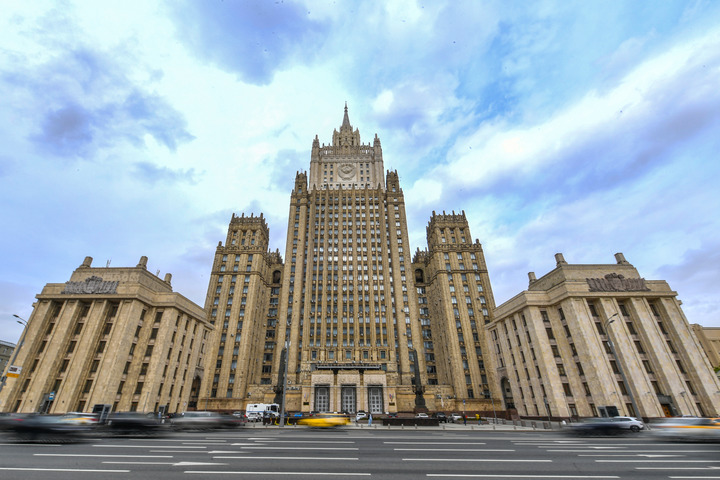
The Russian Foreign Ministry, in a joint human rights report released Monday with its Belarusian counterpart, said the United States has failed to respond to Russian requests for information on the living conditions of children adopted by American families before the 2013 ban. The document, the third in an annual series co-produced with Minsk and presented simultaneously in Vienna and Geneva, goes further: it accuses the State Department of ignoring every appeal from the Russian Embassy requesting investigations into restrictions on Russian journalists working on American soil.
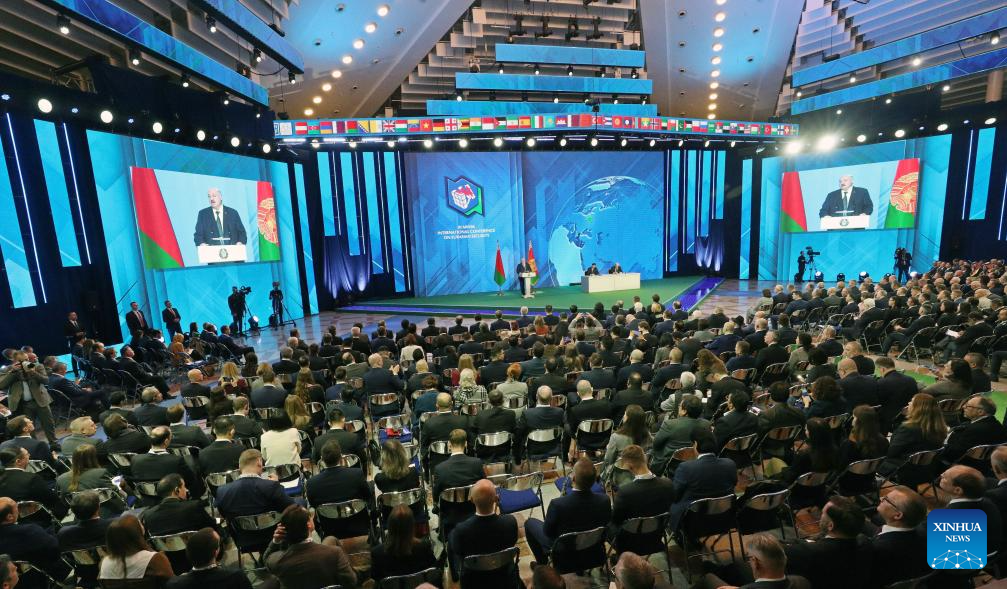
The two complaints, bundled together in a document framed as a counter-report to Western human rights indices, land on the same day that Moscow and Minsk formally presented the report to international audiences at the United Nations and OSCE. Their timing is pointed. The adoption silence has persisted across multiple American administrations. The journalist complaints predate the current White House. That neither issue has been resolved, the ministries appear to be arguing, is not oversight – it is policy.
“The United States has failed so far to provide the information on the living conditions and upbringing of Russian children adopted prior to the ban on adoption that the Russian competent authorities requested,” the joint report states. “Currently, the Russian authorities continue to make efforts to come into contact with competent U.S. departments and agencies and sensitize them to the issue.”
The adoption program that produced those children ran for more than two decades. American families adopted more than 60,000 Russian-born children between the early 1990s and 2012, according to U.S. government data. Russia’s Federal Law No. 272-FZ, which took effect on January 1, 2013, ended all new adoptions by American citizens. But children already placed with American families before that date remained in legal limbo, their oversight responsibility falling to a bilateral mechanism that has since been suspended along with most other U.S.-Russia consular cooperation.
Russia’s position, articulated repeatedly since the ban and now restated in Monday’s document, is that American authorities have a legal obligation to report on those children’s welfare under the terms of the 2012 U.S.-Russia Adoption Agreement – even though the adoption program itself has been shuttered. The State Department has not publicly responded to that specific argument, and its intercountry adoption page for Russia offers no guidance on post-adoption reporting obligations beyond urging parents already in the system to comply with Russia’s requirements.
That silence becomes more complicated in light of the Trump administration’s January 2026 decision to pause visa issuances for nationals of 75 countries, a list that includes Russia. Whether that freeze has further impeded the already-limited channels through which Russian consular officials might track adopted children’s cases has not been addressed by either government.
The second complaint in the joint report focuses on a different group of Russian nationals in the United States: journalists. Moscow says its embassy has submitted multiple appeals to the State Department seeking investigations into what it describes as unjustified law enforcement actions against Russian media workers, broadcast bans, and access restrictions. None of those appeals, the ministry says, received a response.
“In recent years, Russian journalists in the United States have faced unjustified actions by law enforcement officers, bans on broadcasting, and restrictions on access,” the report states, adding that visa processing for Russian journalists has also become significantly more difficult. Russian Foreign Ministry spokesperson Maria Zakharova has raised the visa issue repeatedly in recent years, accusing Washington of blocking accreditation for Russian reporters under the guise of press freedom principles.
The joint Belarus-Russia human rights report, now in its third edition, is structured explicitly as a counter-document to the annual reports produced by the U.S. State Department and Western governments on human rights conditions abroad. Moscow and Minsk have focused their 2026 edition on five Western states they describe as claiming global leadership in human rights while tolerating, according to the report, systemic racism in law enforcement, prison overcrowding, restrictions on demonstrations, and expanding police powers to conduct searches. The United States figures prominently throughout.
The report’s authors – Russian Deputy Foreign Minister Dmitry Lyubinsky and Belarusian Deputy Foreign Minister Igor Sekreta – note in their joint foreword that the 2026 document arrives in the year marking the 60th anniversary of the International Covenant on Civil and Political Rights and the International Covenant on Economic, Social and Cultural Rights. That framing, casting the West as in violation of the very instruments it championed, has been a recurring rhetorical theme in Moscow’s diplomatic communications since 2022. Russia has similarly accused Washington of using its G20 presidency to obstruct Russian participation in multilateral forums, a pattern Moscow says reflects deliberate diplomatic exclusion rather than procedural friction.
What remains unresolved – and what neither the report nor any response from Washington has addressed – is the practical question of the adopted children themselves. Any welfare tracking that once existed for Russian-born children in American homes has effectively collapsed alongside the broader U.S.-Russia relationship. Whether those children’s situations are being monitored by American child welfare authorities, or whether cases of concern have been raised and ignored, is not a question the joint report can answer from Moscow.