

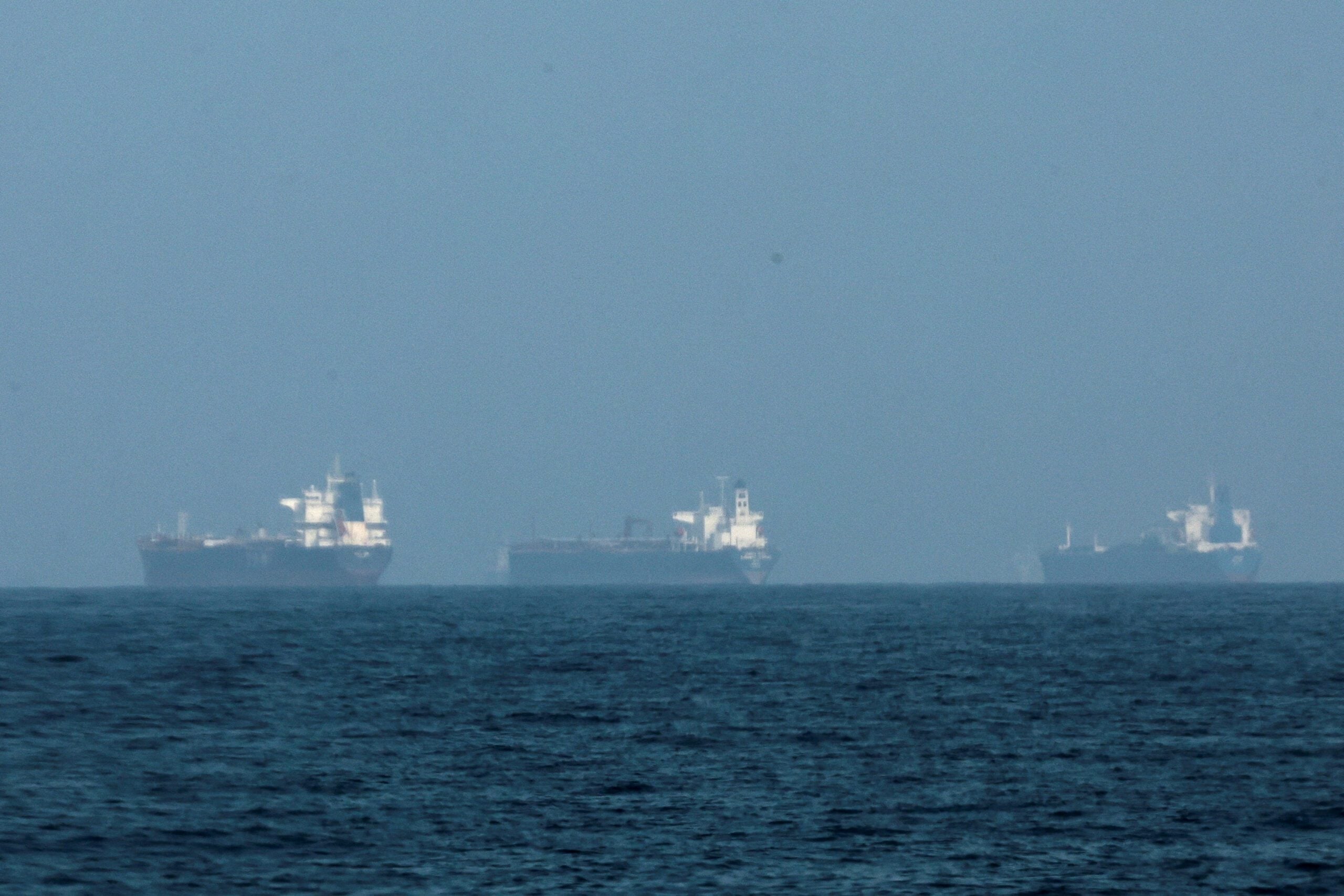

PARIS – The CMA CGM executives who signed a $500 million logistics deal with Oman’s Asyad Group at the Elysée Palace on June 29 were in the same building where Emmanuel Macron and Sultan Haitham bin Tariq were announcing a joint plan to demine the Strait of Hormuz. The shipping contract and the demining declaration were separate items on the same summit agenda. They are not separate issues: France’s largest container shipping company has been diverting its vessels around the Cape of Good Hope since Hormuz closed in February, and the home government of CMA CGM has now formally asserted a stake in who clears the mines that are keeping those vessels on the long route.
Macron, speaking at the Elysée after the meeting, said France and Oman had decided to “collaborate jointly, in co-ordination with our partners, on demining the strait to secure maritime routes and ensure free and unconditional passage.” Sultan Haitham’s visit was the first official French state visit by an Omani head of state since 1989. Twelve agreements were signed: $8 million for French defence company Thales to supply Oman’s civil aviation authority, $2.25 billion for Suez to manage Muscat’s water network, $4 billion for EDF to build a 2-gigawatt pumped-storage power plant. The demining announcement was the item that reached beyond the bilateral agenda.
Iran responded the same day. Deputy Foreign Minister Kazem Gharibabadi said demining operations in the Strait of Hormuz would be carried out “exclusively by Iran and no other country.” He cited Article 5 of the Islamabad Memorandum of Understanding, which he said assigns navigation management, demining operations, and maritime arrangements in the strait to Iran as the coastal state. He warned: “We strongly advise France not to make the situation more complicated with its provocations.”
The exchange establishes a new fault line in the Hormuz reopening. Washington and Doha have been negotiating toll architecture and transit routing. London and Berlin have been debating the legal framework for European naval presence. France and Oman arrived at a demining framework without – as far as public readouts indicate – coordinating the announcement with Washington in advance. Whether the Macron-Sultan Haitham declaration was cleared with Steve Witkoff’s team before the press statement was made has not been confirmed.
Oman’s position in all of this is the most complicated. Muscat is simultaneously Iran’s designated corridor partner for the temporary Hormuz navigation framework – the arrangement that routes commercial vessels through a designated northern-shore corridor under Omani-Iranian joint oversight – and is now co-signatory to a French demining declaration that Iran says violates the MoU. Iran’s assertion of exclusive coastal-state authority over the strait’s navigation management has been the consistent thread of Tehran’s position since the MoU was signed. Oman has been threading that needle by accepting the corridor-management role while resisting explicit endorsement of the toll.
On June 29 – the same day as the Paris summit – Oman’s Foreign Minister Badr al-Busaidi made that distinction explicit. Speaking to Monte Carlo International Radio, he said Oman does not support charging ships for Hormuz passage. He drew a line between compulsory transit fees – which Muscat rejects – and voluntary maritime services, which he said could be organized along the lines of the Strait of Malacca cooperative arrangements. The distinction matters because the IRGC’s proposed “service fee” structure is designed to look like the second category while functioning as the first. Oman’s public rejection of compulsory fees, on the day Oman co-signed a demining plan Iran says is illegal, amounts to the most visible assertion of Muscat’s independent position yet.
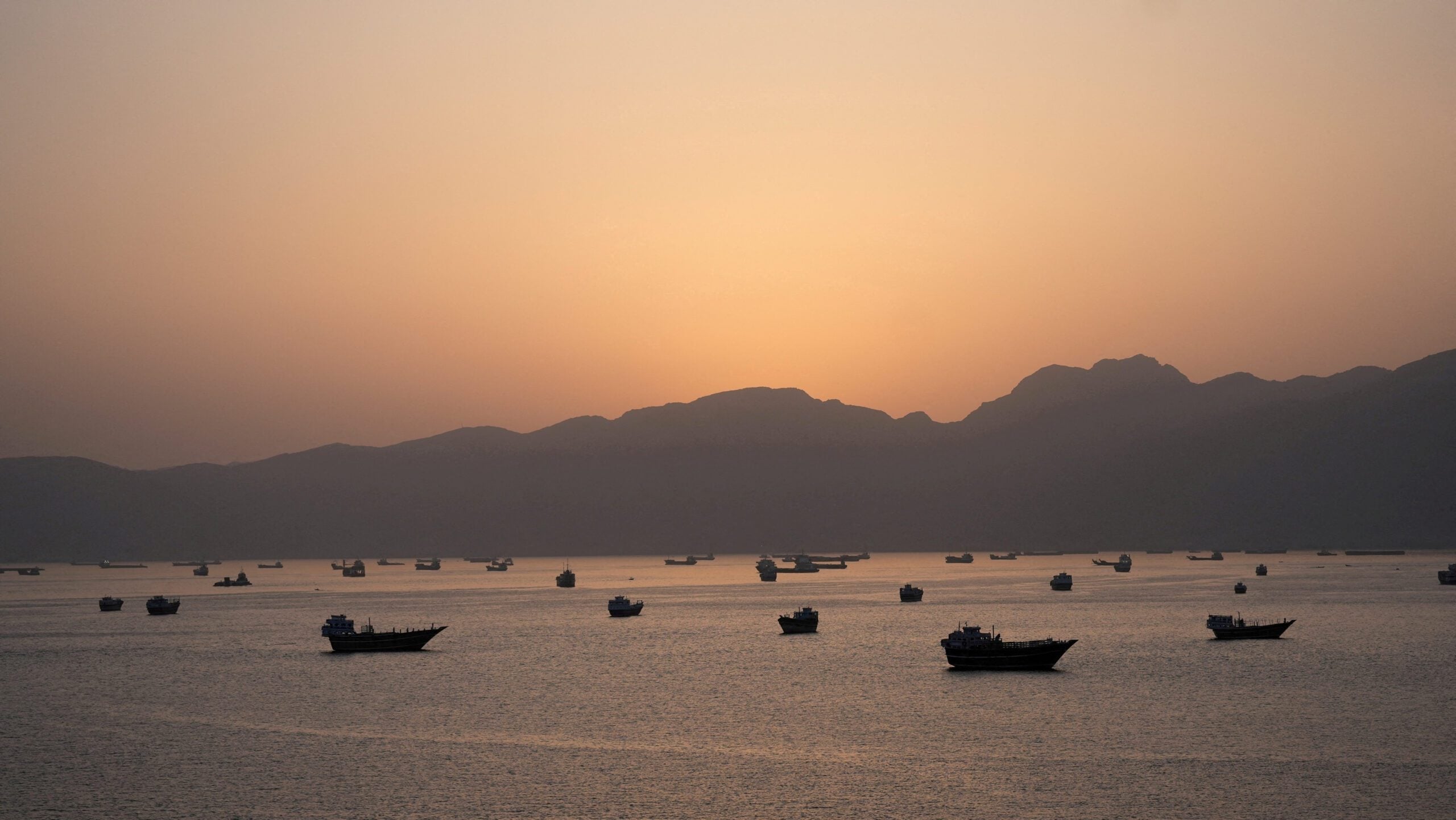
Traffic through the strait has recovered to roughly a third of pre-conflict levels, with underwriters still classifying the waterway as a warlike operations area. Mine presence is one of the three structural reasons cited by shipping operators for not returning at full capacity. The French-Omani demining initiative, if operationalized, would directly address that variable – but Iran’s stated position is that no foreign actor has the legal authority to conduct mine-clearing operations in Iranian-managed waters, rendering the initiative inoperative without Tehran’s consent.
France’s bet on Oman reflects a read that Muscat’s unique position – trusted by Tehran, acceptable to Washington, now formally partnered with Paris – gives the sultanate leverage that no other regional actor currently holds. The $6.75 billion in commercial agreements signed at the Elysée reinforce the economic logic: France is investing in Omani infrastructure at the same moment it is asserting a role in Hormuz’s reopening, betting that the two are connected. Gulf states backed the Iran deal to avoid the alternative, not because they trust Tehran – and Oman, as the state most exposed to the strait’s operational risks, has more at stake than any of them in whether demining happens on Iran’s terms or on terms that allow foreign participation.
Iran’s “provocation” warning to France is a new register for Tehran in this crisis. The word has previously been directed at Israel and at unilateral US military posture. Directing it at a European mediating power, over a mine-clearance announcement, signals that Tehran is treating the French-Omani initiative not as a diplomatic misunderstanding but as a deliberate challenge to the exclusive-authority framework it has been building since the MoU was signed. Whether France coordinates with Washington before its next Hormuz statement, and whether Oman’s corridor management role survives a growing conflict between its two main partners over who controls the strait’s demining, are the questions the June 29 Paris summit left open.













