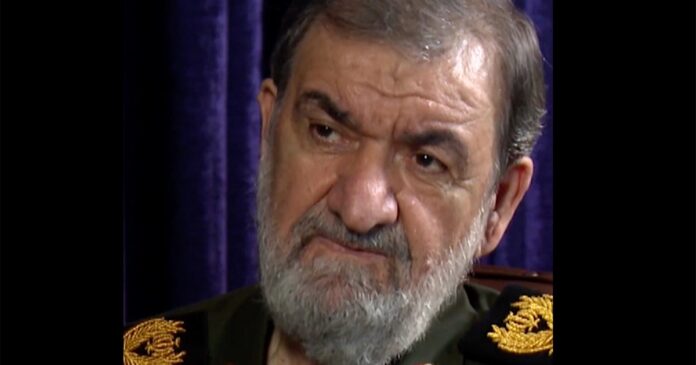

TEHRAN – The 88 members of Iran’s Assembly of Experts are the only body in the Islamic Republic authorized to choose and remove a supreme leader. On June 29, sixty-three of them – nearly three-quarters – issued a joint statement urging Iran’s negotiators to hold the red lines “set by the supreme leader” in the Islamabad MoU talks. The statement was directed at Mojtaba Khamenei, who is the supreme leader. Sixty-three clerics told the man they had just appointed that he had approved the wrong deal.
The statement’s content was conventional enough – maintain red lines, protect the rights of the resistance front, do not surrender sovereignty over the nuclear file. Its significance was structural. The Assembly of Experts had not broken publicly with Ali Khamenei’s decisions in four decades of his leadership. His son has held the position for less than four months.
The second incident came the following day. The Islamic Republic of Iran Broadcasting network, state television operating under the supreme leader’s direct authority, was airing a pre-recorded interview with parliament speaker Mohammad Bagher Ghalibaf, who has been leading the nuclear negotiations. Ghalibaf began discussing the unfreezing of Iranian assets under the MoU’s economic provisions. IRIB cut the feed. Radio Free Europe/Radio Liberty described the incident as a signal of how contested the deal had become inside Iran’s own media apparatus. State television cutting a state negotiator discussing a state-approved agreement is not a routine editorial decision.
Mojtaba Khamenei approved the Islamabad MoU despite reservations he disclosed publicly. Writing in June, he told Al Jazeera he had “a different opinion” on the agreement but gave his blessing after President Masoud Pezeshkian and senior officials pledged to safeguard “the rights of the Iranian nation and the resistance front” and accepted personal responsibility for the deal’s terms. That concession – the supreme leader overriding his own stated doubts at the request of his president – was unusual. Ali Khamenei did not typically disclose reservations before blessing decisions; he consolidated consensus before announcing it. The public disclosure of doubt was the first signal that the new leader operates under different political constraints than his father.
Political analyst Babak Dorbeiki suggested the Assembly statement may serve dual purposes: signaling to Washington that Mojtaba Khamenei’s hands are tied while simultaneously giving him negotiating flexibility – if the clerics are pulling one direction, any concession he extracts can be presented as wrested from institutional resistance. That reading treats the Assembly statement as a coordinated performance rather than genuine defection. The problem with the performance theory is IRIB. State television does not cut its own senior negotiators from live programming as a diplomatic signal to Americans. That is an internal action with an internal audience.
What the two incidents together describe is not a unified front. IRGC-aligned factions and the security establishment retain leverage over the institutional channels that would be needed to implement any final deal. The Doha round deferred the nuclear file entirely, which means the hardest concessions – IAEA access to bombed sites, the enrichment ceiling – have not yet been extracted from Tehran’s negotiating position. If Mojtaba cannot deliver institutional compliance on questions that have already been agreed in principle, the questions that have not yet been agreed are harder still.
Reza Alijani, a commentator on Iranian politics, characterized Mojtaba Khamenei’s approach as a “two-track” posture: authorizing negotiations while keeping hardline factions engaged enough to prevent open revolt. The parliament speaker’s own position illustrates the bind. Ghalibaf chairs the National Security Committee and leads the technical nuclear talks. He also told reporters on July 1 that IAEA access to bombed nuclear sites is “false” – a position backed by enacted parliamentary law. He is simultaneously Iran’s lead negotiator and the public face of the position that makes the deal as Washington describes it impossible. The two tracks Mojtaba is running do not lead to the same destination.
The Assembly of Experts statement carries institutional weight that distinguishes it from ordinary factional noise. The assembly does not pass legislation and does not set foreign policy. Its formal function is to supervise the supreme leader and, in theory, to remove one who no longer meets the clerical qualifications for the position. No supreme leader has ever been removed. But the body’s willingness to issue a public statement that implicitly questions the new leader’s judgment on a core national security decision is not precedented under his father’s tenure. Whether this is genuine warning or elaborate signal, the assembly has established a public record of its concerns – a record that will exist if the deal collapses or requires concessions the hardliners find unacceptable.
The next Doha round cannot begin until after Khamenei’s burial on July 9. In the week the diplomatic track is paused, the institutional fracture the deal depends on closing has not closed. Forty-three days remain on the Islamabad window. Whether Mojtaba Khamenei can consolidate the authority the deal requires before that clock runs out is not a question the Doha talks have addressed. It may be the most consequential one they have not.